





What many had expected since the beginning of the war in the Middle East finally happened early Saturday morning. The Houthis decided—following Hezbollah—to enter the conflict, signaling that Iran seeks to expand the geographic scope of the war to the Red Sea, increasing the complexity for U.S. military presence and air power in the region.
With this move, Tehran and the Shiite militants of Yemen appear to be adopting a strategy of creating a “ring of fire” extending from Lebanon through Iraq and the Gulf to Yemen, forming a front spanning thousands of kilometers.
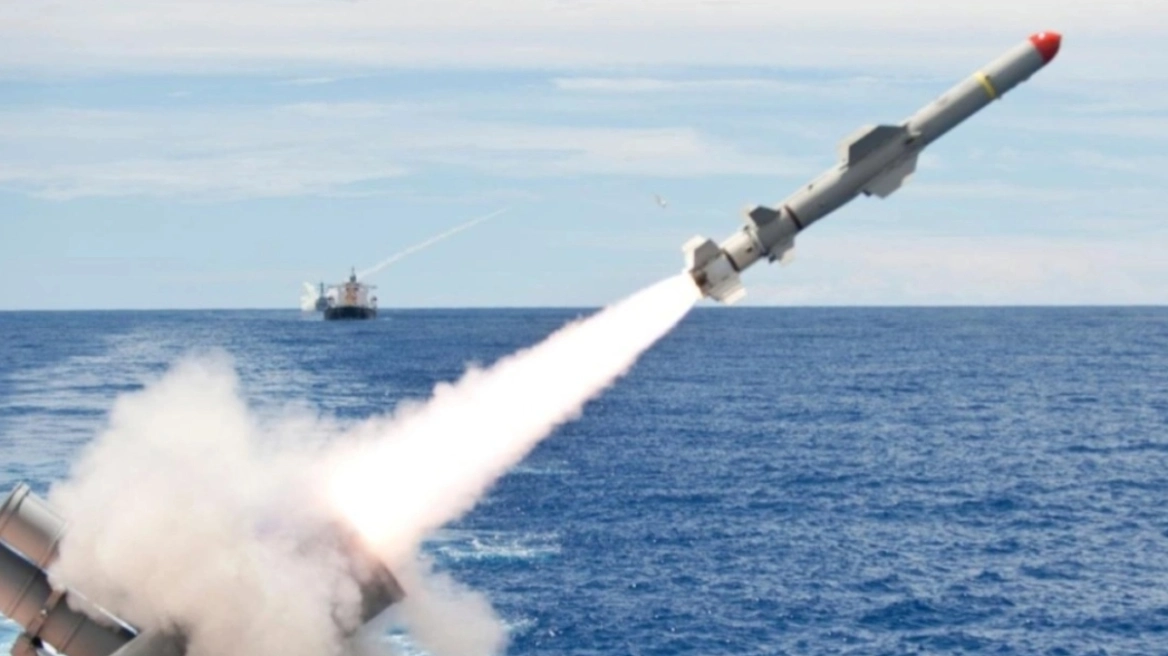
The launch of two missiles—one ballistic and one cruise—by the Houthis toward southern Israel is seen by analysts as a warning message to the United States that its presence in the Red Sea region cannot be taken for granted, especially if it seeks to open the Strait of Hormuz or proceed with a large-scale military operation involving Marines in the Persian Gulf.
They want to keep corridors closed to U.S. aircraft carriers
According to assessments, the Houthis’ decision—at Iran’s request—to engage at this moment is linked to an effort to prevent the passage of two U.S. aircraft carriers through the Red Sea and the Bab el-Mandeb Strait, in case President Donald Trump decides to escalate operations against Tehran.
The aircraft carrier USS Gerald R. Ford is already in the port of Split, Croatia, undergoing urgent maintenance. Meanwhile, USS George H.W. Bush is heading toward the Mediterranean accompanied by three destroyers, according to a Pentagon announcement, to reinforce the Abraham Lincoln, which is in the Arabian Sea. The two aircraft carriers and their naval forces are expected to move toward the operational area off Iran’s coast via the Suez Canal, the Red Sea, and the Bab el-Mandeb Strait.
Long-range arsenal
The Houthis, who for years have hidden munitions in caves for future use, have the capability to threaten large naval units through anti-ship missiles, drones, and fast attack boats. The possibility of deploying naval mines that could disrupt shipping is also not ruled out.
In this way, Yemen’s rebels could complicate the passage of U.S. vessels. Although aircraft carriers can operate from the northern Red Sea, off the coast of Saudi Arabia, Houthi ballistic missiles have the range to strike even that area. The distance between Saudi coasts and the Strait of Hormuz exceeds 1,000 kilometers, creating operational challenges for naval deployment.
It is estimated that the missiles launched serve as a deterrent message to Washington, aiming to delay the buildup of military forces in the Red Sea if the U.S. decides to escort commercial convoys or carry out a large-scale operation against Iran. Although U.S. forces have previously demonstrated they can intercept Houthi missiles and drones, the threat is considered sufficient to slow the pace of military mobilization.
Targeting Saudi Arabia’s East-West pipeline?
Another factor relates to energy supply. According to sources from Yemen opposed to the Houthis, the rebels may also aim to affect the operation of Saudi Arabia’s East-West pipeline, which transports oil via the port of Yanbu on the Red Sea, serving as an alternative route if Iran blocks the Strait of Hormuz.
According to informed sources, the pipeline is now operating at full capacity, allowing the transport of up to 7 million barrels per day—a volume particularly important for Europe’s energy security.
In this context, it is considered likely that Israel may be called upon to support the United States in addressing the Houthi threat, either by providing cover for U.S. aircraft carriers or by striking rebel positions. Such a development would open yet another front in the war, following Iran and Lebanon.
Ask me anything
Explore related questions




