





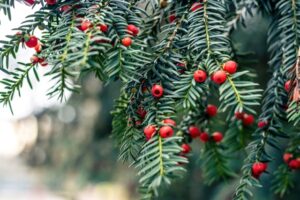
The genetic diversity and medicinal value of itamos, a rare tree of the Greek mountains with significant potential for the development of anti-cancer drugs, are highlighted in a new study by the AUTH.
In the framework of research conducted by the Laboratory of Forest Genetics of the Department of Forestry and Natural Environment, under the coordination of Professor Philip Aravanopoulos, significant populations of the European Itham (Taxus baccata) were identified in Greece, which are valuable natural sources of substances used in widespread anti-cancer drugs. Three regional populations in Northern Greece, in the Cholomontas, Olympos, and Vourinos mountains, were examined to evaluate the genetic and chemical diversity, as well as the epigenetic characteristics of the species.
According to the researchers, taxanes – natural compounds produced by itamos – are key components of drugs such as paclitaxel (Taxol), which is used in the treatment of various forms of cancer.
The results of the study, which is the first comprehensive evaluation of Greek itamos populations, showed significant differences between populations in the amount of anti-cancer taxanes they produce, as well as remarkable seasonal variations in their concentrations. In particular, 10-deacetylbacatin III, a precursor compound for the semi-synthetic production of paclitaxel, was detected at high concentrations in the needles of the trees, with the Olympus population showing the highest levels.
At the same time, significant genetic diversity and clear differentiation between populations were found, which, according to the researchers, highlights the importance of Greek populations as valuable reservoirs of genetic material. Of particular interest are the findings on DNA methylation, a mechanism associated with the adaptation of organisms to environmental conditions, and suggesting the potential of these trees under conditions of strong climate change.
The findings of the study highlight the potential for developing genetic improvement programs to select and propagate trees with increased tax production without compromising genetic diversity. It also highlights the need to protect the existing populations of itamos in Greece, which are rare and often fragmented. Among the measures proposed are the strengthening of the protection regime, systematic monitoring, and the development of conservation actions both within and outside the natural environment.
The study was implemented with national funding (ESPA), in collaboration with ELGO-Dimitra and the Italian research foundation Fondazione Edmund Mach, and its results were published in the prestigious scientific journal PLOS One.
Ask me anything
Explore related questions




