





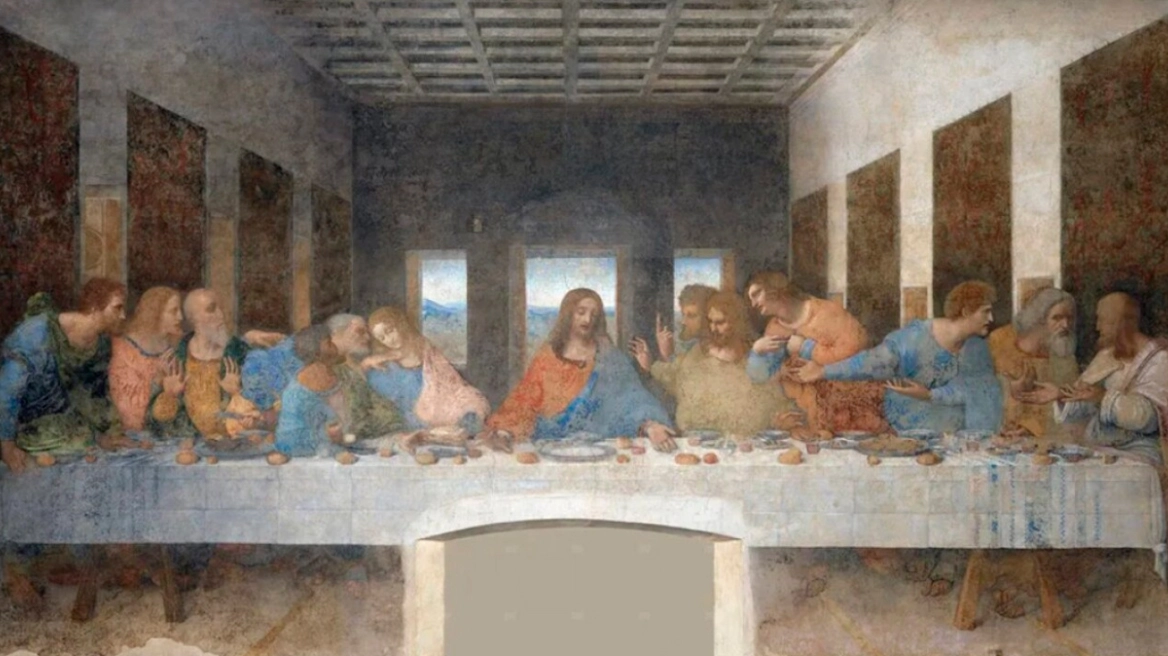
The Passion of Christ inspired many great artists, who depicted scenes from Jesus’ journey to the Crucifixion and the Resurrection. However, a unique place among these works is held by Leonardo da Vinci’s masterpiece The Last Supper, as never before in art history have the human emotions of 13 different figures been captured with such clarity and realism.
The Last Supper by Leonardo da Vinci is one of the most visited artworks in the world.
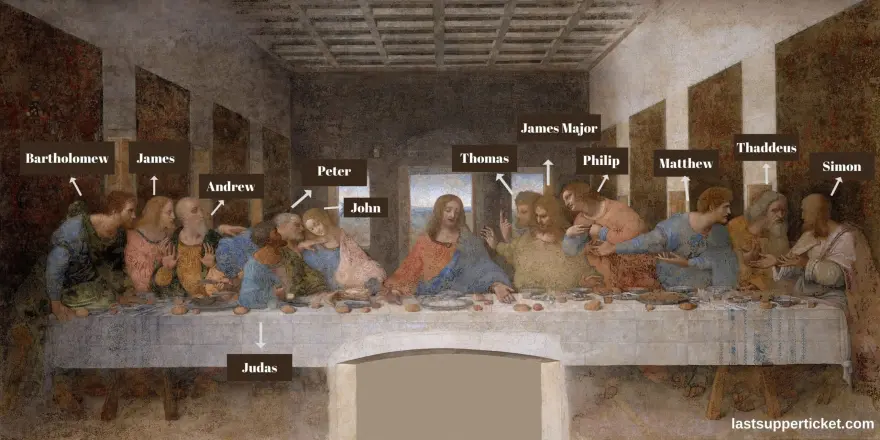
Da Vinci began painting the 880 × 460 cm Last Supper on the large wall of the refectory of the monastery of Santa Maria delle Grazie in Milan, commissioned by Duke Ludovico Sforza. It took him seven years to complete it (1498). His ambitious artistic goal was to capture as faithfully as possible the reactions of the twelve Apostles at the moment when Jesus announces that one of them will betray him.
He used human models to find the appropriate faces. It is said that he examined many young men before selecting a 19-year-old whom he considered ideal for representing Jesus, while for Judas he used a prisoner and criminal as a model.
This meticulous selection of faces, combined with the innovative technique he employed—unlike the traditional fresco method, which did not allow for changes—resulted in a truly astonishing work, securing The Last Supper a place among the greatest artworks of all time.
The detail and emotional intensity in each of the 13 figures give the final composition an incredible realism, as if the scene is unfolding live before the viewer’s eyes.
The face of Jesus, which Da Vinci worked on for six months, is calm and serene, in contrast to the expressions, body language, and gestures of most of the Apostles, which clearly convey shock and anger after the announcement of the betrayal. Judas, seated third to Jesus’ right, is depicted lower than the others—dark and troubled—holding the purse with the thirty pieces of silver.
This was the last figure the great artist painted. He spent countless hours on the high scaffolding set up before the wall, masterfully bringing his grand artistic vision to life. Accounts from witnesses describe a painter completely devoted to his work—sometimes remaining awake and fasting for days so as not to lose inspiration, while at other times leaving after just a few minutes when he felt he lacked the necessary creative drive.
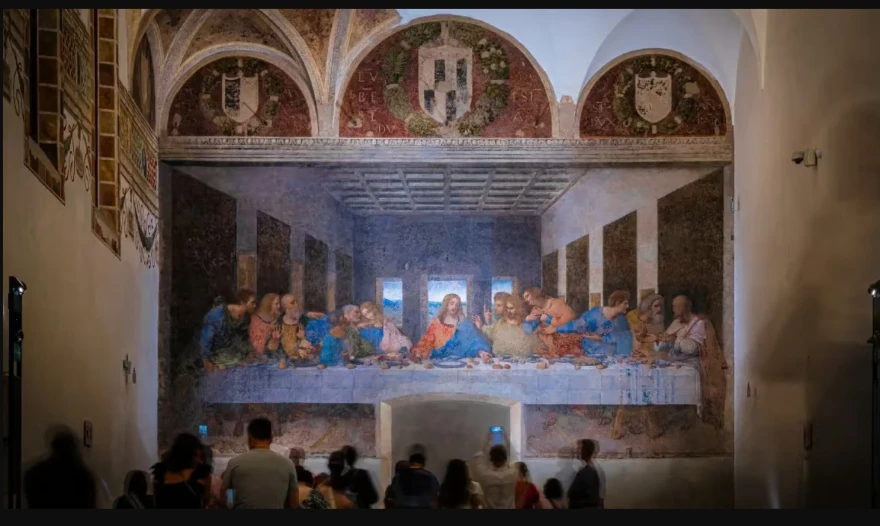
Thus, through immense effort, physical and emotional strain, determination, and unparalleled talent, this great master of painting endowed the history of world art with the most vivid and timeless depiction of one of the most powerful scenes of the Bible—one that has remained unsurpassed from the 15th century to this day.
Ask me anything
Explore related questions




