





Shortly before leaving Islamabad in the early hours of Sunday morning, United States Vice President J.D. Vance described Washington and Tehran as “different worlds”, especially in terms of guarantees that Iran will never acquire a nuclear weapon, not now, not in two years, but in the long term.
However, according to information that emerged after Vance’s 21-hour visit to Pakistan, cited by the New York Times, the US side is not seeking a permanent ban on uranium enrichment. Instead, it has proposeda 20-year “suspension”of all nuclear activity, allowing Iran to retain the right to produce nuclear fuel under the Nuclear Non-Proliferation Treaty.
In response, Tehran reiterated a proposal for a suspension of up to five years, according to two senior Iranian officials and a U.S. official. A similar proposal was tabled in February in failed negotiations in Geneva, which led Donald Trump to decide on a military strike against Iran a few days later.
Beyond the nuclear program, the talks cover other issues, such as restoring free navigation in the Strait of Hormuz and ending Iran’s support for organizations like Hamas and Hezbollah. However, the core of the dispute remains Tehran’s refusal to abandon its nuclear ambitions, dismantle its facilities or remove its stockpiles of enriched fuel from the country.
The fact that the two sides are now focusing on the length of the suspension is seen as an indication that there is room for agreement. According to Reuters, a new round of negotiations is expected to take place again in Islamabad towards the end of this week or early next week, although the White House has clarified that no meeting has yet been finalized.
Trump fears a deal similar to the 2015 deal
For Donald Trump, however, there is a risk that a new deal could resemble the 2015 agreement on Iran’s nuclear program, which he withdrew from in 2018, calling it “horrible and one-sided”. That agreement, known as the Joint Comprehensive Plan of Action (JCPOA), provided for a gradual increase in allowable uranium enrichment until 2030, when restrictions would lapse, though Iran would still be bound by the Nuclear Non-Proliferation Treaty.
According to Rob Malley, who was involved in the 2015 negotiations and then led a Joe Biden administration effort to reestablish an agreement, even a multi-year complete suspension of nuclear activity would be a more stringent framework than the JCPOA.
The history of US-Iran relations includes repeated attempts to delay Tehran’s acquisition of a nuclear weapon, either through cyberattacks that caused centrifuges to be destroyed or through sanctions and diplomatic agreements. The result is that Iran has taken longer to come close to acquiring a nuclear weapon than any other country that has pursued a similar program, such as North Korea, India, Pakistan or Israel.
J.D. Vance said there had been“some good talks”with Iran in Pakistan, noting that the continuation depended on Tehran’s flexibility. As he told Fox News, Iran has shown a willingness to compromise, but “hasn’t gone far enough.”
White House press secretaryCaroline Levitt stressed that the US “red lines” are clear and argued that pressure on Iran is increasing due to Washington’s naval blockade, affecting oil exports.
A point of friction and the 440 kilograms of enriched uranium
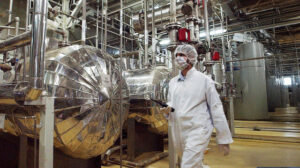
Another point of friction concerns the US demand that some 440 kilograms of highly enriched uranium be removed from Iran to ensure it is not used for military purposes. Donald Trump is even reportedly considering sending ground forces to Isfahan to secure the material, which is kept in underground facilities.
Tehran insists that the fuel should remain within the country, but proposes to dilute it so it cannot be used to make a nuclear weapon. That process would significantly lengthen the time it would take to build a nuclear warhead, though it would keep Iran in control of the material, which could in the future be re-enriched to levels close to the 90 percent needed to make a weapon.
The economic aspect is also on the table. Iran is seeking the release of about $6 billion from oil sales, which remains frozen in Qatar because of sanctions imposed during Trump’s first term.
Ask me anything
Explore related questions




