





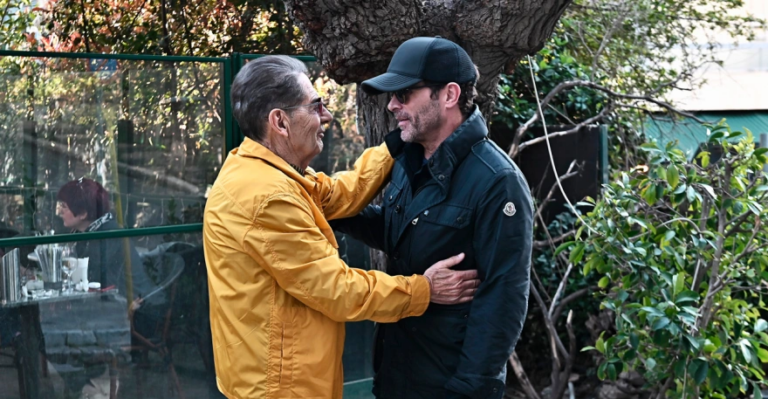
The popular Greek actor opens up about his new film, in which he portrays a coast guard captain who saved lives on Lesvos. He explains why he avoids social media, describes himself as an “atheist Orthodox Christian,” and shares his desire to move into directing—following a path similar to Clint Eastwood.
Introduction
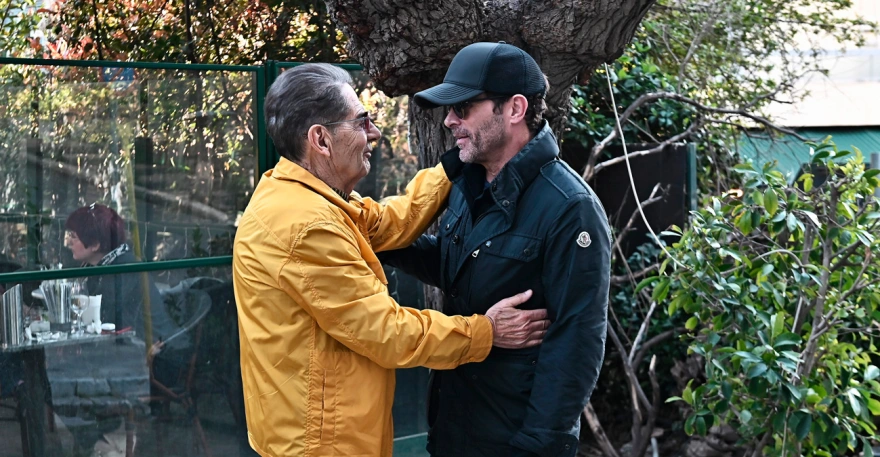
Konstantinos Markoulakis meets Dimitris Danikas on the occasion of his new film “I Was a Stranger”, set for release on April 23. The film, directed by American filmmaker Brad Anderson, tells a deeply human story inspired by the suffering of innocent victims under the Assad regime in Syria.
Three central characters drive the narrative: a doctor, a soldier, and a Greek coast guard captain. Markoulakis plays the latter—a role inspired by the late, decorated officer Kyriakos Papadopoulos, known for saving thousands of refugees at sea.
But the conversation quickly moves beyond cinema.
Markoulakis describes himself paradoxically as an “atheist Orthodox Christian,” reflects on having experienced overwhelming, all-consuming love, and remarks that the human body is “a machine of desire and pleasure.” Most strikingly, he states:
“An actor can be exceptional—and at the same time a terrible human being.”
Scene 1: The Film and the Role
Dimitris Danikas: How do you manage to do so many things at once?
Konstantinos Markoulakis: I don’t actually do many things simultaneously. Projects just overlap in timing. One finishes, another begins.
He explains that “I Was a Stranger” was filmed in 2022, while his theater work and other projects followed separately.
The role itself came through an audition—interestingly, after John Malkovich had already been considered for the same part.
Markoulakis:
“The director, Brad Anderson, is not just a filmmaker but also an activist. He’s been deeply involved with the refugee crisis and has spent time in Syria and the Middle East.”
The film, he says, is political—but not in a simplistic way.
Markoulakis:
“It doesn’t push a specific agenda. It stands on the side of humanity.”
Scene 2: The Human Story Behind the Crisis
Rather than offering solutions, the film focuses on empathy.
Markoulakis:
“It reminds us that every refugee we see is a person with a real story—someone who was forced to leave their home for serious reasons.”
He plays a character inspired by Kyriakos Papadopoulos, a coast guard officer who saved thousands of lives.
Markoulakis:
“What fascinated me was that he wasn’t a ‘hero’ in the Hollywood sense. He acted with calm, with awareness of the human condition. That’s what I tried to portray—the anti-heroic hero.”
Scene 3: Filming and Challenges
The film was shot in Turkey with a relatively modest budget of €5 million.
Despite this, production was intense and highly detailed. Many extras were real refugees, and before filming each day, one would share their personal story with the cast and crew.
One particularly demanding scene required Markoulakis to dive underwater without oxygen.
Markoulakis:
“I told the director, ‘Let me do it.’ They added weights, and I stayed submerged for the entire shot. It was challenging—but I loved it.”
Scene 4: Greek Actors and Craft
Markoulakis emphasizes that Greek actors are highly skilled and adaptable.
Markoulakis:
“We understand the language of cinema. We’re not just performers—we’re involved in the technical side too. That’s something not all actors do.”
Scene 5: Cinema, Theater, and Ambitions
Despite a long career, he feels he has done relatively few films and hopes to do more.
He also expresses a growing desire to direct:
Markoulakis:
“Sometimes I think about Clint Eastwood. He started directing later in life—and created incredible work. Maybe I’ll do the same.”
Scene 6: A Complex World
Discussing modern life, he highlights its overwhelming complexity.
Markoulakis:
“The world isn’t just chaotic—it’s too complex for us to fully process. That’s why people turn to simple explanations or conspiracy theories.”
Scene 7: Faith and Silence
On religion:
Markoulakis:
“I’m an atheist Orthodox Christian. I don’t believe literally, but I’m deeply moved by the symbolism and meaning—especially during Easter.”
He also explains his decision to step back from news and social media:
Markoulakis:
“I’ve reduced the noise in my life. I don’t need to know everything or have an opinion about everything. What I need is silence.”
Scene 8: Love and Human Nature
On love:
Markoulakis:
“If you’re not in love to the point of devastation, what’s the point? But real relationships come after that intensity—when you truly understand the other person.”
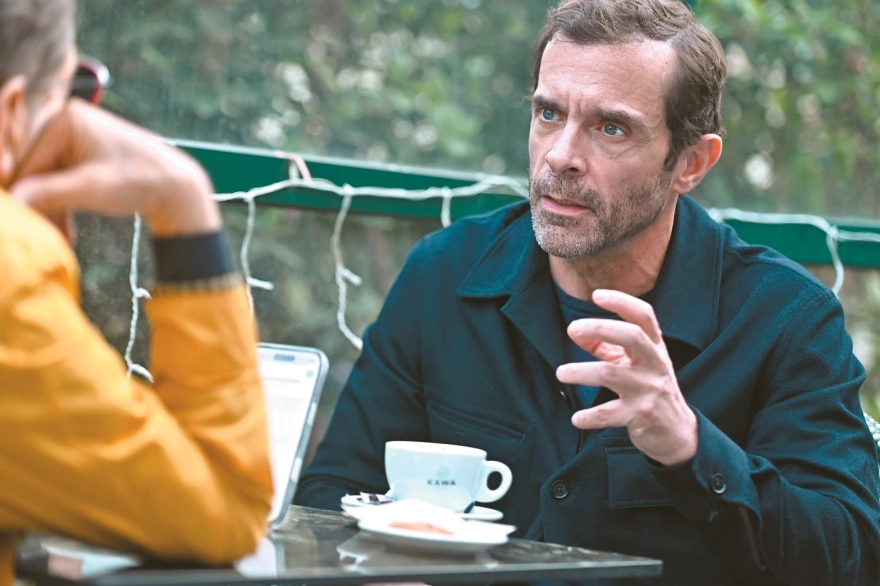
He reflects on desire:
Markoulakis:
“The body is a machine of desire and pleasure. But maturity is learning not to follow every impulse.”
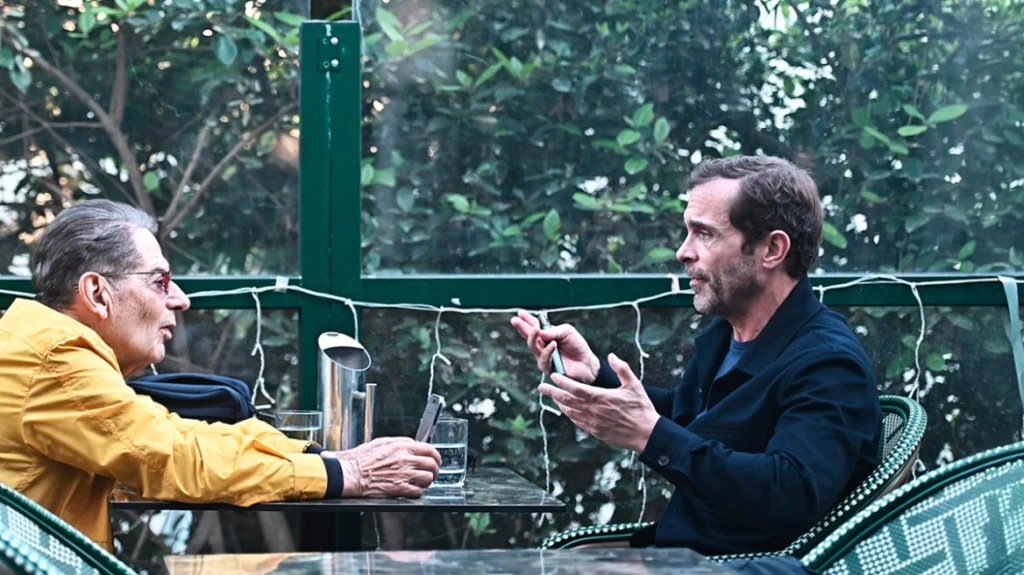
Epilogue: Contradictions
Asked about misconduct in the industry, he says he has never witnessed extreme cases—but acknowledges conflict and complexity.
He concludes with a thought that encapsulates both the artist and the human condition:
“An actor can be brilliant—and at the same time a terrible human being.”
Ask me anything
Explore related questions




