






The 38-year-old Whitney Robinson was considering becoming a mother when she was diagnosed with post-traumatic stress disorder, triggered by witnessing a violent gun-related incident in Kansas City.
The thought that her child would have to be trained at school for the possibility of an armed attack deeply unsettled her. In her home country, such preparation is a necessity — something she could neither ignore nor accept.
That realization ultimately tipped the balance. Together with her husband, she decided to relocate to Greece.
Whitney went viral just days ago, when a video she posted on social media about Greece’s public healthcare system (ESY) was reshared by Health Minister Adonis Georgiadis, as well as by protothema.gr. Her surprise at the attention was captured in a follow-up video on TikTok.
However, Robinson did not simply praise the National Health System. Her personal experience became the starting point for a new professional path: medical tourism. From Pylaia in Thessaloniki, where she has now been living permanently with her family for nearly five years, she helps fellow Americans travel to Greece and connects them with doctors across various specialties for a wide range of medical procedures.
She particularly highlights specialists in assisted reproduction, noting that “some of the best doctors in the world are in Greece.” At the same time, through the platform she created, Whitney – The Local Edit, she supports English-speaking individuals relocating — either temporarily or permanently — to Greece, offering guidance on everything from healthcare to daily life.
A life-changing decision
Robinson’s connection to Greece dates back nearly two decades. She was just 10 years old when her mother married a Greek man from Agios Ioannis in Serres. By 14, she was visiting Greece for the first time — and was immediately captivated by both the country and its people.
“We have a big family in Serres,” she says today, speaking near-fluent Greek. Over the years, she became deeply integrated into her extended Greek family, cherishing summers filled with relatives, food, language, and traditions.
At 18, she chose to study in Greece, enrolling at the American College of Thessaloniki. “I had almost decided I wouldn’t return to the U.S.,” she says. But when she graduated in 2010, Greece was in the depths of economic crisis. With unemployment rising sharply, her plans shifted, and the “Greek dream” seemed to fade.
That changed years later.

In her early 30s, she witnessed a violent crime involving firearms — an experience that left a lasting psychological impact. “I kept reliving it again and again, until I was diagnosed with PTSD,” she recalls.
As she thought about starting a family, fear took over: the idea that her child might grow up in a similar environment, or even be trained at school to respond to gun violence, became unbearable.
For her, the solution had a name — Greece.
A new life in Thessaloniki
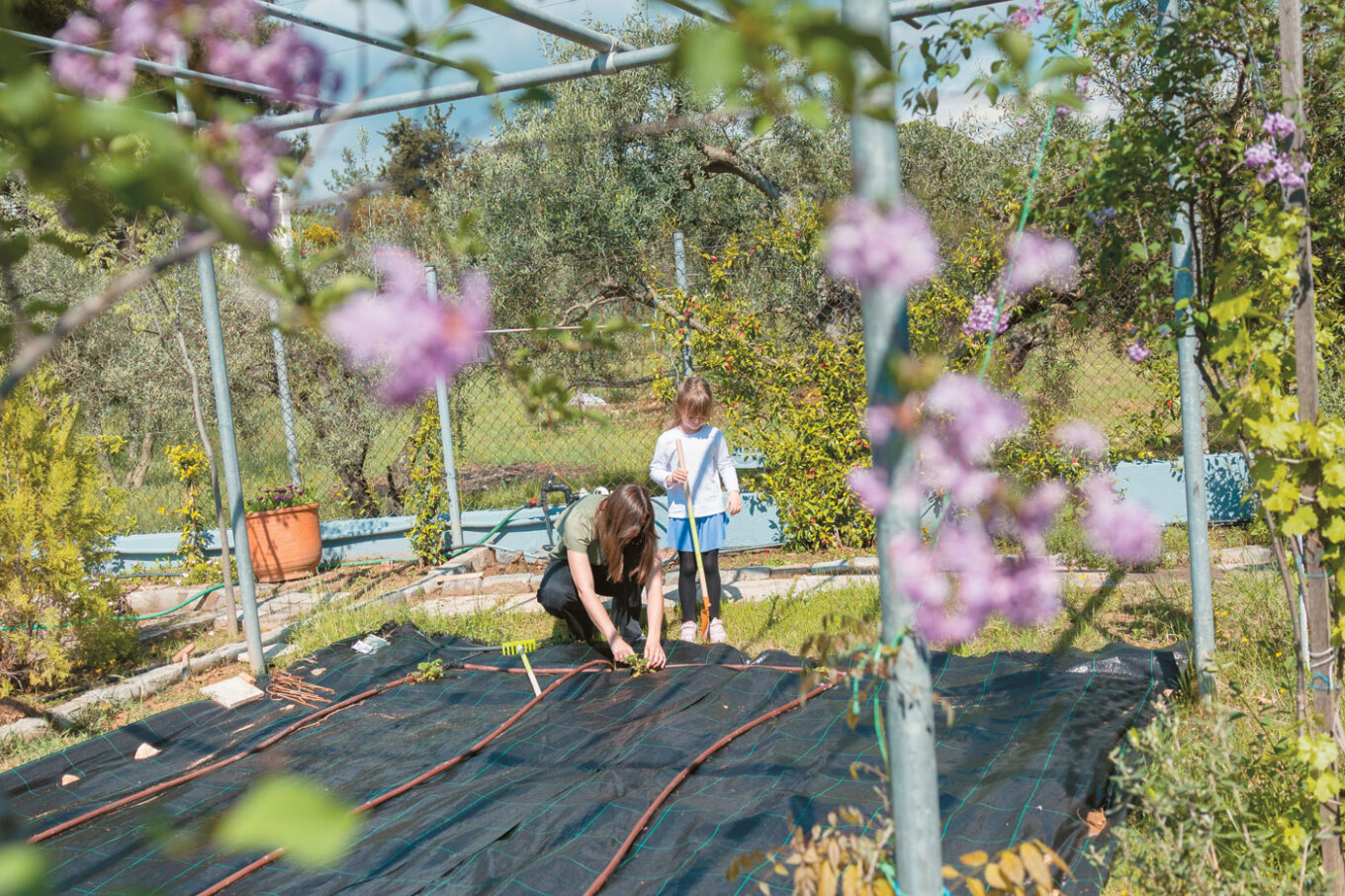
She and her husband relocated permanently to Thessaloniki when their daughter was just 10 months old. Today, their child — now 5.5 years old — attends kindergarten, surrounded by friends, cousins, and a sense of safety.
“She learned to walk here, she was baptized here — this is her home,” Robinson says. “I wanted her to grow up carefree, and here she has that chance.”
Robinson herself moved to Greece through the Golden Visa program, while her husband works remotely as a digital nomad, handling European projects for his company.
Άλλο ένα βίντεο από μία Αμερικανίδα που συγκρίνει το σύστημα Υγείας των ΗΠΑ με το ΕΣΥ και γκρεμίζει όλους τους μύθους και την άδικη εικόνα που έχουμε για αυτό. Δείτε το και βγάλτε τα συμπεράσματα σας: pic.twitter.com/ZN21UhkSZo
— Άδωνις Γεωργιάδης (@AdonisGeorgiadi) April 16, 2026
Discovering Greece’s healthcare system
Her interaction with Greece’s healthcare system came early — and it left a strong impression.
In her now-viral video, Robinson compares the Greek system with that of the United States, challenging what she describes as a widespread — almost “brainwashed” — belief that American healthcare is superior.
“When we were planning to move, people kept asking: ‘What will you do if you need a doctor?’” she says.
The reality, she found, was surprisingly simple. “I needed a general practitioner. I booked an appointment through an app, and within 30 minutes I was at the doctor’s office. In the U.S., that would have been almost impossible.”
She also highlights the continuous, direct communication she has with her daughter’s pediatrician, receiving immediate guidance whenever needed.
Turning experience into opportunity
The idea of entering medical tourism came almost by chance — when she encouraged her mother to undergo blepharoplasty (eyelid surgery) in Greece.
The experience revealed two key insights: the high level of expertise among Greek doctors and the significantly lower cost compared to the United States.
“In the U.S., it would have cost $10,000 to $12,000,” she says. “In Greece, the entire procedure — including travel — was far more affordable, and the results were excellent.”
Her mother paid €450 to the clinic and €1,900 to the doctor. “Everything was perfect,” she says. “She left thrilled.”
That experience led Robinson to build a network, connecting patients with carefully vetted doctors and clinics. “I make recommendations, but the patient decides. I’m not paid by doctors or clinics,” she clarifies.
Changing perceptions
Beyond healthcare, Robinson is also challenging stereotypes about Greece.
“People are often surprised by how modern everything is here,” she says. “They imagine something outdated — maybe based on old films or kitschy restaurants abroad — but what they find is contemporary homes, well-equipped clinics, and a very high standard of living.”
Her message to fellow Americans is simple:
“Would you consider Greece for medical care?”
For Robinson, the answer is already clear.
Ask me anything
Explore related questions




