





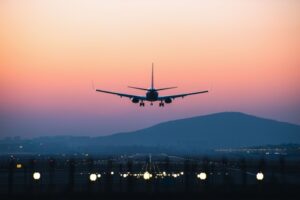
The possibility of the world “running out” of jet fuel due to the crisis in the Strait of Hormuz once seemed unthinkable. However, prolonged US-Iran tensions and instability in the global energy market have sparked an unprecedented debate about the future of air travel, ticket prices, and aviation’s dependence on fossil fuels.
The central question now dominating markets and the aviation industry is not whether jet fuel will literally run out, but how expensive and difficult it may become to obtain if the crisis in the Persian Gulf continues.
The Strait of Hormuz is one of the world’s most critical energy corridors, with around 41% of Europe’s aviation fuel passing through it. According to data from analytics firm Kpler, global shipments of jet fuel and kerosene fell last week to below 2.3 million tonnes—the lowest level ever recorded.
Experts reassure markets
Despite growing concerns, experts say the global market is not yet close to actual shortages. Professor Richard Green of Imperial College London told The Guardian that global oil consumption is around 100 million barrels per day and that even in a severe disruption of the Strait of Hormuz, the resulting supply loss would likely be between 5% and 10%.
He noted that some volumes could be redirected through pipelines or alternative sea routes, while countries such as the United Arab Emirates and Saudi Arabia have access to other export routes via the Indian Ocean and the Red Sea.
Rising prices and flight disruptions
The most immediate issue, however, appears to be cost. Professor Raphael Palacios, head of aeronautics at Imperial College London, says aviation fuel prices have doubled in roughly two months.
“Jet fuel now costs almost as much as the petrol drivers were paying last year,” he said.
The impact is already visible in the aviation sector. Lufthansa announced on April 22 that it was cutting 20,000 flights, while Spirit Airlines has entered bankruptcy proceedings. Virgin has warned it can no longer absorb rising fuel costs and will raise ticket prices, while IAG, the parent company of British Airways, has also announced “price adjustments.”
EasyJet has sought to reassure passengers with a “book with confidence” policy, saying it will not increase prices on already purchased tickets. The airline has hedged around 70% of its fuel needs until September through financial contracts.
Travelers changing behavior
Uncertainty is already influencing consumer behavior. According to a Globetrender survey, nearly half of travel industry professionals expect sharp week-to-week price fluctuations.
Many travelers are delaying bookings in hopes of market stabilization, while demand is shifting toward closer and perceived “safer” destinations.
Experts expect initial route reductions to affect smaller regional airports and less profitable connections first, while major international routes will be maintained for longer.
Crisis accelerating the “post-oil” transition
Beyond the immediate disruption, the situation is reviving discussions about the future of aviation and the transition away from fossil fuels.
Professor Palacios argues that the technology for fossil-free flight already exists, but costs remain prohibitive.
One option is synthetic fuels, produced by capturing carbon and hydrogen through reverse chemical processes. However, these require vast amounts of electricity and can cost up to ten times more than conventional kerosene.
Another option is hydrogen fuel. While already tested by companies such as Rolls-Royce, it requires entirely new infrastructure, including cryogenic storage and redesigned refueling systems.
Meanwhile, aircraft manufacturers are developing more fuel-efficient planes, including experimental designs with large folding wings to improve aerodynamics.
“The oil era will end before oil runs out”
Despite technological progress, experts say the transition will take decades. Palacios suggests a 50-year timeline for full transformation, noting that major crises often accelerate historical change.
There is also growing concern that air travel could become increasingly unaffordable, turning into a luxury reserved for wealthier passengers.
Professor Green adds that high oil prices disproportionately affect poorer countries, impacting not only transport but also agriculture and fertilizer supply.
As OPEC’s former Secretary-General Sheikh Ahmed Zaki Yamani once said:
“The Stone Age did not end because we ran out of stones, and the oil age will end long before we run out of oil.”
Ask me anything
Explore related questions




