





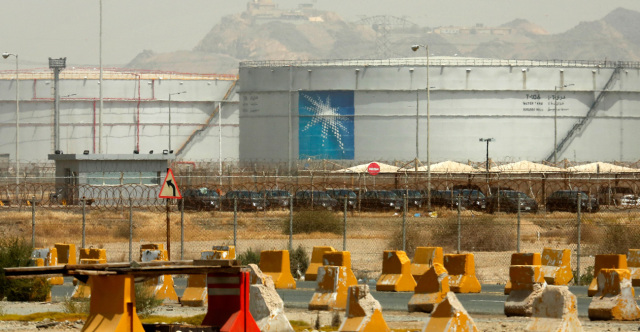
Saudi Aramco issued a serious warning about long-term disruption in global oil markets due to the crisis in the Strait of Hormuz, as the war in the Middle East enters its third month and negotiations between the United States and Iran remain deadlocked.
Aramco CEO Amin Nasser stated that even if shipping traffic through the Strait resumes immediately, the global oil market would still need months to return to balance.
“If commercial flows restart immediately or today through the Strait of Hormuz, it will take several months for the oil market to rebalance,” he said.
At the same time, he warned that if restrictions on maritime transport continue for more than a few weeks, supply disruptions will persist and the market will not return to normal conditions before 2027.
Oil market on alert
The crisis in the Strait of Hormuz has caused major turbulence in international markets, as naval pressure from both Iran and the United States has nearly paralyzed ship traffic through the critical maritime passage.
The Strait is one of the world’s most important energy arteries, as a significant share of global oil exports passes through it.
Brent crude traded near $106 per barrel on Monday, rising as much as 4.6% before easing slightly below $104.
The latest surge came after Donald Trump rejected Iran’s response to a U.S. proposal aimed at ending the conflict. On Tehran’s side, a spokesperson for Iran’s Foreign Ministry described the country’s proposal as “reasonable and generous,” confirming that the two sides remain far from an agreement.
Aramco increased profits
Despite the turmoil, Saudi Aramco announced a significant increase in first-quarter profits, benefiting from higher oil prices and from its ability to redirect part of its exports through a pipeline bypassing Hormuz.
The company reported a 26% increase in adjusted net profit, reaching 126 billion riyals — approximately $33.6 billion — exceeding analysts’ forecasts.
At the same time, it maintained its shareholder dividend unchanged, a particularly important factor for the Saudi economy.
Aramco also noted higher sales of crude oil, refined fuels and chemical products compared with last year.
Morgan Stanley: “Race against time” for the oil market
Morgan Stanley also warned of a “race against time” for the global oil market in the event of a prolonged closure of the Strait of Hormuz.
The bank’s analysts estimate that so far the market has held up thanks to strategic reserves, increased U.S. exports and reduced Chinese imports.
However, they warned that if the closure extends through late June or July, prices could surge significantly higher.
Under Morgan Stanley’s base-case scenario, Brent is expected to average around $110 per barrel this quarter, decline to $100 next quarter and fall to $90 by the end of the year.
In the more extreme scenario, involving a longer-lasting crisis, prices could climb as high as $130–150 per barrel.
Analysts noted that the increase of 3.8 million barrels per day in U.S. exports and the reduction of 5.5 million barrels per day in Chinese imports have so far absorbed much of the pressure on the market.
Ask me anything
Explore related questions




