





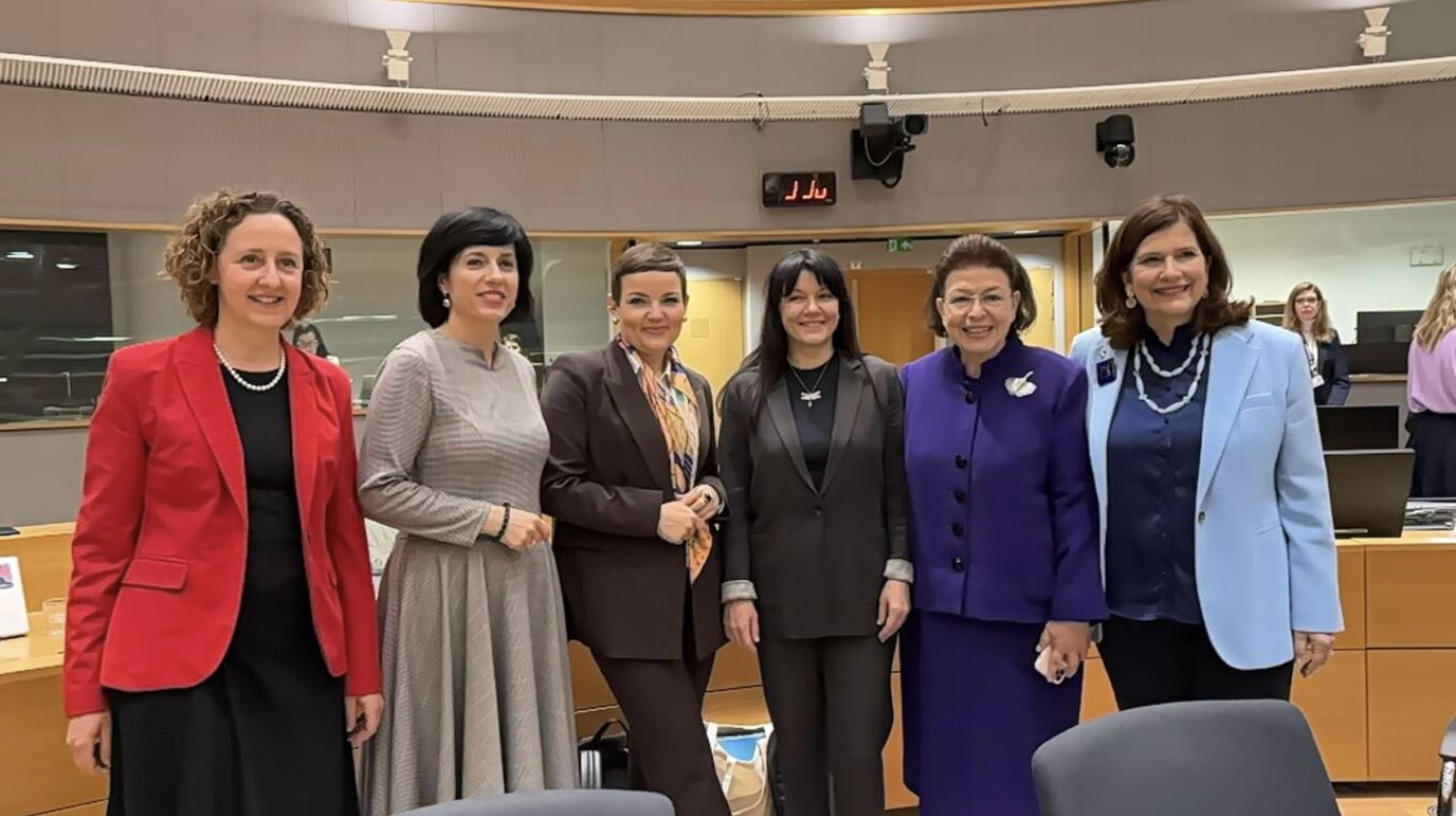
The presentation by the Minister of Culture, Lina Mendoni, during the meeting of the Council of Education, Youth, Culture and Sport Ministers of the European Union in Brussels, held under the Cypriot Presidency of the Council of the EU, focused on the geopolitical dimension of culture, the digital transition, and the need to safeguard creators in the face of the rapid development of Artificial Intelligence.
The Minister of Culture first addressed the regulation of the “AgoraEU” programme, which aims to strengthen cross-border cooperation, protect linguistic diversity, and support fundamental rights. The programme places particular emphasis on the audiovisual sector and the support of independent productions, recognizing their role in cultural pluralism.
“AgoraEU is not merely a financial tool. It is a substantial political investment in the European idea itself. Strengthening cross-border cultural cooperation, supporting creators, and protecting cultural and linguistic diversity are cornerstones for a Europe without discrimination,” she stated. At the same time, she stressed that the new programme requires a specific and ambitious budget, as well as the creation of Offices in every member state, which would function as contact and support points for artists, creators, and cultural organizations, facilitating their access to European funding tools.
She also made special reference to the importance of supporting the European audiovisual sector against increasing global competition, under terms that safeguard Europe’s cultural identity, strengthen independent productions and co-productions, and highlight new talent. The Minister further noted that Greece, both as a member state and as the future holder of the EU Presidency in the second half of 2027, will actively contribute to ensuring that the “AgoraEU” programme remains accessible and effective.
Referring to the 2027–2030 Work Programme for Culture, the Minister stressed that the discussion is taking place at a time when Europe is being called upon to redefine culture as a critical factor for citizens’ resilience and defence. Lina Mendoni stated:
“The new Programme must focus on strengthening cultural resilience against natural disasters and armed conflicts, as well as ensuring the sustainability of the sector. It must create a coherent and flexible European framework capable of protecting cultural heritage, strengthening creative production, and promoting cultural diversity.”
The Minister noted that Europe needs a cultural policy that guarantees human dignity and cultural pluralism remain at the core of the European project, emphasizing that culture cannot be treated as a secondary area of public policy, but rather as a critical factor of democratic cohesion and Europe’s global presence.
In this context, Greece proposed four strategic pillars for the new EU Work Programme for Culture: strengthening Europe’s cultural resilience, promoting a sustainable and human-centred digital transition, enhancing participation in culture, and highlighting the geopolitical dimension of culture in the Union’s international relations.
Lina Mendoni also stressed that protecting cultural heritage from natural disasters, environmental threats, armed conflicts, and the illegal trafficking of cultural goods is now becoming a European priority. At the same time, she highlighted the need to establish common European principles for transparency, fair compensation, and the ethical use of cultural content by Artificial Intelligence systems, as well as the need to strengthen mobility, training, and social protection for cultural professionals.
During the discussion on Artificial Intelligence and the need to assess the legal framework for copyright, Lina Mendoni referred to the recent resolution of the European Parliament highlighting the inadequacy of existing regulations. She stressed that creativity and the sustainability of the cultural ecosystem cannot be left to fragmented interventions.
“A more ambitious European approach is required, one that restores the balance between technological innovation and the protection of creators’ fundamental rights,” she underlined. The Minister insisted on the need for transparency regarding the training data of AI models and on the protection of creators.
As part of the discussion, the Minister of Culture intervened in the debate on a Spanish initiative regarding the legal framework governing Artificial Intelligence, calling for an evaluation and update of the European regulatory framework in order to restore the balance between innovation, transparency, and safeguarding creators’ rights.
Finally, she addressed the issue of Russia’s return to the 61st International Art Exhibition of the Venice Biennale. She emphasized that the current circumstances, following Russia’s violent invasion of Ukraine, highlight cultural policy as an area of fundamental moral and political responsibility, stating:
“The instrumentalization of culture, especially during periods of armed conflict and violations of fundamental humanitarian principles, as is happening today in Ukraine, cannot be accepted by the European cultural community… EU institutions cannot become vehicles for legitimizing practices that contradict the principles of peace and respect for cultural diversity — precisely what Russia attempted to do.”
She also thanked the 21 Ministers of Culture who co-signed the joint declaration against Russia’s representation at the Biennale.
Ask me anything
Explore related questions




