





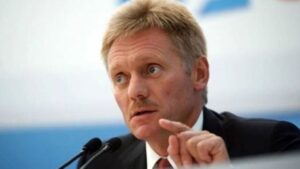
Russia is open to dialogue with Europeans on the war in Ukraine, Kremlin spokesman Dmitry Peskov said today.
“The Russians are ready for talks,” Peskov stated. “We believe it is always better to talk than to drive the situation into total confrontation—which is what the Europeans are currently doing.”
He added that Russia would welcome a change in attitude. Referring to recent statements from Finnish President Alexander Stubb and comments from Berlin regarding the possibility of direct talks with Moscow, the Kremlin spokesman said it was “probably not a bad thing” to consider appointing a negotiator at the European Union level.
“Just a few months ago, such discussions were not even taking place in Europe,” Peskov noted.
Russian President Vladimir Putin has consistently said he is ready for talks, provided there is sufficient willingness from the other side. At the same time, Moscow has repeatedly argued that European countries should be considered parties to the conflict, as they are supporting Ukraine with weapons and therefore should not be part of any negotiating table.
Search for a suitable mediator
Negotiations aimed at ending the Russian invasion of Ukraine have recently been conducted with US mediation, but without significant progress.
The main obstacle, according to Moscow, is its demand for the withdrawal of all Ukrainian forces from the Donbas region. Ukrainian President Volodymyr Zelensky has firmly rejected any territorial concessions.
Asked recently by a Russian journalist which European figure he would prefer as a mediator, Putin mentioned former German Chancellor Gerhard Schröder, with whom he maintains friendly relations. Ukraine has rejected the idea of Schröder serving as a mediator, citing his close ties to the Russian leadership.
A Kremlin spokesman clarified today that Putin did not formally propose Schröder, but merely mentioned his name in response to a specific question.
Putin has also ruled out the possibility that someone who has made critical remarks about Russia could serve as a mediator.
It remains unclear which EU official could take on such a role. An obvious candidate would be EU foreign policy chief Kaja Kallas, but Moscow has accused her of hostility toward Russia and of refusing to engage in dialogue.
Ask me anything
Explore related questions




