





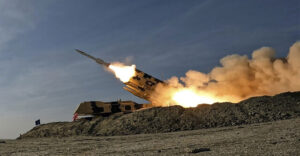
The Iran appears to be in a position to launch many more long-range missiles against Israel and other Middle East, as it has moved rapidly to restore its underground missile facilities, which were hit by US and Israeli attacks.
In particular, it has now reportedly restored 50 of the 69 tunnel entrances that were damaged at 18 different underground missile facilities.
According to an analysis of satellite imagery cited by CNN, Tehran has managed to deal with the extensive damage caused by the airstrikes using simple equipment such as bulldozers, loaders and dump trucks. These developments, experts say, highlight the limits of the US strategy, which is based mainly on destroying the entrances to underground facilities.
For weeks, the United States and Israel have sought to restrict Iran’s access to its underground missile bases by destroying roads and burying tunnel entrances under tons of rubble.
Iran has restored access to most of its underground missile bases in less than two months, despite a massive US-Israeli bombing campaign, according to an analysis of satellite imagery. pic.twitter.com/6EtNdYEa52
– Vegas ʷ̣ (@vegasyx) May 31, 2026
However, the new images show that the Iranian side has managed to repair much of the damage, suggesting that the country’s missile capabilities cannot be neutralized simply by blocking access to the underground facilities.
.
“Iran still has a large stockpile of missiles”
Although the US and Iran have reached a preliminary agreement to reopen maritime transport through the Strait of Hormuz, there are still significant outstanding issues and months of negotiations before arrangements are finalized.
In the event of a resumption of hostilities, experts believe Tehran still has significant missile strike capabilities.
“Iran can continue to launch missiles as long as it has launchers and crews, even if production is halted,” said Sam Ler, a researcher at the James Martin Center for Nonproliferation Studies.
🔶️ WATCH: Iran used bulldozers and evacuation trucks to reopen at least 50 entrances to 18 underground missile sites during the ceasefire, and returned missiles and launchers that US-Israeli attacks closed inside mountain shelters. pic.twitter.com/jKjRjybwbW
– Monika (@Monika_is_His) May 30, 2026
“There is nothing to prevent the launchers from arming themselves with the large stockpile of missiles that the Iranians still have,” he added.
At the Desfoul missile base, satellite images on May 12 showed that four of the five entrances to the underground complex had already been reopened, while only one remained blocked.
During the clashes, recovery crews worked under constant threat of further bombing, as the US and Israel frequently targeted even the equipment used for excavation.
Despite the difficulties, Tehran continued to launch missiles throughout the war, albeit at a significantly reduced rate. After a ceasefire was reached more than seven weeks ago, rehabilitation work accelerated markedly.
According to CNN’s analysis, Iran has now restored 50 of the 69 tunnel entrances that were damaged at 18 different underground missile sites.
Restoring roads and critical infrastructure
In addition to the tunnel entrances, Tehran has repaired other parts of the bases.
The United States and Israel had bombed access roads to prevent the movement of mobile missile launchers. Newer satellite images show that almost all of the craters have now been covered, and in some cases roads have been repaved.
“The U.S. military is highly effective in achieving tactical successes, and the temporary disabling of Iranian missile forces is a prime example,” Ler said.
“But if this success is not accompanied by clear strategic objectives and a realistic victory plan, it can turn into a strategic failure,”
he added.
The Pentagon did not comment directly on the analysis findings. A U.S. Defense Department spokesman reiterated only that “the U.S. military is the strongest in the world and has all the assets needed to operate at the time and place of the president’s choosing.”
One of the key objectives of the war
US President Donald Trump has repeatedly said that the destruction of Iran’s missile arsenal was one of the key objectives of the war.
In a March post on the Truth Social platform, he had included the “complete elimination of Iranian missile capabilities, launchers and any related infrastructure” among the five key strategic objectives of the campaign.
Iran’s network of underground missile bases, which has been under construction for more than two decades, provides significant protection for the country’s weapons systems.
Many of the facilities are located under hundreds of meters of rock, which severely limits military options for destroying them.
In the initial phase of the conflict, the U.S. and Israel focused on the entrances to the facilities and the search for mobile launchers, which significantly limited Iranian attacks.
The bombing caused severe damage, burying most entrances under huge piles of rubble and destroying road links and equipment.
Estimates of remaining reserves
Experts estimate that Iran still has about 1,000 missiles stored in its underground facilities.
In their view, this stockpile is unlikely to have been severely damaged by attacks focused on the surface.
Timur Kadiseff, a researcher at the Institute for Peace and Security Policy Research at the University of Hamburg, noted that Iran had been preparing for such an eventuality for two decades.
“They have been preparing for this kind of war for 20 years. They are very well prepared,” he said.
“Expensive weapons against bulldozers”
The images show that the reopening of the bases was accomplished by relatively simple means.
At several facilities, loaders can be seen removing rubble and trucks filling craters that had been created by bombs.
At a base near Isfahan, the US and Israel carried out dozens of strikes to block four tunnel entrances. At least 18 craters were visible at two of those entrances.
In early May, satellite images captured trucks filling the craters, while the other entrances had already been opened and roads restored.
At another base near Khomein, images from April showed at least ten construction vehicles working to restore one of the entrances.
Analysts express concern that the threat from Iran’s missile arsenal is being underestimated, particularly at a time when U.S. stockpiles of interceptor missiles are dwindling.
At the same time, they believe that attacks on Iran’s missile industries may not be enough to prevent the long-term restoration of its production capacity.
U.S. intelligence agencies already estimate that Tehran has begun restoring critical military capabilities, including drone production and replacement of launchers and missile infrastructure.
“The Iranians have exceeded all the timelines that the intelligence agencies had set for restoring their capabilities,” a U.S. official told CNN.
Kandiseff summarized the problem as follows: “It takes extremely advanced and very expensive weapons to cause this kind of damage. But the restoration, however, is done with very simple technology – with bulldozers.”
Ask me anything
Explore related questions




