





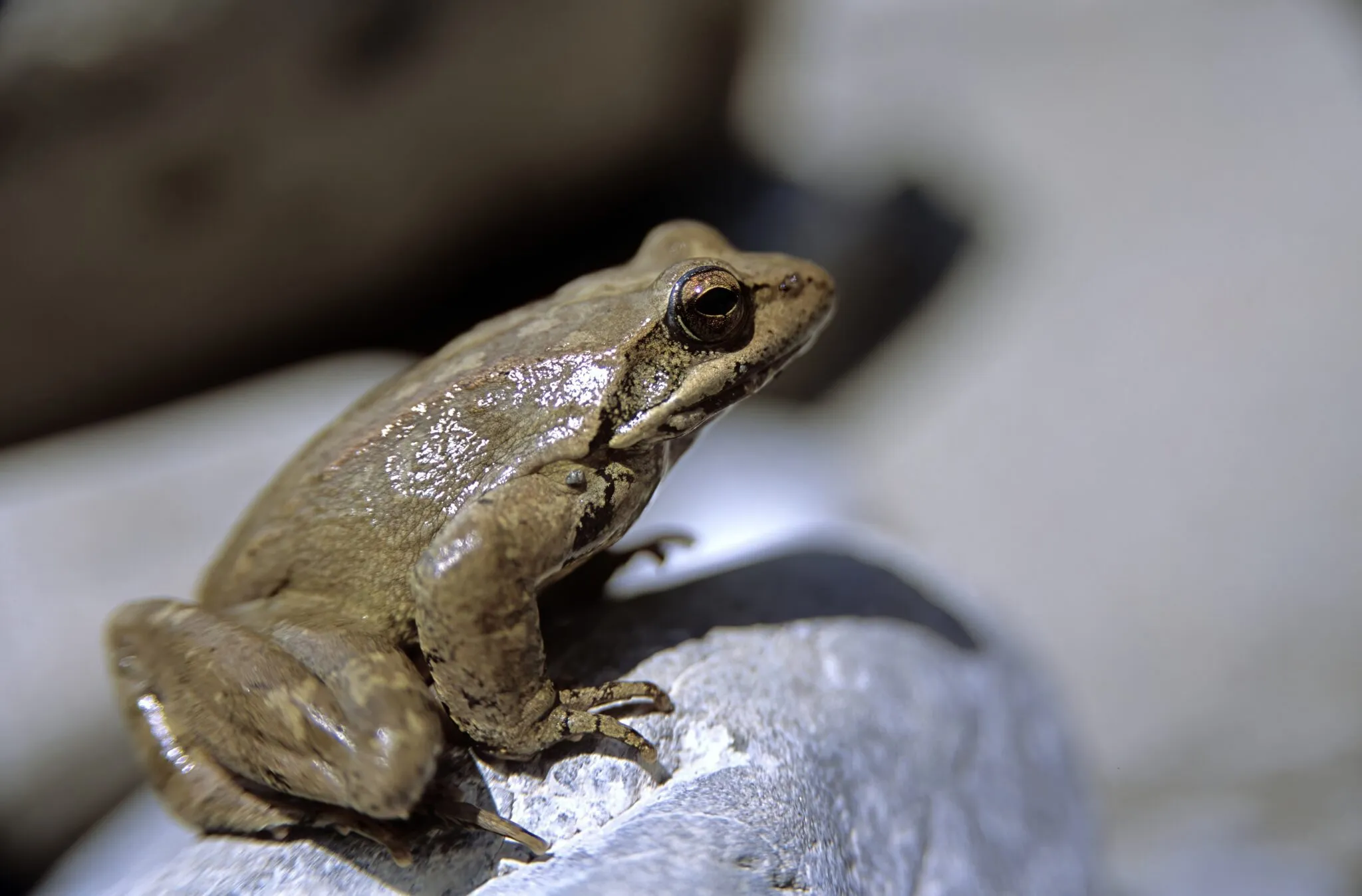
On the island of Karpathos, one of Europe’s rarest amphibians is fighting a quiet battle for survival.
The Karpathos frog, known locally as the vatraklos, is an endemic species found only in Greece. More specifically, it lives in a handful of small, fragmented wetland habitats on the island, making its survival closely tied to the fragile balance of Karpathos’ natural environment.
Older residents remember a time when the frog could be found across much of the island, although it was never particularly common. Since the 1980s, however, its presence has steadily declined. Today, small populations survive mainly in a few ravines and streams in the northern part of Karpathos.
Its limited range makes the species especially vulnerable. The loss or degradation of freshwater habitats, changes in water availability, human activity and pressure on small island ecosystems all threaten the places where the frog lives, feeds and reproduces.
For scientists and conservation groups, the Karpathos frog is more than a small amphibian with a local name. It is a biological marker of the island’s environmental health. When species that depend on clean water and stable habitats begin to disappear, the warning concerns the whole ecosystem.
The frog’s story also highlights a wider truth about island biodiversity. Small islands often host species found nowhere else in the world, but those same species can be extremely fragile. A single damaged stream, a dry season or the destruction of a breeding site can have consequences for an entire population.
Protecting the Karpathos frog therefore means protecting the island’s freshwater habitats, limiting pressure on sensitive areas and recognising that even the smallest creatures can carry major ecological significance.
For Karpathos, the vatraklos is not just a rare frog. It is part of the island’s natural identity – a quiet “island prince” whose survival depends on whether its last refuges can be preserved.
Read more: Topetmou.gr
Ask me anything
Explore related questions




