





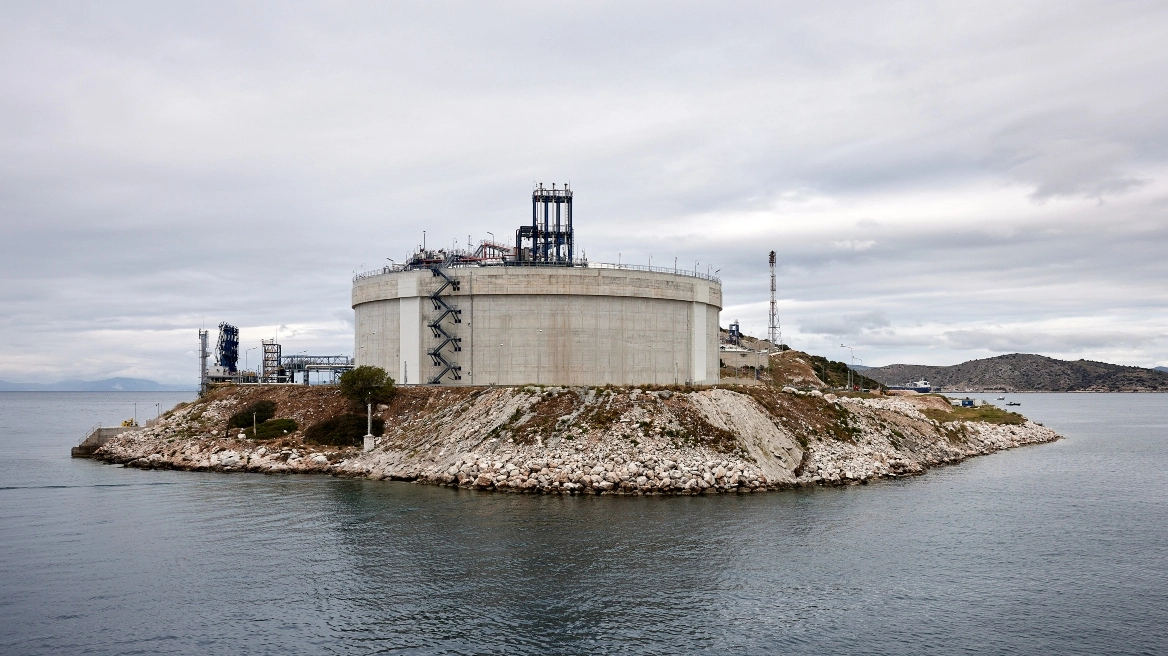
The government is moving forward with the creation of a General Secretariat for the Protection of Critical Infrastructure within the Ministry of Citizen Protection, seeking to organize a unified framework for the prevention and response to risks threatening installations and networks essential to the country’s functioning.
The new structure is expected to coordinate the relevant authorities for the protection of energy, telecommunications, transport, and healthcare infrastructure, at a time when hybrid threats are gaining increasing weight in the security strategies of European states.
The government plan is currently being developed in cooperation with key operators of critical infrastructure, relevant ministries, and national security bodies, aiming to establish a unified mechanism for prevention, monitoring, and crisis management.
The initiative is directly linked to the European obligation to implement the directive on the resilience of critical entities and is accompanied by a stricter compliance and oversight framework for operators managing strategic infrastructure.
The Baltic lesson
The discussion on protecting critical networks has intensified in recent years following a series of incidents that highlighted vulnerabilities even in the most advanced countries. A characteristic example is the Baltic Sea case, where the Estlink-2 undersea electricity interconnector between Finland and Estonia suffered severe damage when a ship reportedly dragged its anchor along the seabed.
The incident required months of repair work and highlighted how vulnerable exposed energy interconnections in open sea areas remain. It was not an isolated case.
In recent years, repeated failures and suspicious incidents have been recorded in submarine cables and pipelines in Northern Europe, while the destruction of the Nord Stream pipelines in 2022 served as a wake-up call for the entire European energy market. European authorities now consider subsea infrastructure one of the most difficult sectors to monitor and protect.
Focus on energy interconnections
For Greece, the issue is particularly important due to the ongoing expansion of submarine electricity interconnections. Projects linking islands to the mainland grid, international electricity interconnections, and natural gas facilities are considered high-strategic-value infrastructure, whose protection is directly tied to the country’s energy security.
Experts note that damage to a submarine cable—whether accidental or intentional—can cause serious disruptions in electricity supply and require a long time for full restoration. At the same time, the rapid development of maritime drones and autonomous systems creates new challenges that were not included in security planning until a few years ago.
In this context, major energy operators have already strengthened their protective measures. DESFA has upgraded its cybersecurity safeguards after the attack it suffered in 2022 and is examining additional protection measures for critical facilities, while ADMIE is developing drone-based monitoring systems and exploring rapid-response solutions for potential damage to submarine cables and other critical transmission infrastructure.
The common assessment among those involved in the planning is that protecting critical infrastructure is no longer purely a technical or operational challenge, but a fundamental national security issue. In an environment where cyberattacks, sabotage, and hybrid threats are multiplying, infrastructure resilience is becoming a key factor for overall security and the functioning of the economy.
Ask me anything
Explore related questions




