





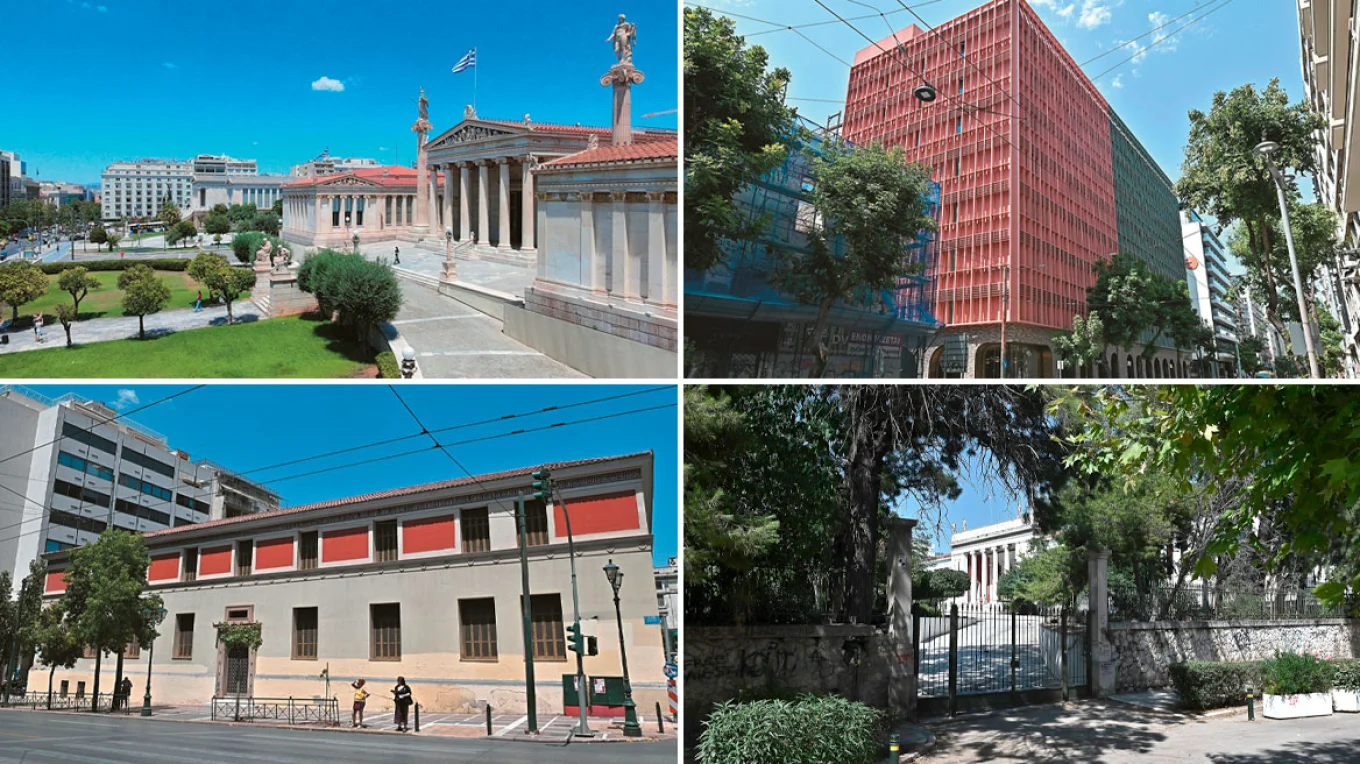
Something is changing in Athens’ traditional commercial center. After the absolute decline, devaluation, and abandonment of previous years, the first steps toward revival are becoming visible.
A new commercial, social, cultural, and entertainment ecosystem is taking shape along Stadiou and Panepistimiou Streets — two central avenues that, in the post-war period and for four decades, were the heart of the capital’s development and were full of life, but were later left to decay — toward the Omonia area and culminating at the square itself and the surrounding blocks, which suffered a similar, perhaps even worse, fate.
With new emblematic landmarks such as the new Arsakeio Arcade, which will soon open its doors to visitors, and the redevelopment of the Schliemann Mansion, with renovations and the reopening of historic properties for the same or different uses, such as the Old National Printing House, with the new “Minion” and the turning of the page for the “Notos” building at Chavteia, with the opening of new hotels, with the redevelopment of the area around the “Akademia” station on the under-construction Line 4 of the metro, as well as the redevelopment that will accompany the expansion and upgrade of the National Archaeological Museum, this vital area of the capital’s center is regaining its pulse, gradually reconstructing a new identity, and projecting optimism for the future.
It comes as a logical continuation of the successful effort to change the image of the commercial, tourism, and social footprint in the first half of these two emblematic streets, up to the boundaries of Klafthmonos Square and Panepistimiou Street, starting from Syntagma, an effort that began immediately after the bailout crisis, with spectacular growth in the city center’s real estate and tourism markets.
Bridging precisely this gap in commercial activity, foot traffic, and aesthetics between these two areas is the next challenge for Athens. It is not an easy task, nor one that can be completed in the short term. After all, their decline was also a long process. It began long before the bailout memoranda. The first sign of abandonment came during the era of arson attacks on department stores in the early 1980s.
This was followed by store closures, the desertion of once-vibrant arcades, which became shelters for homeless people and drug users, and even hideouts for criminals, the complete demographic transformation of the area, and the darkness in its streets, reaching the peak of abandonment during the eight-year bailout period, when they often became scenes of clashes, with extensive destruction and even tragic victims such as those at Marfin.
Alongside the redevelopments and among the renovated and new buildings, the inconsistencies and unresolved issues of the past remain visible. For example, the buildings of Fokas, “Athenee” — Tsitsopoulos Brothers, and the former “Apollon” Hotel on Stadiou Street, as well as “Rex,” the once-thriving “temple of entertainment” on Panepistimiou Street, together with many other properties, remain firmly closed.
What is equally evident, however, is that the signs are entirely positive. Next to the derelict and abandoned properties, new ones are being born; gradually, the balance and the overall image are changing.
Investment activity remains undiminished. New arrivals of retail chains, branded stores, and major companies are being announced. Notable and even ultra-luxury hotels are appearing in various blocks. Traditional hangouts are giving way to new ones that reflect today’s habits. The center of the capital has begun, albeit with difficulty, to breathe again.
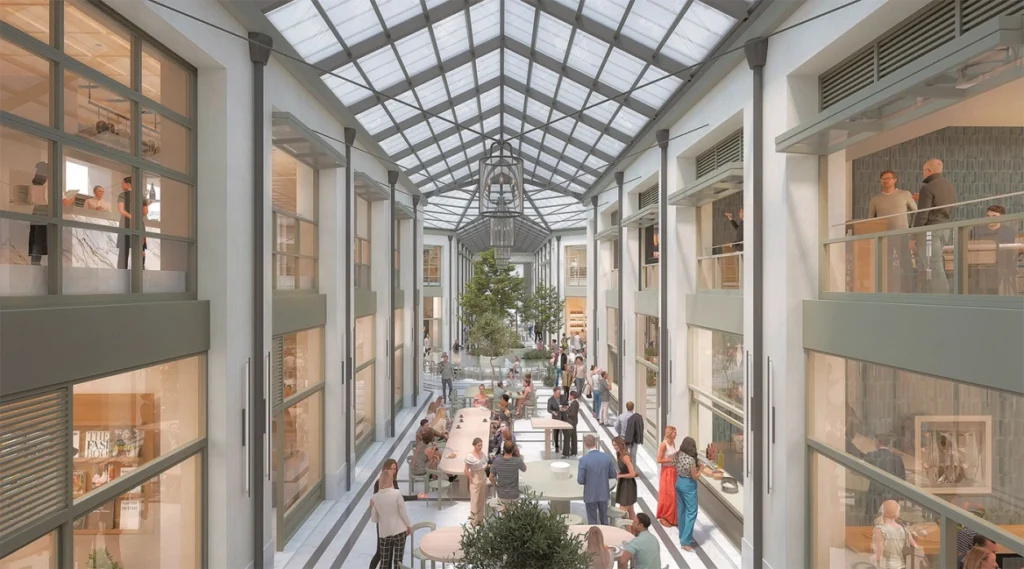
The Arsakeio Arcade becomes a food hall
The Arsakeio Arcade was one of the emblematic landmarks of the capital’s center, attracting thousands of visitors for decades. A multifaceted meeting place, with the legendary “Orfeas” cinema and the Art Theatre dominating the scene, along with numerous shops and even cafés, it is returning today after years of abandonment with a new plan.
The goal for Athens’ first food hall is ambitious: to become the second most popular tourist destination in Athens after the Acropolis. This translates into a target daily visitor count of 8,000–10,000 people.
This objective was set from the time the lease agreement for the property was signed in 2019 between the Educational Society that manages the Arsakeio Schools and the Arsakeio Mansion, and the investors — namely Legendary Foods — which undertook for 35 years the redevelopment and utilization of approximately 13,000 sq. m. out of the mansion’s total 25,000 sq. m. The investment reaches €40 million: €22 million from the company and €18 million from tenants.
Based on these figures, the stakes are indeed very high. If the challenge succeeds, the new landmark will have a positive impact on the wider area, which today is commercially weak, tourism-deficient, and socially problematic.
Legendary Foods’ goal is to give new life to the mansion while preserving its architectural character, so that it becomes a modern ecosystem combining gastronomy, culture, creativity, commerce, and education — together creating nine different experiences for visitors inside the Arsakeio Mansion.
Among them are the Free University of the Educational Society, the historic Karolos Koun Art Theatre, the European Parliament’s Europa Experience, an interactive hub for European institutions, retail stores of major brands (Nike, Lacoste, BSB, Bostonians), as well as PPC (the Public Power Corporation), a space for Greek food products, ten different gastronomic experiences, food education activities, five spaces dedicated to Greek creators, and a rich program of cultural events.
The Arsakeio Mansion has a 180-year history. It was built in 1846 according to designs by architect Lysandros Kaftanzoglou to house the first girls’ school. After its expansion, the building complex with the central arcade was constructed in 1900 according to designs by German architect Ernst Ziller, who reshaped the facades of the buildings on Stadiou Street by introducing neo-Baroque architectural elements such as domes. In 1937, the “Orfeas” cinema was built, one of the oldest and largest cinemas in Athens in terms of capacity (1,869 seats).
During the final years of its operation, it was converted into a theatre. In 1942, Karolos Koun’s pioneering Art Theatre was established in its basement. And in June 1996, the Book Arcade was completed, taking the place of the cinema.
“Ideal” Cinema – Schliemann Mansion
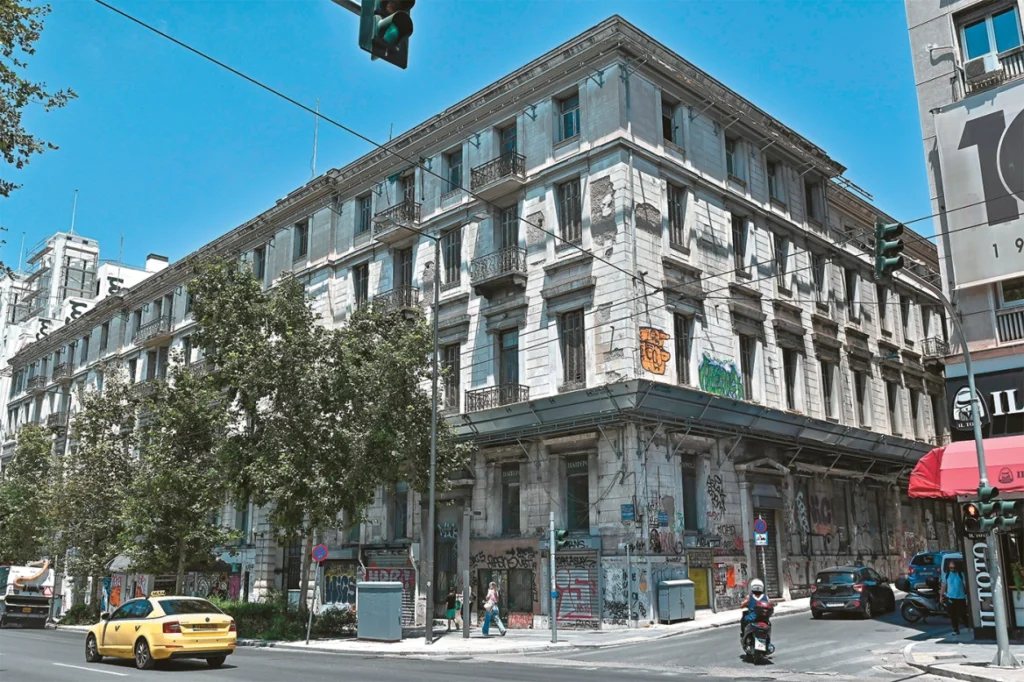
This is the large neoclassical building at the corner of 46 Panepistimiou Street and Charilaou Trikoupi Street, almost opposite the Arsakeio. It was a popular landmark for Athenians, mainly because of the “Ideal” cinema and the restaurant of the same name that it housed.
It was built during the decade of 1880–1890 and belonged to the complex of four residences of Heinrich Schliemann on Panepistimiou Street. It was designed by Ernst Ziller. During World War II, it housed the Arsakeio Educational Institution; it later operated as a hotel and was subsequently converted into office space.
The Mitsis Group acquired its management for 30+10 years following a tender conducted by EFKA (the National Social Security Fund). It has already announced the implementation of a €36 million investment program for the renovation, refurbishment, and modernization of the mansion, which includes the development of a luxury five-star hotel and the expansion of the cinema’s use into theatrical and conference activities.
The “Ideal” cinema, a long-standing gathering place for Athens’ film enthusiasts, began operating in 1921 as “Salon Ideal.” It was destroyed by fire three times (in 1933, 1947, and 1990), but each time it was repaired and reopened. The curtain fell on the “Ideal” with a screening of Quentin Tarantino’s Pulp Fiction on December 29, 2023, in a particularly emotional atmosphere.
Also, the “Ideal” restaurant of the Vlassopoulos brothers, next to the cinema, had been a landmark of the city since the 1930s, closely connected with its professional and social life. It ranked very high among Athens’ gastronomic destinations and attracted a distinguished clientele. It closed its imposing crystal entrance door in 2014.
Another emblematic venue, at the corner of Panepistimiou and Charilaou Trikoupi Streets, was the small semi-basement “Aigaion,” famous for its warm, fluffy loukoumades (Greek doughnuts). It began operating in 1926 under Georgios Fylla. It closed in 2017, but today it is returning through the family’s third-generation successor, relocating to the Arsakeio Arcade.
Justice Park
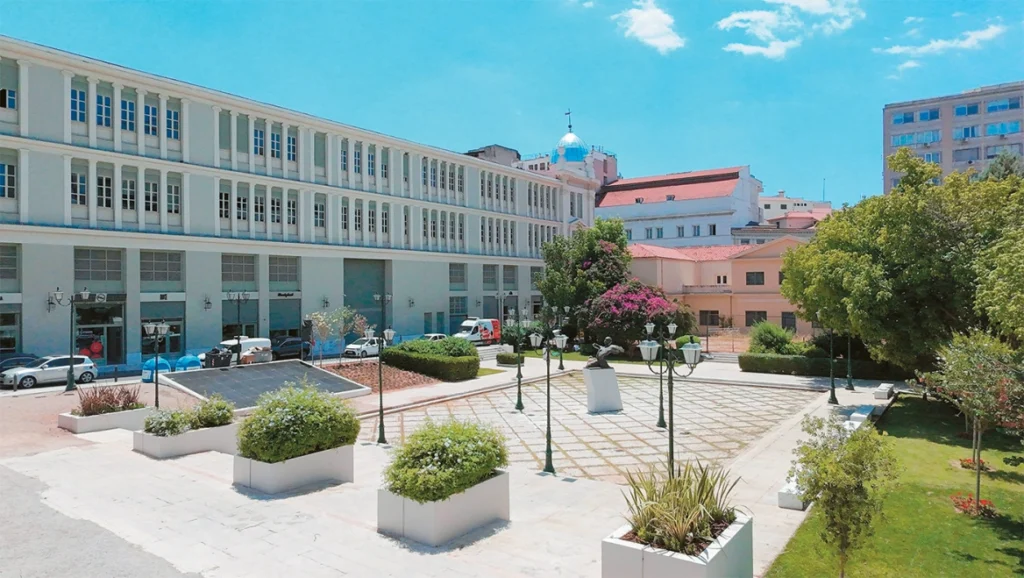
Justice Square is an open space on Panepistimiou Street, between Arsaki and Santarosa Streets. However, instead of being a 4.5-acre oasis in the center of the capital, for many years it had been left to its fate, becoming, especially after dark, a gathering place for homeless people and drug users. Now, however, an organized effort has been made to change its appearance, following restoration work, cleaning, and new plantings.
In front of the square, toward Stadiou Street, stands the building of the Old National Printing House. It is perhaps the epitome of the abandonment of a historic building, covering an area of 1,300 sq. m. Although it is among the oldest buildings of modern Athens — constructed in 1834 by Bavarian architect Joseph Hoffer to house the Royal Printing House and Lithography Office and later the Court of First Instance — for years it served as an informal shelter for people struggling with addiction and for homeless people.
Since 2020, plans have been underway to highlight the building’s value through a 25-year free concession to the Municipality of Athens, which would undertake its restoration and transformation into a venue for exhibitions and cultural and artistic events. It should be noted that it had remained closed and unused since the early 2000s, although in 2021 it hosted the 7th Athens Biennale.
However, the plan changed. Last autumn, the Municipality of Athens decided to grant the building to the Council of State. At the same time, together with the completion of the renovation of the neighboring Arsakeio building and the redevelopment of the square, a Justice Park will be created in the heart of Athens.
It is reasonably estimated that the renovated building will be ready for use next year.
Vallianeio Mansion
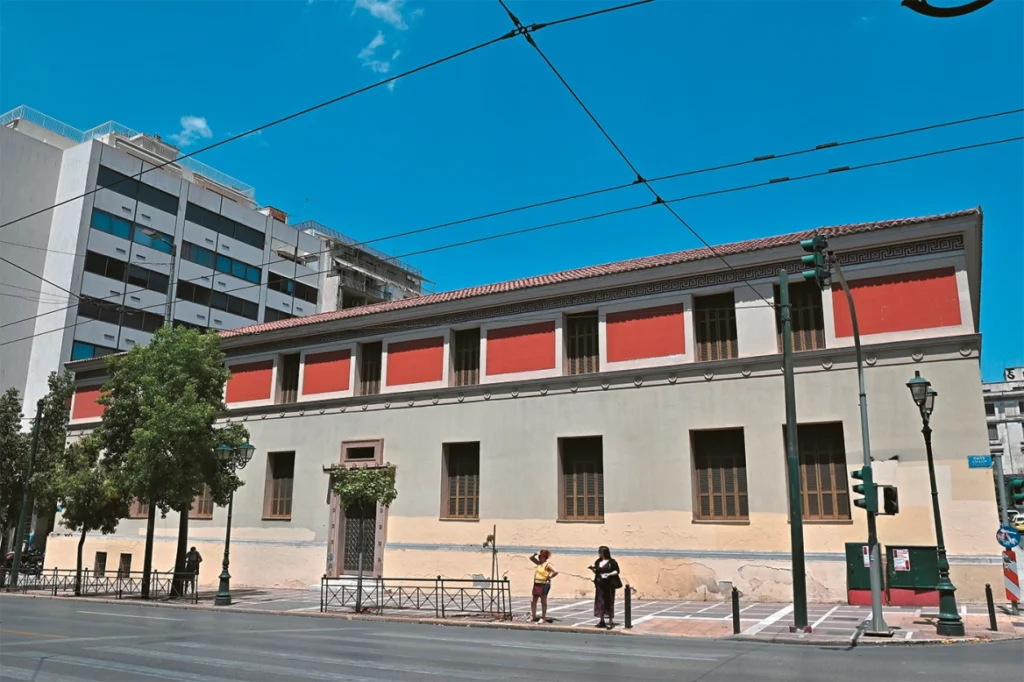
Better known as the building of the former National Library, it was reintroduced to the public a few months ago — it had been closed since 2023 — following maintenance and restoration works on the roof of its iconic reading room and the entrance hall.
It is yet another historic marble landmark building of Athens. Its foundation stone was laid in March 1888, funded by three brothers of the Greek diaspora, Panagis, Marinos, and Andreas Vallianos. It was designed by Danish architect Theophil Hansen. Its construction was supervised by Ernst Ziller.
It housed the National Library of Greece (NLG) continuously from 1903 until 2017. In 2018, the NLG moved to its new facilities at the Stavros Niarchos Foundation Cultural Center. The Vallianeio, however, did not remain silent. It now houses the newspaper collection and reading room. It has been declared a monument by the Ministry of Culture.
Redevelopment of Akademias Street
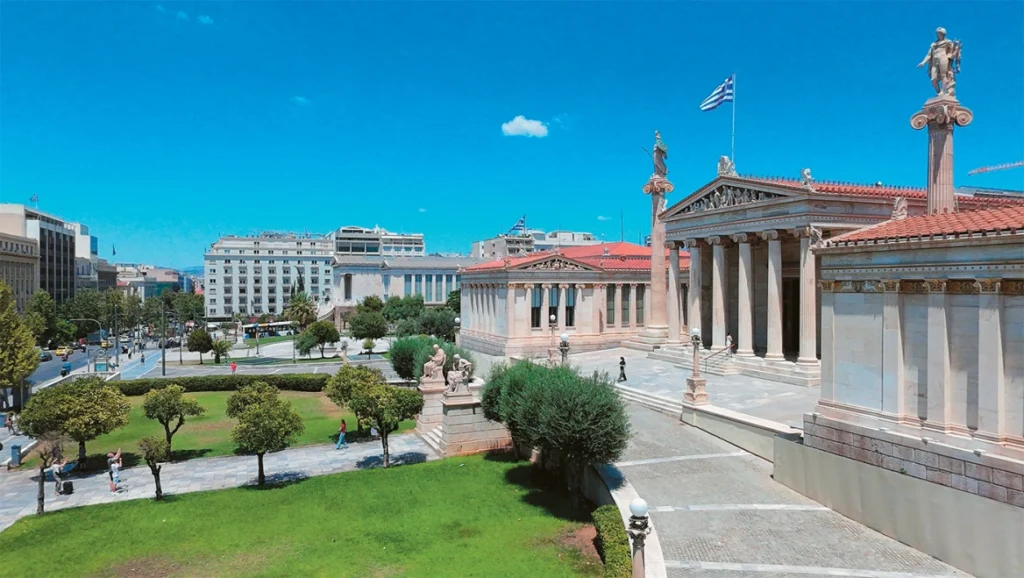
On the rear side of the Athenian Trilogy, toward Akademias Street, there is already a construction site for the building of the “Akademia” station of the new Line 4 of the metro. It will be connected to the “Panepistimio” station of Line 2 by an underground passage measuring 140 meters. Its completion will be accompanied by the creation of a new landmark in the area.
The redevelopment will result in the delivery of a new public space, with the upgrading of the existing “green cores” of the Academy of Athens, the National Library, as well as the Cultural Center of the Municipality of Athens and the Kostis Palamas building. It will include new plantings and a significant enhancement of urban greenery, reconstruction of existing pedestrian routes and access points in the area, and modern infrastructure (lighting, benches, accessibility for people with disabilities).
The redevelopment is expected to be delivered most likely together with the overall completion of the project in 2032.
Omonia
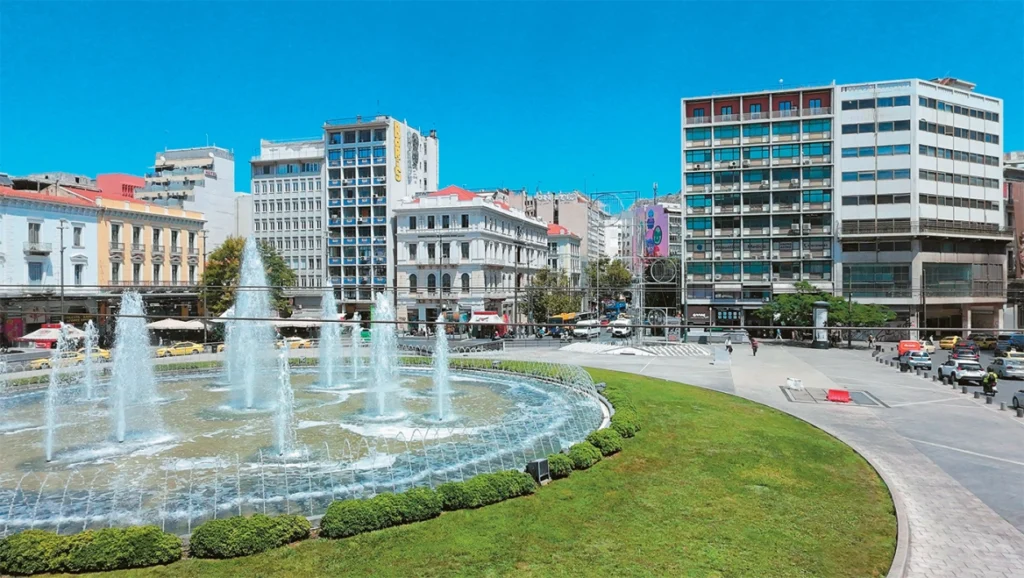
In Omonia Square and the surrounding blocks, a hotel boom has been underway for the past five years. Indicatively, in 2022 the “Brown Acropol” on 1 Piraeus Street, the “Dave Red Athens” in the former Communist Party of Greece offices on Veranzerou Street, and the “Lighthouse” — formerly “La Mirage” — which housed Marika Kotopouli’s Theatre (and later also operated as a cinema), began operating. All belong to the Israeli Brown hotel chain.
Also, Marriott Group’s “Moxy” is housed in the abandoned Sarogleio Mansion.
At the intersection of 3rd September Street and Chalkokondyli Street, “Vision Omonia” opened, owned by Israeli businessman Amir Mamou. There is also the five-star “Adia Aluma Athens Curio Collection by Hilton,” owned by Aluma Hotels & Resorts, a subsidiary of Israel’s Isrotel Hotels (owned by the Dayan interests), at the intersection of Lykourgou and Sokratous Streets.
Even on the very difficult and until now “untouched” side of Agiou Konstantinou Street and its side streets — where the only remaining island of light is the National Theatre building — an important development has emerged. It concerns plans to reopen the famous “Ambassadeur” at 65–67 Sokratous Street as a hotel, with at least three stars.
The “Ambassadeur” was built in 1961 and operated as a first-class hotel for 20 years. It then housed the Athens Court of Appeals until 2000. Since then, it remained vacant, and for a long period served as a shelter for undocumented migrants, homeless people, and others.
National Archaeological Museum
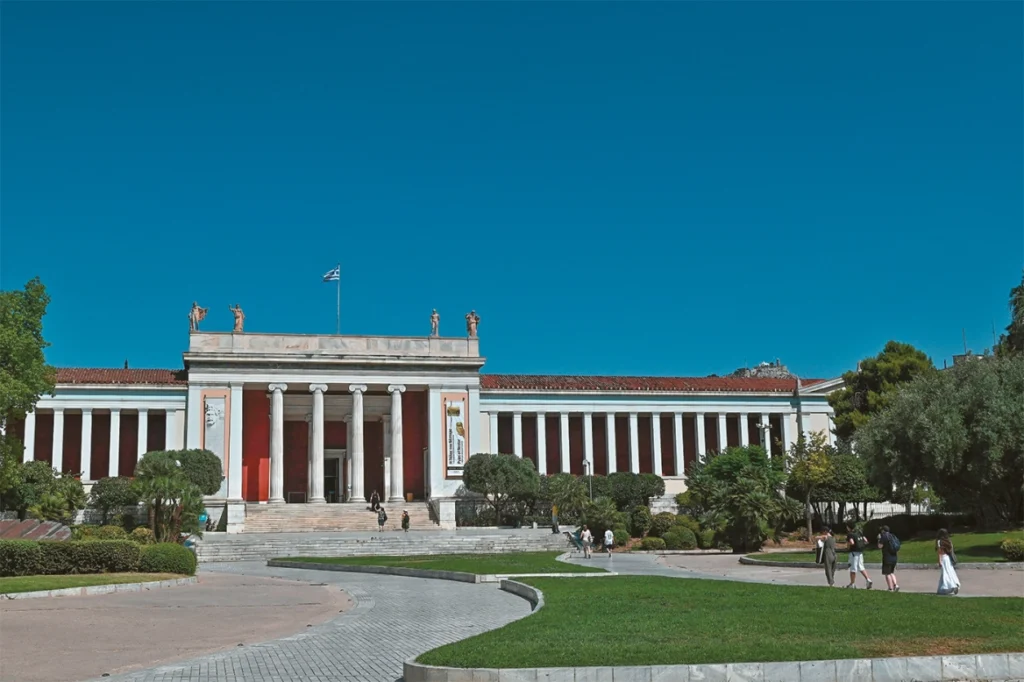
A special case is the redevelopment that will accompany the expansion and upgrade of the National Archaeological Museum on Patission Street. Throughout the surrounding area, numerous projects are planned with the aim of transforming a neglected and degraded neighborhood.
Already in May, the Special Urban Planning Plan (SUP) concerning the Museum received approval from the Central Council of Modern Monuments.
The Museum’s Immediate Influence Zone (ZAE), which is regulated by the SUP, extends from Alexandras Avenue and Acharnon Street to Omonia and Panepistimiou, including — most interestingly — Exarchia Square.
As part of the urban redevelopment projects in the area, the renovation of Tositsa Street’s pedestrian walkway is planned.
The project aims to establish the Archaeological Museum as a landmark of the city, create a research center for the study of antiquity, and provide an open, universally accessible public garden that will function as a center of culture and recreation.
The Museum building has been designated a monument since 1952, while in 1972 the building block surrounding it was also designated an archaeological site.
Its historical development extends from 1871 to the 20th century, with successive expansions and interventions by important architects (Kalkos, Vlahos, Ziller, Metaxas, Nomikos, Karantinos).
In 2024, the donation agreement by Spyros and Dorothy Latsis was ratified to finance the studies, establishing the institutional and financial foundation for the implementation of the current project.
Blend Development
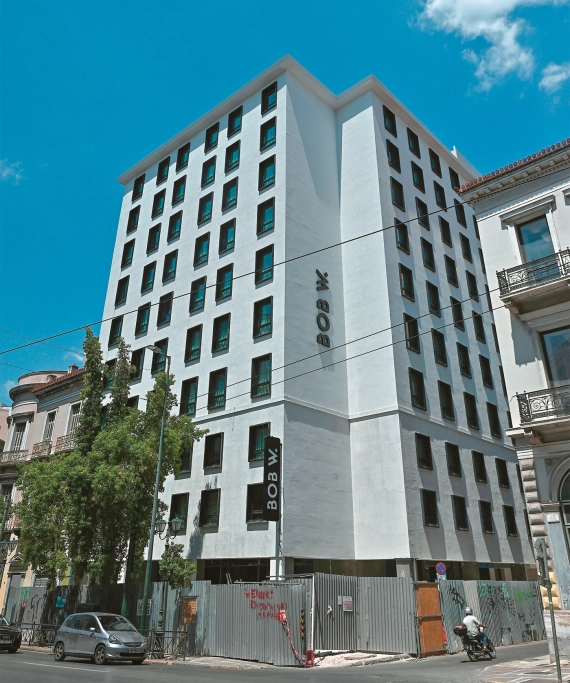
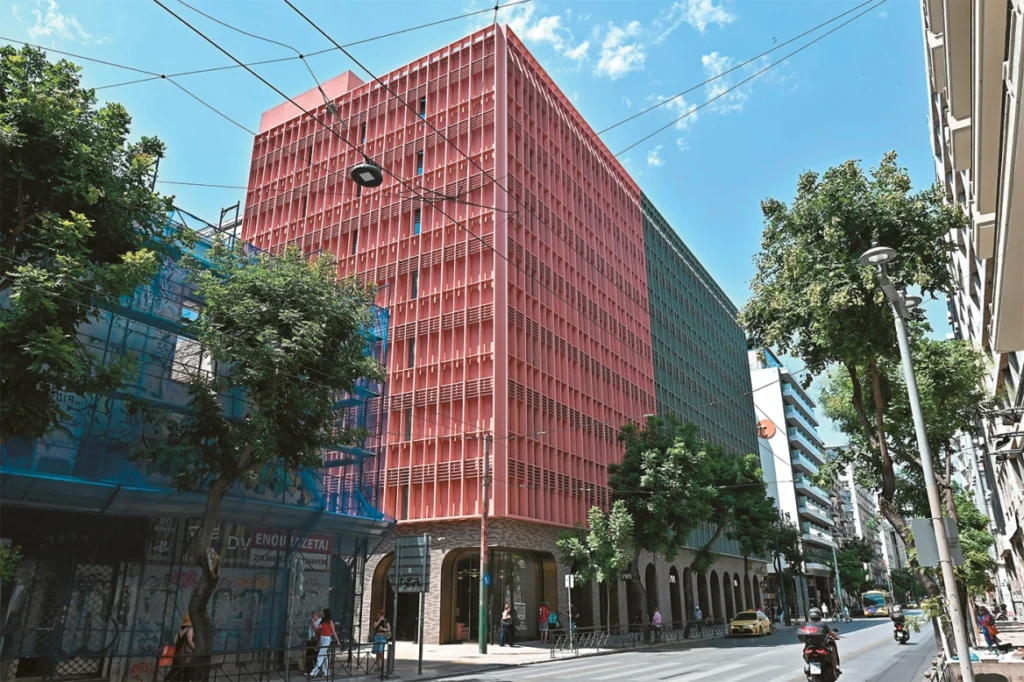
Blend Development, owned by the Kallitsantsis family, is proceeding with the reconstruction and conversion of the building at the corner of 54 Stadiou Street and Emmanouil Benaki Street into a green hotel certified under the LEED standard, with an investment of approximately €25 million.
The latest important step was the approval, two months ago, by the Ministry of Culture of the study concerning the change of use and interventions to the façade of the nine-story office building, constructed in 1959 and with an area of approximately 5,000 sq. m.
Athinogenous Mansion
There are also positive developments for the Athinogenous Mansion, which has been abandoned for decades and is one of the city’s most historic buildings and one of exceptional architectural value.
Today it has passed into the hands of renowned shipowner George Prokopiou, who, through his companies, has proceeded with a €10 million investment for the restoration of the listed building and the addition of a new modern structure of 10,000 sq. m., which is expected to be completed this year.
The new eight-story building will include offices and educational spaces, while limited commercial uses will also be developed.
Theatrical Museum in the Soutsos Residence
The three-story neoclassical building at 47 Stadiou Street, covering 1,974 sq. m., which was built at the end of the 19th century and later became the residence of Alexandros Soutsos, was not only preserved but will soon open its doors, fully renovated, as a state-of-the-art Theatre Museum, housing its Library and Archive.
A permanent exhibition is also planned for the building.
This entire demanding yet effective process is credited almost entirely to Culture Minister Lina Mendoni.
In the summer of 2020, the building almost disappeared from the map due to a fire. It suffered several damages, fortunately not irreparable. The three-story neoclassical building belongs to the Alexandros Soutsos Bequest, managed by the National Gallery – Alexandros Soutsos Museum.
The Banks
At the same time, banks are also strengthening their presence in the historic center.
After renovating its headquarters at 40 Stadiou Street, Alpha Bank proceeded with the acquisition of the listed property at 38 Stadiou Street from Ioannis Papalekas’s Yoda, in order to create the Alpha Bank Campus.
In addition, Piraeus Bank acquired the former National Insurance building at the intersection of Korai and Stadiou Streets, for the development and installation of its new headquarters.
The building, with an area of 12,600 sq. m., will be transformed into a green office space, with retail stores and food-and-beverage outlets in Korai Arcade.
The same property includes the “Asty” cinema. The plan also includes the utilization of Kommandatur — the detention cells from the period of German occupation — as a historical museum and memorial space.
Piraeus Bank’s new central administrative units will be delivered by Dimand in the coming months.
One Year of the New “Minion”
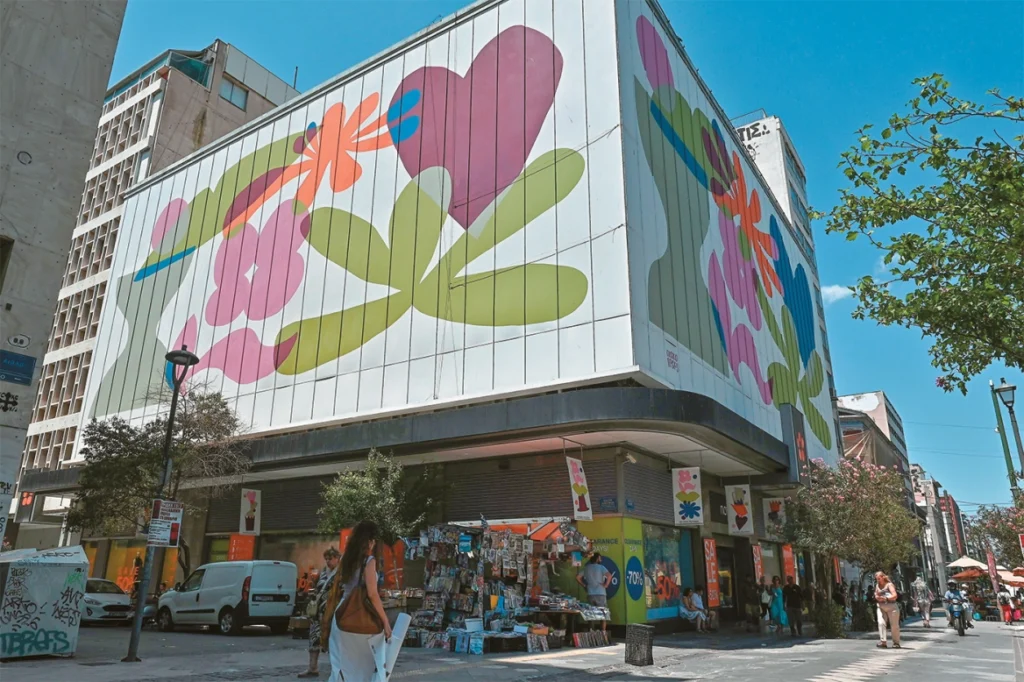
On April 10, 2025, the beginning of Patission Street was illuminated once again. This was because the new “Minion” opened, with an area of 18,565 sq. m., occupying the block bordered by Patission, Veranzerou, Dorou, and Satovriandou Streets, under Dimand’s signature.
The historic landmark building of Yiannis Georgakakis — who transformed a kiosk into the first and most popular department store in the country for decades — after the devastating fire of 1980 and despite enormous efforts to reopen, failed to recover and eventually went bankrupt.
It has now been transformed into a modern green office complex with commercial spaces.
A landmark that for decades served not only Athenians but also visitors to the city for their shopping, with a permanently packed restaurant and café offering a unique view of the Acropolis and Lycabettus Hill, is returning — but this time as a mixed-use building.
The new landmark property consists of buildings A and B-C-D-E.
The second, with an area of 13,787 sq. m., passed into the hands of Alpha Bank at the end of 2025. It houses the Zara store and the company’s offices, as well as offices of PPC (Public Power Corporation).
Building A, with an area of 4,778 sq. m., remained in Dimand’s hands, which plans to create approximately 40 apartments ranging from 50 to 125 sq. m.
From “Lampropoulos” and “Notos” to a New Future Use
The former rival of “Minion,” the “Brothers Lampropoulos” department store, after 113 years of continuous presence in the Stadiou–Aiolou–Lykourgou triangle — the last 25 of which were as “Notos Galleries” under the Papaellinas Group — is preparing to close its doors on August 31, marking the end of an entire era.
However, the landmark itself will remain; it is simply changing its identity.
The plan for the building’s next chapter involves a large-scale redevelopment with modern and green features, as part of a structured investment plan.
According to market sources, Dimand is examining various scenarios, such as converting the building into office spaces, reopening it as a retail space or department store, or transforming it into a hotel.
However, a mixed-use model similar to “Minion” is also considered likely, with offices (or even apartments) on the upper floors and retail spaces on the ground floor.
Ask me anything
Explore related questions




