





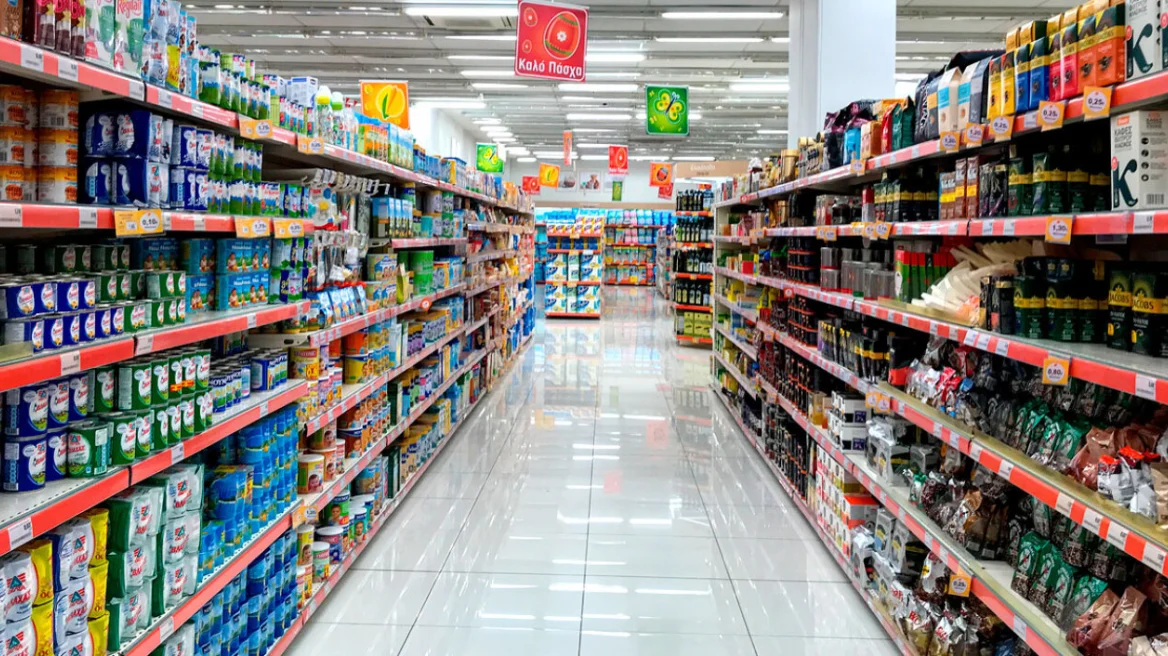
Beginning Monday, July 27, businesses will start submitting binding proposals to participate in the National Price Reduction Initiative, which calls for 5%–20% reductions in the regular shelf prices of essential supermarket products starting August 31.
According to the timetable drawn up by the Independent Authority for Market Supervision and Consumer Protection (AAEA&PK), companies will submit their proposals on a product-by-product basis (using barcode identification). The proposals will be evaluated on July 28, and on July 29 supermarket chains will be notified which products have been accepted into the initiative. The process will conclude on August 3 with the submission of final proposals.
The initiative provides for genuine reductions in regular shelf prices, not temporary discounts or promotional offers. The reference price for each product will be its regular shelf price on August 27. The program will take effect on August 31 and remain in force until December 31, 2026.
The initiative was first launched during a meeting chaired by Prime Minister Kyriakos Mitsotakis at the Maximos Mansion in late June and was further developed at a subsequent meeting led by Development Minister Takis Theodorikakos, attended by representatives of industry, suppliers, and organized retail.
The invitation sent by the AAEA&PK to manufacturers and commercial organizations specifies that the reductions must apply to regular shelf prices, not temporary discounts or promotional campaigns. The benchmark will again be the regular price of each product on August 27, and any later promotional discount must be calculated from the new, reduced price.
High-priority product categories include:
- Fresh meat
- Dairy products
- Eggs
- Pasta
- Legumes
- Flour
- Cooking oils
- Infant formula and diapers
- Breakfast foods
- Soft drinks
- Laundry detergents
- Personal hygiene products
- School supplies
The Authority emphasizes that participating companies should nominate widely sold, commercially significant products, rather than niche or low-volume items.
Businesses will submit detailed information for each product identified by barcode, including its current price, new price, percentage reduction, and the duration of the price cut. Products accepted into the initiative must remain in the program for at least two months.
Consumers will be able to view participating products through a dedicated section of the PosoKanei platform, while stores will display standardized shelf labels to make the participating products easy to identify.
The AAEA&PK has established 16 competition safeguards, prohibiting competing companies from exchanging information about prices, discount percentages, costs, or commercial strategies. According to the Authority, the success of the initiative will be measured by the real benefit delivered to Greek households through meaningful and sustained reductions in the prices of essential goods.
Ask me anything
Explore related questions




