





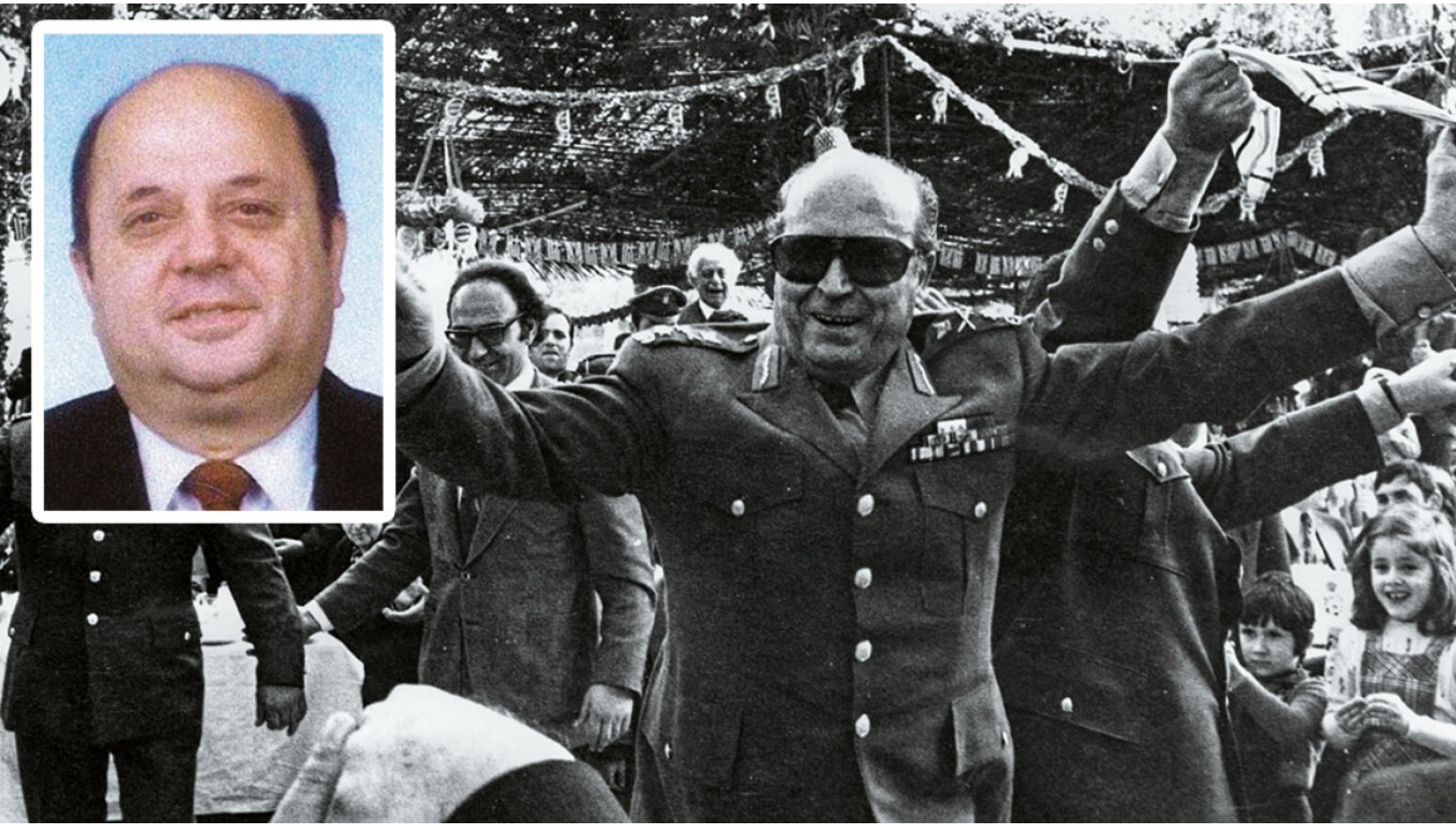
To learn certain details about the life of Peter Koromilas, or Peter Korom, one has to turn to what Americans call an “obituary”, where some biographical information is provided. However, these details are not as interesting as the secret activities of the Greek-American CIA operative, especially the years he spent in Greece and the extremely close relationship he maintained with dictator Dimitris Ioannidis.
The relationship was so close that, although in 1974 Koromilas had been transferred to another CIA station (in Cairo), he came to Athens a few days before the coup orchestrated by his friend Mimis — as he called Ioannidis — against Archbishop Makarios in Cyprus.
His relationship with Ioannidis and the role he is alleged to have played during those dramatic hours represent only one chapter in Koromilas’ life and activities in the shadowy world of intelligence.
He too was one of the “chosen ones” of Tom Karamessines, the man who created the Greek faction within the CIA, bringing into its ranks people such as, among many others, Gus Avrakotos, Peter Koromilas, and Nicholas Leonteris.
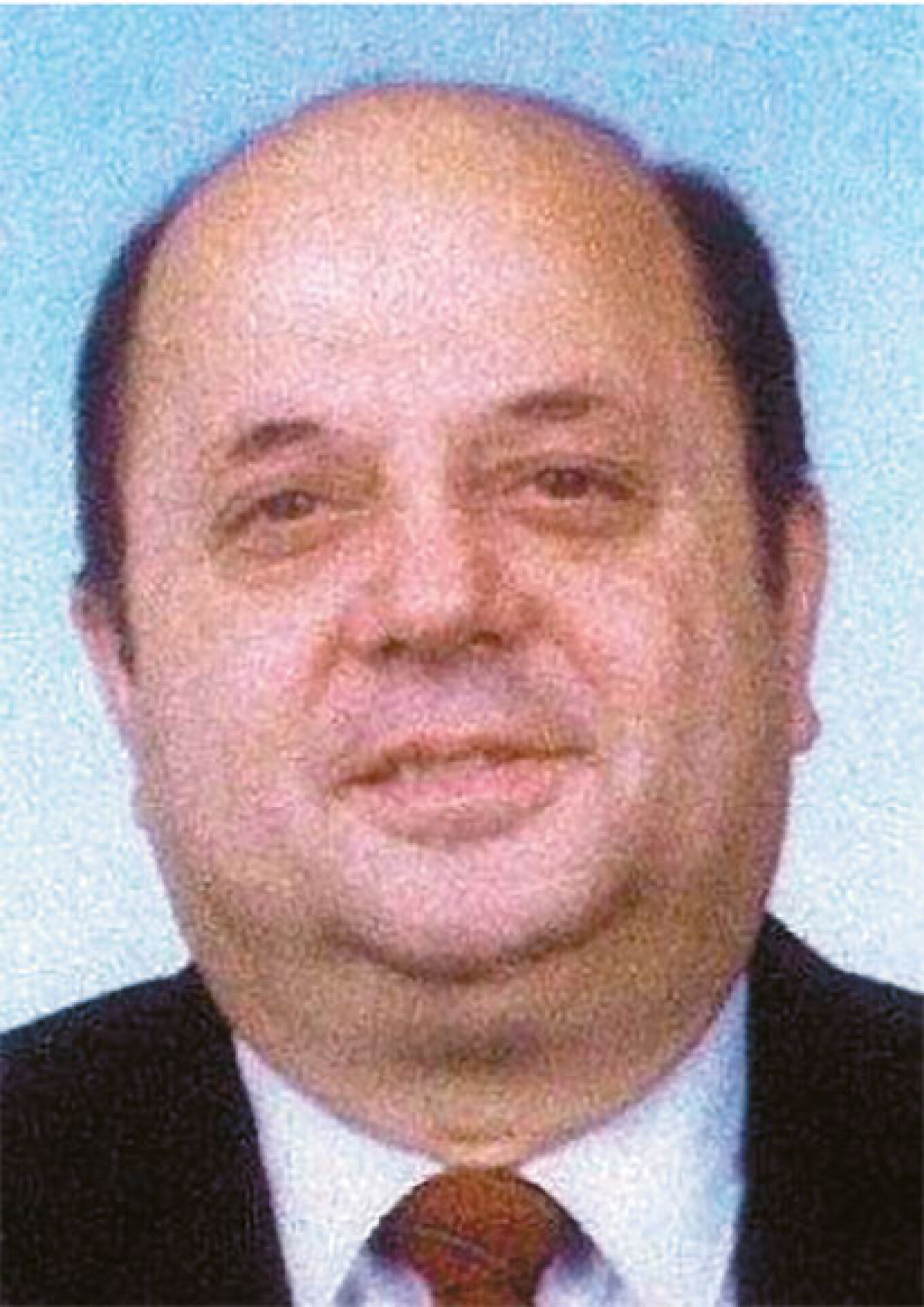
No. 2 at the Athens Station
In distant 1913, Dover, Delaware, was the city where Spyros and Angeliki Koromilas, a Greek couple seeking a better life in America like so many others, settled.
Petros, who later became Peter, was born on August 16, 1928, and was the second son of the family. His parents already had a four-year-old son, James, while four years after Peter’s birth they had their daughter Mary.
The young boy grew up with what his parents could provide in a city that many considered — and still consider — bland and lacking character. Like his brother, he was a good student. After high school, he continued his studies at Amherst College and later at the University of New Hampshire, where he completed a master’s degree in chemistry.
It is not known how he was recruited by the CIA in the mid-1950s, although he is believed to have been recommended to Karamessines, whose intuition regarding Greek candidates very rarely proved wrong.
After his training as an operations officer and his first overseas assignments, he was transferred to the U.S. Embassy in Athens.
He was so capable that in the following years he became No. 2 at the CIA station in Athens (deputy station chief), meaning he reported only to the station chief of the time and was responsible for coordinating and overseeing all classified operations in Greece.
At the same time, he made sure to establish good connections within the Greek Armed Forces, perhaps without imagining that one of those contacts would, only a few years later, come to control the fate of Greece and Cyprus during the explosive summer of 1974.
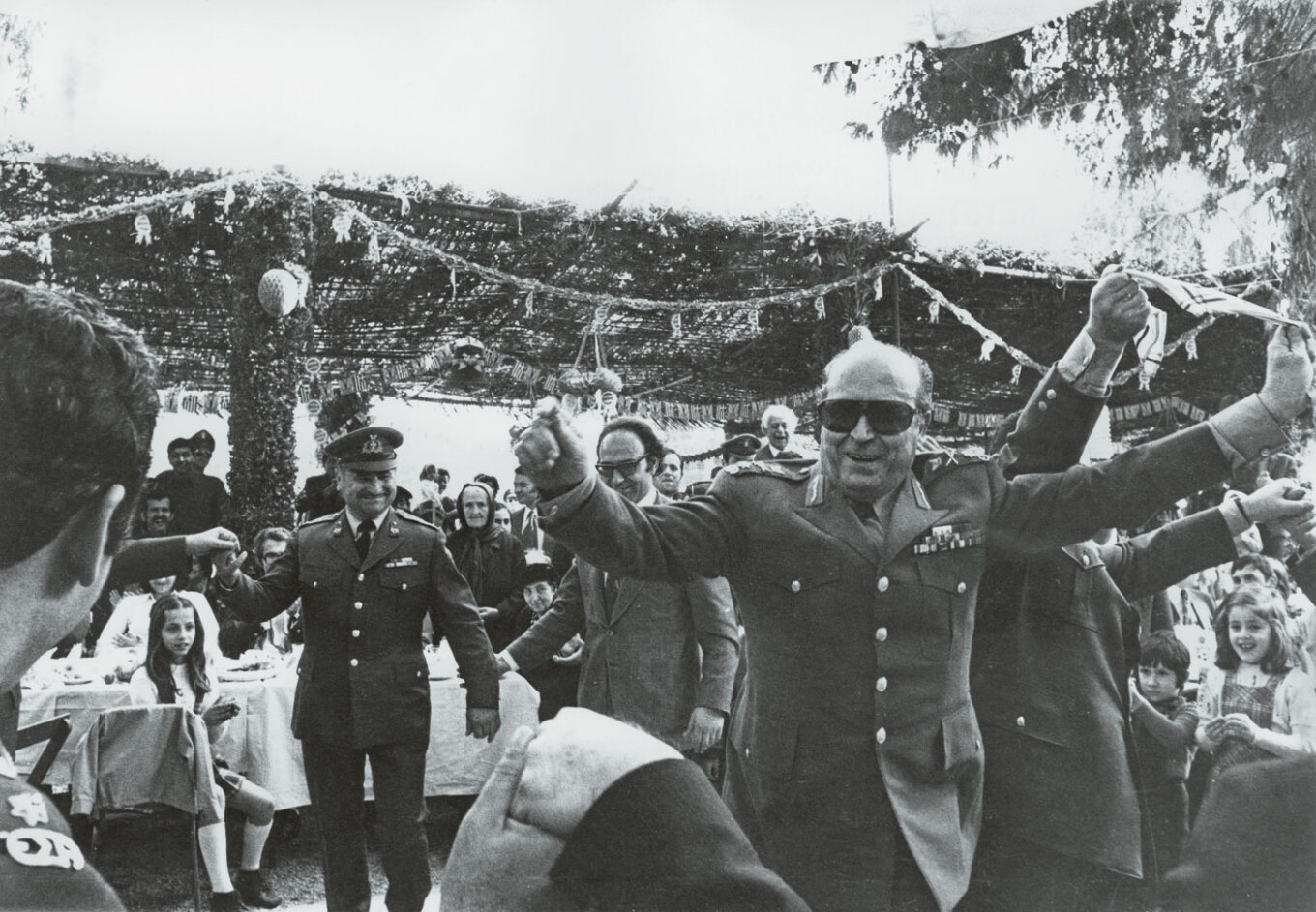
The “invisible dictator” Dimitris Ioannidis maintained a close relationship with the Greek-American CIA operative Peter Koromilas. The meeting they held shortly before the coup in Cyprus remains shrouded in mystery.
Kissinger, the CIA, and Korom!
Koromilas is believed to have worked closely with the later legendary CIA operative Gus Avrakotos, who introduced him to dictator George Papadopoulos and Ioannis Ladas, according to reports in Greek and international media.
The New York Times, in an article published on August 2, 1974, revealed that senior U.S. government officials had repeatedly pressured the CIA not to interfere in Greece’s domestic affairs and not to maintain special relationships with specific politicians.
According to the article, this position reflected the “current views” of Secretary of State Henry Kissinger and CIA Director William Colby, namely that the United States should not interfere in the internal politics of foreign countries.
This claim sounds at least ironic when considering the number of fronts the United States had opened from Vietnam to Latin America, with the CIA undertaking numerous covert operations, including the overthrow of Salvador Allende in Chile, while the State Department quietly approved.
The same article cited Greek sources and information provided anonymously by U.S. intelligence officials, according to which CIA personnel remained very close to the Greek junta until its collapse.
A specific official told the newspaper that the CIA continued to maintain at least 60 active agents in Greece during the previous 15 years, dating back to the early 1960s.
He emphasized that the agency maintained very close relations not only with Georgios Papadopoulos, but also with the man who overthrew him and seized power himself: then-Brigadier Dimitris Ioannidis.
This was the same Ioannidis who met regularly for years with Peter Korom, the shortened version of Koromilas’ surname, which he adopted as a Greek-American.
Peter and “Mimis”
The New York Times article states:
“The agent said to have been closest to General Ioannidis was Peter Koromilas, a Greek-American who was also known as Korom. A U.S. official said that Mr. Koromilas had been sent to Athens to consult with General Ioannidis shortly before the July 15 coup in Cyprus, which was led by Greek officers.”
By that time, Koromilas had already been transferred from the CIA station in Athens to Cairo, but he reportedly maintained extremely close, almost daily contact with Mimis, as he called Ioannidis.
When Ron Estes became deputy station chief at the large Athens CIA station in 1973, Peter Koromilas introduced him to Ioannidis.
According to a report by Alexis Papahelas in To Vima in 2008, the meeting took place at the offices of the CIA station, which was located in the building of the Army Share Fund on Voukourestiou Street.
Koromilas reportedly told Estes to pay special attention to Ioannidis because he was his friend. However, his successor understood in the following months that Ioannidis was exactly what CIA analysts’ reports had described: the powerful but unpredictable figure of the junta.
In the summer of 1974, all those involved would discover this in the most dramatic way.
The Secret Trip
How close the junta’s relationship with the CIA was can easily be seen from the following: according to a New York Times report, all the coup leaders attended the farewell party held by James M. Potts, the CIA station chief in Greece until August 1972.
The then-U.S. ambassador to Greece, Henry Tasca, who was present, became furious at the presence of the “colonels,” left the party, and sent a cable to Washington criticizing the station chief.
Tasca preferred communicating with political figures and opposed the overthrow of George Papadopoulos by Dimitris Ioannidis, which, although difficult to prove, was allegedly carried out with CIA approval.
The general, who had hardly ever traveled abroad and did not speak English well, strongly disliked Makarios and believed he could provide a solution to the Cyprus issue.
Ioannidis’ confidence that he could resolve the Cyprus problem within 24 hours by overthrowing Makarios frightened the State Department, which in June 1974 requested that a clear message be sent to the dictator.
The message stated that the United States did not support changing the existing situation in Cyprus, although everyone knew that Henry Kissinger did not even want to hear the name of the Archbishop.
Tasca requested a meeting with Ioannidis, but the latter ignored him, preferring instead to speak with Ron Estes and Koromilas, who at that time was serving at the CIA station in Cairo.
The reality was that, during that period, the intentions of U.S. State Department officials — with Kissinger as an exception — differed from those of the CIA, whose officers are alleged to have encouraged Ioannidis to proceed with the coup.
The Secret Meeting and the Coup
He finally made his decision on July 2, 1974. When Makarios asked him the following day to remove the Greek National Guard from the island, the wheels of events, as the saying goes, had begun turning.
A few days before the coup took place, Peter Koromilas is alleged to have traveled urgently to Athens to meet his friend Mimis, possibly at the urging of Ron Estes.
During a meeting Estes had with the general, he realized that Ioannidis was determined to proceed with his plan and warned him that Turkey would most likely invade the island following the coup.
Koromilas’ arrival in Athens and what he discussed with Dimitris Ioannidis remain a mystery. If a report of the meeting exists — experienced former intelligence officers say that one may never have been written — it will most likely never be declassified.
During those days, the general had officially adopted a moderate stance, according to reports and assessments received by the State Department, but the CIA was allegedly pursuing its own, different foreign policy.
On the morning of July 15, the coup against Makarios was launched, sealing the fate of Cyprus, as Turkey found the pretext for the invasion that followed.
Koromilas is believed to have learned the news while in Cairo, but it remains unknown to this day whether he contacted Ioannidis again and what was said during those conversations.
Koromilas’ later CIA career included serving as station chief at the U.S. Embassy in The Hague, Netherlands, from 1980 to 1983, before returning to Cairo for the period 1987–1989.
This was his final posting. After 38 years with the CIA, he retired and was awarded the Intelligence Medal of Merit for operational excellence.
He lived quietly for the next 18 years and died on Sunday, June 10, 2007, at the age of 78, after battling cancer, with his family by his side.
He spoke Greek fluently and also had excellent command of French, Dutch, German, and Arabic.
He married Mary-Ann, and they had two children, Paula and Spencer.
He enjoyed philosophy, the arts, music, swimming, fishing, and hunting, and liked sharing a good game of poker with friends.
He never agreed to speak publicly about his work at the CIA, especially his years of activity in Greece and his role during the dramatic summer of 1974, which forever marked both Greece and Cyprus.
Ask me anything
Explore related questions




