





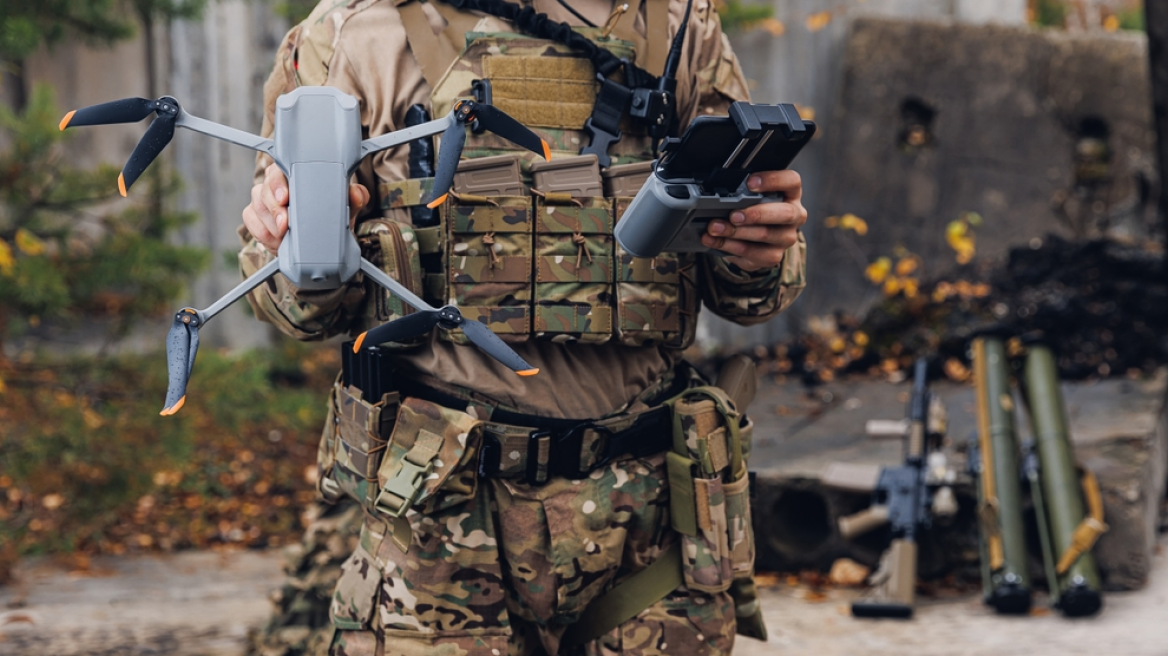
On the front line of the war in eastern Europe, near the Russian-Ukrainian border, a Colombian soldier who had volunteered to join the Ukrainian armed forces made a troubling discovery: some of his fellow Colombians who had also gone to fight alongside Ukraine had links to organized crime back home.
The men in question were identified, excluded, and “sent back to their homeland,” according to Taras Palianytsia, an officer at Ukraine’s Foreign Recruitment Center within the Ministry of Defense, speaking to the Financial Times.
However, the incident was not isolated. Over the past year, there have been repeated reports that illegal armed groups in Colombia have attempted to send fighters to Ukraine in order to acquire the most advanced expertise in drone warfare and then, upon returning home, use these skills against the Colombian military.
“Recruitment networks are very complex, but what worries me most is the level of specialization they are acquiring,” a Colombian humanitarian worker in Ukraine told the FT on condition of anonymity. “Former paramilitaries, former rebels, and former soldiers are fighting and learning together here how to operate drones,” he added.
Drones Are Changing Warfare in Colombia Too
Just as unmanned aircraft have radically transformed the war between Ukraine and Russia, they are now overturning the rules of the decades-long armed conflict in Colombia between the state, left-wing rebels, and drug trafficking organizations.
During operations against ELN rebels in the jungle, the Colombian military had traditionally been able to take air superiority for granted. That is no longer the case.
“The drone industry has exploded, and criminal organizations have adapted the technology to carry out attacks, creating a major challenge to air superiority on the battlefield,” Colombia’s outgoing Defense Minister and Air Force General Pedro Suarez told the Financial Times.
The country’s Defense Ministry estimates that illegal armed groups carried out 264 drone attacks between 2024 and 2025, mainly using inexpensive commercial drones modified to drop explosives from the air.
In May, one soldier was killed and six others injured while conducting a patrol in a coca-growing area. In April, drone attacks killed three soldiers near the border with Ecuador, while a military radar system in the province of Cauca was also hit.
In December, strikes against a military base killed seven people. “This is a dramatic change that has affected both mobility and survival on the battlefield,” Sanchez said.
96% of Attacks Were Intercepted
According to Colombia’s Defense Minister, the country’s armed forces managed last year to “neutralize” 96% of attempted drone attacks, either by disrupting their radio frequencies or destroying the devices themselves.
However, illegal organizations are attempting to use lessons from the war in Ukraine to bypass these defenses.
A Colombian drone operator fighting in Ukraine said cartel-linked recruiters are seeking training in the equipment and operation of first-person view (FPV) drones. These are attack drones that, because of their high maneuverability, are harder to shoot down. They are usually directed straight toward the target and explode upon impact.
“FPV drones have already started being used in Colombia. What they still do not know is how to encrypt communication between the drone and the operator or how to attach the explosive payload in the way it is done here in Ukraine,” the operator told the Financial Times from the southern front, in the Zaporizhzhia region.
Seeking Technology to Bypass Jamming
According to authorities, armed groups are also attempting to bypass the military’s electronic warfare systems by acquiring drones that use extremely thin fiber-optic cables, through which they connect over long distances with ground control systems.
This tactic was also developed during the Russia-Ukraine war and has been adopted by Hezbollah in its conflict with Israel.
The Colombian state is attempting to prevent the purchase of such systems by imposing strict restrictions on drone imports. At the same time, it is strengthening its defenses.
In January, the government announced plans to create a $1.6 billion “anti-drone shield” that would include frequency-jamming equipment as well as fixed and vehicle-mounted detection systems.
Analysts warn, however, that preventing the transfer of expertise from Colombian fighters returning from Ukraine should also be a priority.
Up to 500 Colombians Killed in Ukraine
Colombia has a long tradition of veterans of its armed forces, who gained extensive experience through decades of internal conflicts, ending up fighting in foreign countries.
Colombians have participated in wars in South Sudan, Yemen, and Ukraine, where up to 500 are estimated to have been killed during the four years since the start of Russia’s full-scale invasion.
“Colombians can learn and adapt very quickly and endure difficult service conditions,” Ukrainian recruitment officer Taras Palianytsia said. “They have proven their value to commanders, who truly appreciate these men,” he added.
Reactions in Colombia
The participation of Colombians in the war in Ukraine has sparked strong reactions in their homeland.
Last October, President Gustavo Petro claimed that “Ukrainians treat Colombians as an inferior race” and called on his compatriots who, he said, were “being treated as cannon fodder” to return home.
In an effort to reduce the financial incentives for joining foreign armed forces, his government increased military salaries and ratified the 1989 UN Convention against the recruitment, use, financing, and training of mercenaries.
Defense Minister Pedro Suarez described the participation of Colombians in distant war zones as a “sad reality,” attributing it to the high salaries offered compared with the pensions they receive in Colombia.
A Decades-Long War in South America
Colombia’s armed forces have been fighting cartels and rebel organizations for decades in an armed conflict estimated to have cost approximately 450,000 lives between 1958 and 2016.
The country’s largest rebel organization, the Revolutionary Armed Forces of Colombia (FARC), disarmed in 2016; however, several splinter groups continued fighting the state.
All of Colombia’s armed organizations are involved in illegal economic activities, including drug trafficking, illegal mining, and extortion.
Their activity expanded during the presidency of Gustavo Petro, who for three years pursued negotiations with armed groups under his “Total Peace” initiative before shifting toward a tougher military approach near the end of his single four-year term.
Today, Friday, Petro hands over the presidency to Abelardo de la Espriella, who has adopted a hard-line position on security issues and has pledged, among other things, to build prisons in the jungle.
Following a recent drone attack against the military, de la Espriella said he would prioritize the “restoration of state authority in the areas most affected by violence.”
“The Military Has Lost Its Monopoly in the Air”
The new president, however, is taking power from a weaker position compared with several of his recent predecessors, experts estimate.
“The number of drones these organizations possess could very easily overwhelm the defenses of any military or political target,” said Elizabeth Dickinson, Deputy Director for Latin America at the International Crisis Group.
“The armed forces have completely lost their monopoly over the airspace, and this represents a truly enormous strategic change,” she concluded.
Ask me anything
Explore related questions




