





The villages of Imbros once again fill with Greek voices for a brief period every August, when Greeks who live far from the island return to their family homes. Church bells ring, and the celebration of August 15 takes on a special significance for the Greek community, as it is simultaneously an opportunity to return and reconnect with their place of origin.
The picture, however, changes once the summer season ends and most visitors depart. The central issue facing the island’s historic Greek community then comes back to the fore: whether it can maintain its presence on Imbros and ensure its continuity through younger generations.
The issue is documented in a report by Buse Keskin for Agence France-Presse (AFP), published by Euronews.
Through the testimonies of Greeks who were forced to leave their homeland, people who later decided to return, and current residents, the report captures the situation of the Greek community on Imbros and Tenedos.
At the same time, it highlights a striking contradiction: the Greek past of the two islands is taking an increasingly prominent place in their tourist image, even as the very communities that created this historical and cultural heritage continue to shrink.
Under the 1923 Treaty of Lausanne, the Greek populations of Imbros, Tenedos and Constantinople were exempted from the compulsory population exchange between Greece and Turkey. A corresponding exemption applied to the Muslims of Western Thrace.
Greeks constituted the majority of Imbros’s population at the time. For decades, however, administrative decisions by Ankara, pressure on minority institutions and Greek-Turkish tensions gradually weakened the community.
The year 1964 was decisive. As the Cyprus crisis escalated, Turkish authorities closed the island’s Greek schools and established open agricultural prisons on expropriated land near Schinoudi, then the largest Greek village on Imbros.
The presence of prisoners, along with incidents of theft and violence, created a climate of fear among Greek families. The exodus accelerated after 1974 and the Turkish invasion of Cyprus.
77-year-old Dinos Chaimantos left Imbros at the age of 13. He initially settled in Constantinople and five years later moved to Sydney, Australia.
Although he spent most of his life away from the island, his connection to his birthplace was never severed. Upon returning to Imbros, he can still recognize the streets, the people and a way of life he remembers from his childhood.
The memory of shepherd Giorgis Baki is similarly complex; a relative of his was murdered during that period. Businessman Christos Vogiatzi, for his part, distinguishes the relationships among ordinary residents from the policies implemented against the Greek community.
Their testimonies show that the exodus was not the result of a natural demographic shift. It was the outcome of an environment of insecurity in which Greek families felt they no longer had a future in their homeland.
The situation began to change in 2013, when, with encouragement from the European Union as well, a Greek school reopened on Imbros.
52-year-old singer Stelios Berberis, who was born on the island and returned five years ago to settle there permanently, says that around 600 Greeks have returned since then. The estimate is his own and takes on particular significance when compared with 2005, when fewer than 70 Greeks remained on Imbros.
Berberis and his wife, Pelin, run a stone tavern in Agios Theodoros, the birthplace village of Ecumenical Patriarch Bartholomew. There, they sing in Greek and Turkish, with rebetika songs about life abroad, lost homelands and unfulfilled love taking center stage.
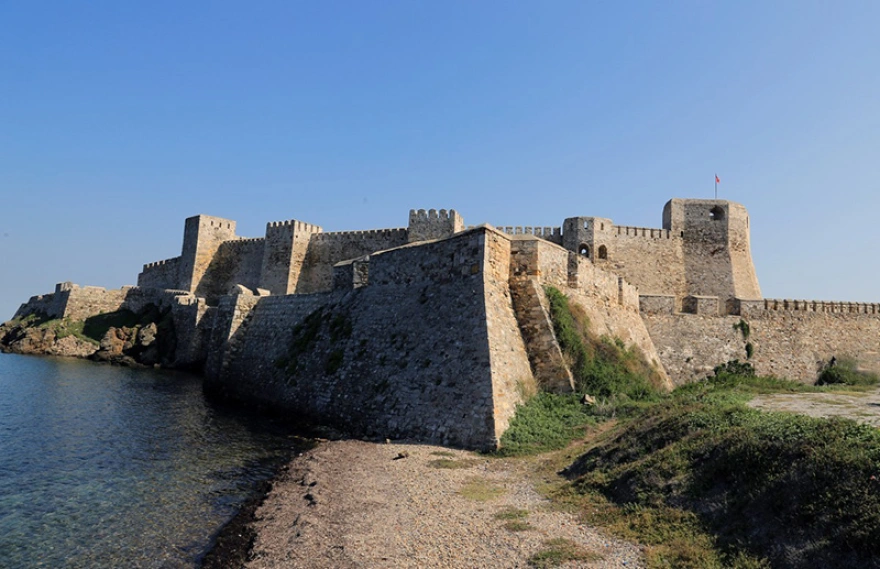
Despite signs of revival, the Greek community remains small compared with the island’s approximately 7,000 permanent residents. In summer, when tourism peaks, the total population can reach 30,000.
Berberis himself sums up his anxiety in four words: “Our culture is dying.”
The problem is not limited to the number of permanent residents. For many descendants of Imbrians, the emotional bond with the island is no longer as strong as it was for their parents and grandparents.
Vogiatzi observes that his children are not particularly interested in inheriting the family home. At the same time, prices for the old stone houses have soared as interest from Turkish buyers has increased.
Schinoudi perhaps offers the strongest image of this contradiction. It was once the wealthiest village on Imbros. Today, much of it remains in ruins, with abandoned houses serving as reminders of the community that lived there and created its life over centuries.
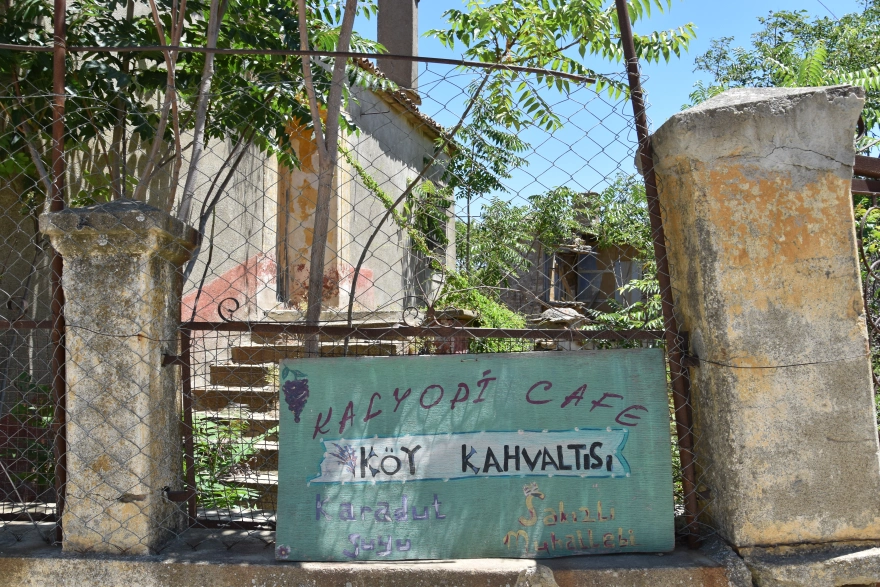
The situation is even more difficult on neighboring Tenedos. According to the AFP report, only around 15 Greeks remain on the island, all of them elderly.
Hakan Guruney, who moved to Tenedos from Constantinople in the 1980s, established a small private museum to preserve the memory of the place. His collection includes old candy wrappers, handmade lace, prayer books and postcards from the Dardanelles campaign.
His observation about Greek songs now being played in Tenedos restaurants while the island’s Greek residents have almost disappeared encapsulates a painful contradiction: Greek cultural heritage remains attractive, but the community that created it is at risk of disappearing.
The story of Imbros and Tenedos is not merely a story of persecution, nor simply a narrative of return. It is an ongoing struggle between memory and oblivion, revival and demographic decline — and above all, a struggle over whether the Greek presence will remain alive for generations to come.
Ask me anything
Explore related questions




