





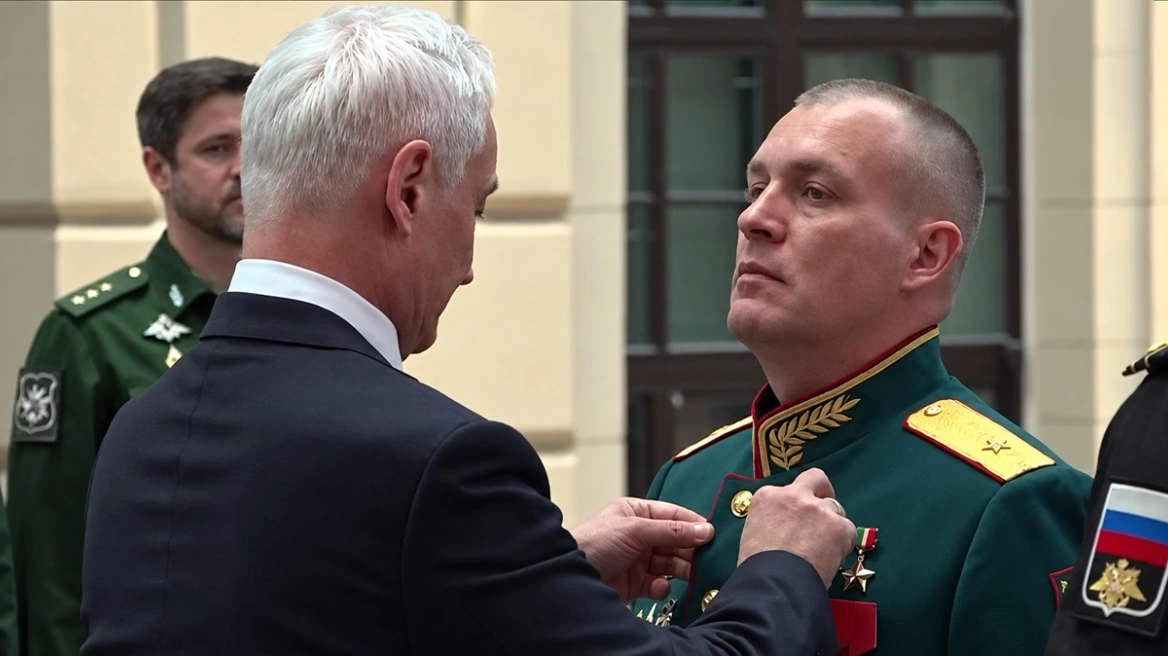
The Russian military has suffered a significant loss, with Major General Anton Felixovich Grunis killed in a Ukrainian strike. He was one of its most prominent figures in the war in Ukraine and an officer whom Moscow’s state media portrayed as a particularly successful commander on the front line.
The Ukrainian side claims that the 46-year-old general was killed on 12 September in a drone strike near Kindrativka, in the Donetsk region. Robert Brovdi, commander of Ukraine’s Unmanned Systems Forces, announced that his forces carried out the strike. Russia has now confirmed Grunis’s death, although it has not officially announced the circumstances in which he was killed.
Grunis was from Tatarstan and had a long military career. He had served in the Second Chechen War, the 2008 Russia-Georgia war, Russian operations during the annexation of Crimea in 2014 and in Syria, before taking up duties in the war that began with Russia’s full-scale invasion of Ukraine in 2022.
The first reports of his death appeared on a Russian military Telegram channel, “Suvorov Brotherhood”, where an obituary was published for the graduate of the Kazan Suvorov Military School.
The Ukrainian version of the strike
Footage released by Ukrainian military sources attributes the strike to the 427th Unmanned Systems Brigade, “Rarog”. The footage shows kamikaze drones heading towards buildings in the Kindrativka area, followed by powerful explosions and fires.
The footage, however, does not in itself prove that Grunis was inside the specific buildings at the time of the attack.
Ukraine’s military leadership claims that the Russian general was killed there, while Reuters noted that it had not been able to independently verify all the details of the strike.
He had been made a “Hero of Russia” just days earlier
His death came just over two weeks after he had received one of Russia’s highest honours.
On 27 August, Russian Defence Minister Andrei Belousov awarded him the “Gold Star” and the title of “Hero of the Russian Federation” for his actions in Ukraine. Russian state media then portrayed him as saying that he felt honoured by the distinction and was certain of a final Russian victory.
Grunis had gained considerable prominence in Russia through repeated appearances in state media. He was nicknamed “The Terrible” and was portrayed as a tough front-line commander.
Under his command was the 4th Motor Rifle Brigade, which Russia’s Defence Ministry promoted as an elite formation.
Kostyantynivka and the disputed “capture”
Grunis gained his greatest publicity from the battles for Kostyantynivka in eastern Ukraine.
In July, Russian state television broadcast footage of Vladimir Putin being briefed by the military leadership that the city had come under the control of Russian forces and that Grunis’s 4th Brigade had played a decisive role.
He himself described how his forces moved through forests and marshy terrain, bypassing Ukrainian positions, and claimed that they had managed to penetrate deep into the city. “All our units very quickly and successfully began operating on the left bank of the city and building on their success. In the end, we cut the city into pieces like a pie,” he had said. He attributed the success to his soldiers, saying that “our greatest advantage was the Russian soldier” and describing him as “every commander’s dream”.
However, the Russian claim that Kostyantynivka had been captured was disputed by Ukraine and independent analysts. Even in mid-September, fighting in the area was continuing, with the two sides controlling different sections and Russia attempting to expand its presence in the city. Reuters also notes that Moscow had portrayed Grunis as a key figure in Russian advances in Kostyantynivka, which Kyiv disputes.
Ask me anything
Explore related questions




