





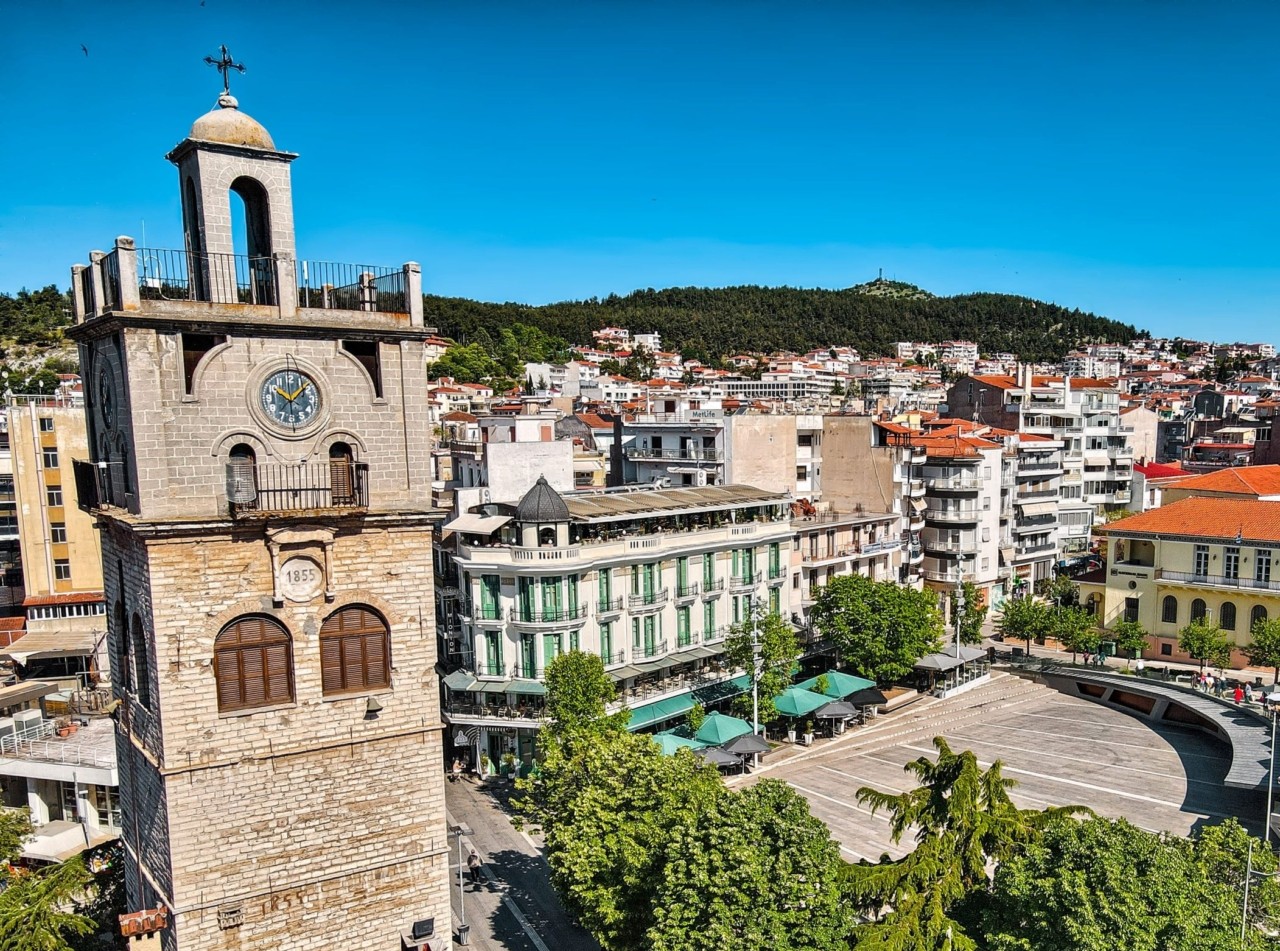
In Kozani’s central square, the scene remains that of a traditional Greek town. The church, town hall, cafés and tavernas make up the familiar setting. A few meters away, however, one of the biggest transformations in the history of Greece’s energy sector is underway.
Where tons of lignite were stockpiled for decades to supply power-generation units, PPC plans to create one of the largest data centers in Europe. The project is at the heart of a €5.8 billion investment plan aimed at transforming the former lignite-producing region into a technology and energy hub.
The undertaking is one of the biggest bets of the phase-out of lignite, not only for Western Macedonia but also for PPC itself, which is attempting to leave behind the image of a company that relied exclusively on coal.
From the mines to data centers
Kozani was a “PPC town” for decades. At the peak of its activity, in 2010, the company employed approximately 5,500 people in Western Macedonia, creating an entire economic cycle around it.
Today, the region is facing the difficult transition to the new era. The Agios Dimitrios power plant, about 18 kilometers from Kozani, has ceased operations following the gradual phase-out of lignite. The number of employees at the plant has fallen to 58, from 420 at the beginning of the year.
The region’s last major lignite-fired power plant, Ptolemaida V, is also expected to stop using lignite by the end of the year.
For the local community, however, the big question remains: what will replace the jobs that are being lost?
“No one is saying that the plants should not close, but they need to tell us exactly what will happen the next day,” said Kozani Mayor Giannis Kokkalieris, stressing that the region needs new jobs with comparable pay.
The artificial intelligence bet
The government’s and PPC’s answer is that the new economy will be based on technology and artificial intelligence.
The Kozani data center will have a capacity of 300 MW and is targeted for completion by the end of 2028, with the potential to expand to 1 GW by 2031.
PPC is already in discussions with major technology companies and hyperscalers to lease the facilities. One of the project’s key advantages is that electricity will be supplied through PPC’s energy network in the region, under long-term electricity supply agreements.
At the same time, the company says that the data center’s water consumption will amount to just 0.6% of the needs of the former lignite operations.
The community is waiting for the jobs
Despite the expectations, residents remain cautious. The transition has already left its mark on the local economy.
Approximately 650 of the town’s 1,500 commercial businesses have closed, according to Athanasios Dragatsikas, president of the Kozani Commercial Association. At the same time, many young people are leaving the region in search of opportunities in Athens, Thessaloniki or abroad.
“The worst thing you can do to people is create a sense of despair,” he said.
PPC maintains that the new projects can create a significant number of jobs. At the peak of construction, an estimated 7,500 workers will be needed, while once fully developed the projects are expected to create at least 2,200 permanent jobs, of which approximately 1,500 will be related to operating the data center once it reaches 1 GW.
From the lignite economy to the knowledge economy
The next day is not only about energy but also about creating a new ecosystem around technology.
PPC is working with the University of Western Macedonia to create training programs that will prepare young workers for the needs of the new investments.
Just as lignite activity created an entire satellite economy in the region, the goal is for the same thing to happen with data centers, start-ups and IT services.
For Kozani, the big challenge is not simply to host a huge technology project. It is to prove that a region built on coal can become part of the new digital economy.
Ask me anything
Explore related questions




