





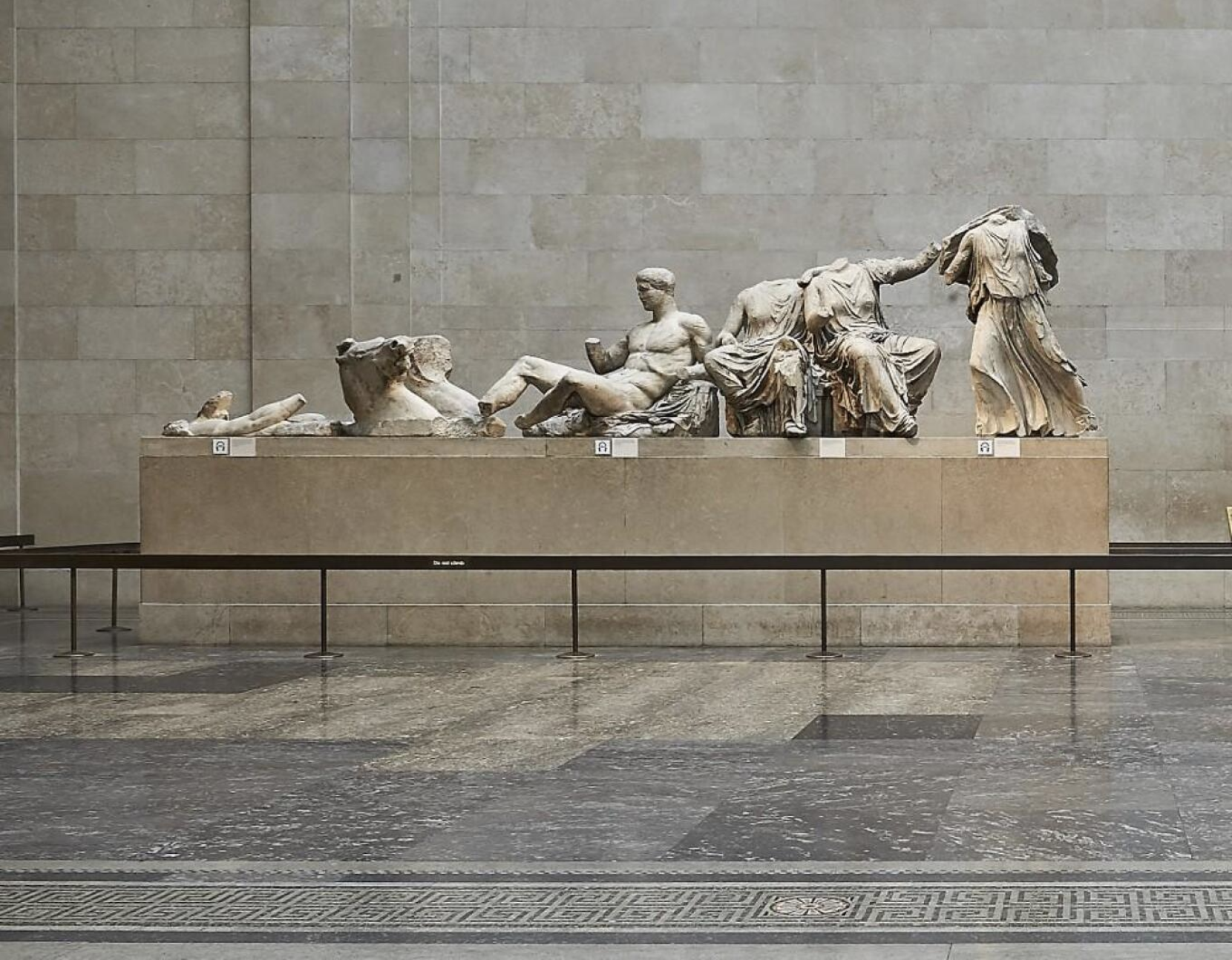
Negotiations between Greece and the British Museum over the reunification of the Parthenon Sculptures have reached a dead end, according to The Daily Telegraph.
The newspaper reported that no talks are currently taking place, and that Athens has made clear it does not expect them to resume in the near future.
The discussions, which began in 2021, have effectively stalled. Greek officials are said to be frustrated by the lack of progress and by the failure to find a formula that sidesteps the central question dividing the two sides, namely who legally owns the sculptures.
The report comes less than two weeks after Greek Prime Minister Kyriakos Mitsotakis told UNESCO Director-General Khaled El-Enany, at a meeting on 11 September, that reuniting the sculptures remains a long-standing national priority for Greece.

The loan impasse
The British Museum maintains that UK law, under the British Museum Act 1963, prevents it from permanently giving up objects in its collection and allows it only to lend them. A conventional loan, however, requires the borrower to accept the lender’s ownership. That is a red line for Athens, which does not recognise that the museum ever acquired legal title to the sculptures.
Greece’s position is unambiguous. It regards the pieces held in London as integral parts of the Parthenon that must be reunited with those on display at the Acropolis Museum.
According to the Greek Culture Ministry, about 60% of the Parthenon’s surviving sculptural decoration is held by the British Museum, with most of the rest in Athens. The sculptures were removed from the Acropolis in the early 19th century on the orders of Lord Elgin, then British ambassador to the Ottoman Empire, and have been in the museum since 1816. In its official statement on the issue, the museum notes that Greece first formally requested their permanent return in 1983, and that successive Greek governments have refused to acknowledge its trustees’ title.
The hybrid deal that never materialised
In recent years, the two sides explored a compromise that would have allowed each to avoid formally abandoning its legal stance.
Under the proposed “hybrid” arrangement, framed as neither a permanent transfer nor a conventional loan, a significant number of sculptures would have returned to Athens for an extended period. In exchange, Greece would have sent major antiquities to London for a rotating programme of exhibitions.
By 2024, the talks were being described as “quite advanced”, with the British Museum calling them “constructive” at the time.
Yet as recently as November 2025, Mitsotakis publicly admitted that progress had fallen short of what he had hoped for. He suggested that the museum’s major refurbishment, particularly of the Duveen Gallery where the sculptures are displayed, could open up fresh opportunities.
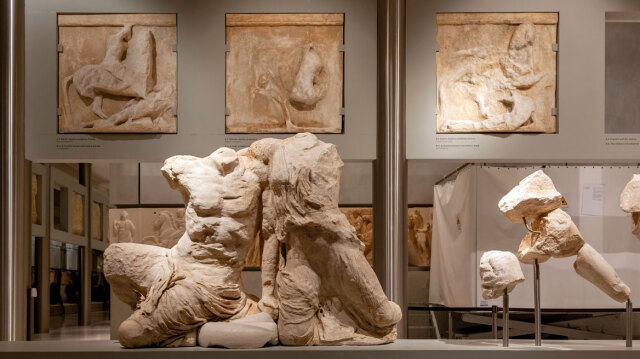
Regular contact has ceased, says the Telegraph
According to the Telegraph, efforts to find a creative solution have come to nothing, and regular contact between Athens and the museum has stopped. A source quoted by the paper said there are currently no active talks.
Channels of communication have not been closed for good, however, leaving room for the situation to change in the future.
The British Museum’s most recent public statement, still posted on its website, says it is pursuing a “new Parthenon partnership” and describes its discussions with Greece as “constructive and ongoing”.
Why Athens rejects the Bayeux Tapestry model
The report follows the opening at the British Museum on 10 September of an exhibition of the Bayeux Tapestry, lent by France under a bilateral agreement. The 70-metre embroidery, which depicts the Norman Conquest of England in 1066, will remain on display until July 2027. In return, the museum is sending major treasures from its own collection, including objects from the Sutton Hoo burial and the Lewis chessmen, to museums in Normandy.
British Museum Director Nicholas Cullinan had hinted that the arrangement could point the way towards a solution for the Parthenon Sculptures.
According to the Telegraph, however, the idea was not well received in Athens. Greek officials point to a fundamental difference: France’s ownership of the Bayeux Tapestry is not in dispute, whereas the question of legal title lies at the very heart of the Parthenon row.
Ask me anything
Explore related questions




