





The Ministry of Culture is moving ahead with a new package of interventions aimed at further protecting and showcasing the archaeological remains of Ancient Olympia, expanding the archaeological site open to visitors and upgrading the overall visitor experience.
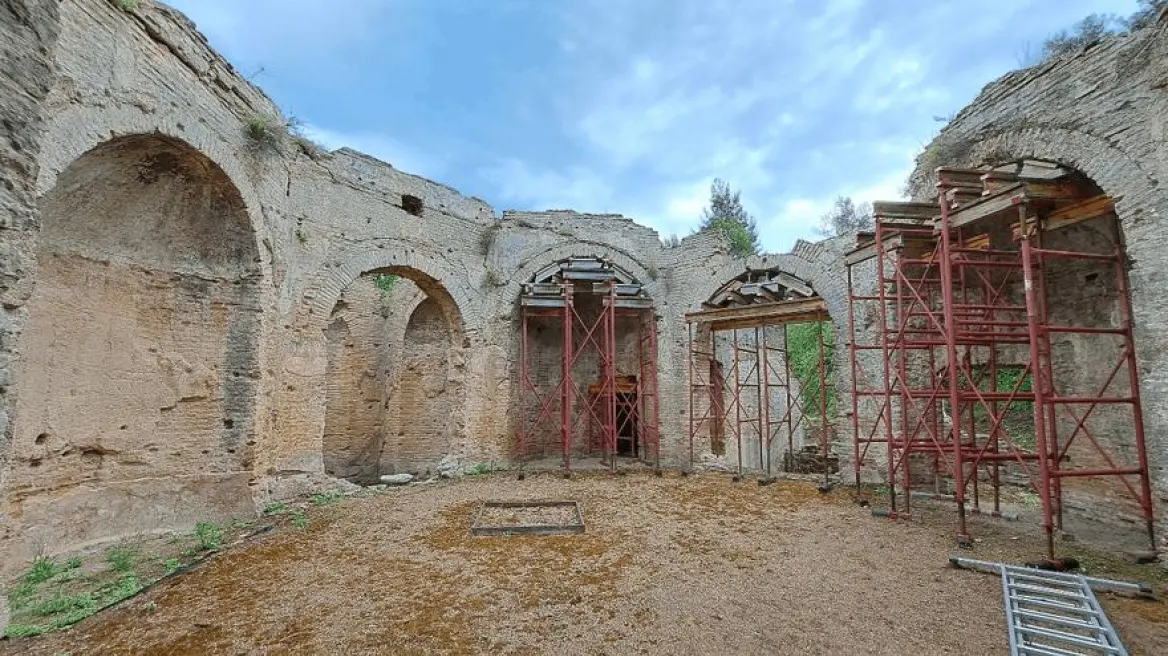
This new phase comprises three major projects, with a total budget of approximately €4 million, which are already under way: the restoration and showcasing of the Roman Octagon, the so-called “House of Nero”; the third phase of the excavation and showcasing of the Gymnasium; and the protection and restoration of the retaining wall of the Treasuries of Mount Kronion.
“Ancient Olympia is at the center of a comprehensive, long-term plan by the Ministry of Culture to protect, restore and showcase its unique monumental heritage. Following the completion and opening to the public of three restored monuments—the Early Christian basilica or Workshop of Pheidias, the complex of the Southern Baths and the Baths of the Leonidaion—we are moving into a new phase of interventions,” Culture Minister Lina Mendoni said, adding: “Alongside interventions on the monuments, the Ministry of Culture has improved visitor accessibility and service infrastructure, developing advanced digital services, including for people with hearing and visual impairments, creating the conditions for a modern and comprehensive visiting experience for everyone. With a steadfast commitment to protecting and showcasing our cultural heritage, we continue to invest in Ancient Olympia, an archaeological site of global significance, so that it remains vibrant and accessible to future generations.”
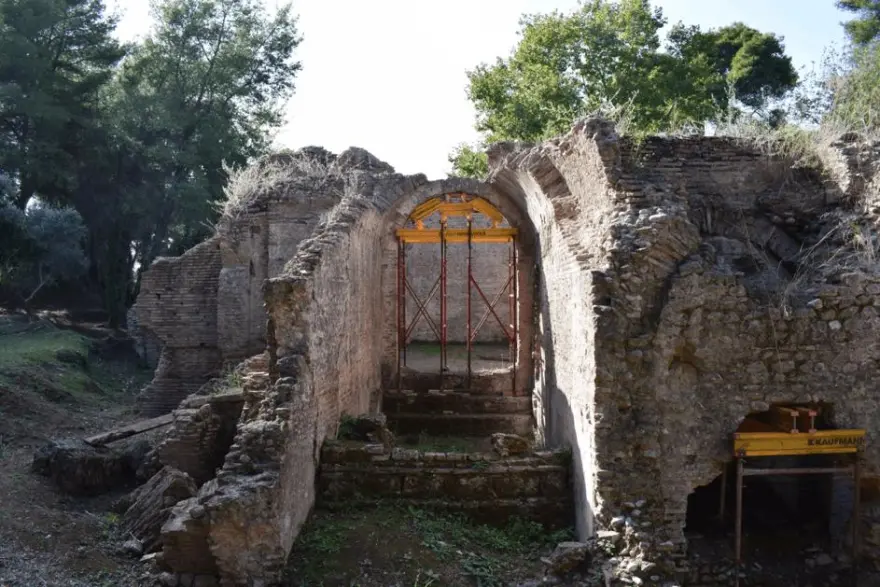
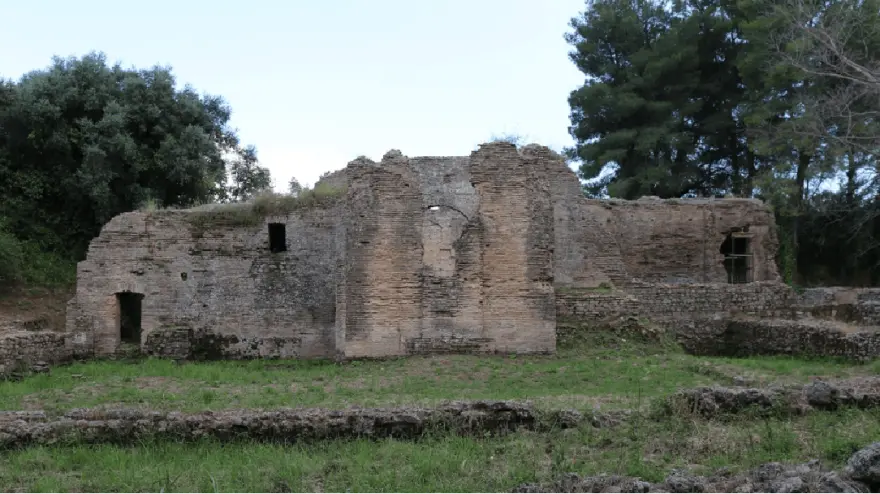
The complex of the Southeast Baths constitutes an important archaeological ensemble with successive building phases. The “House of Nero” and the Southeast Baths are two successive building phases of the same site, with different functions. The “House of Nero” began operating in the 5th century BC as a Sanctuary of Hestia, while a stoa and ancillary areas were added in the 3rd century BC. Between AD 65 and 67, a luxurious villa was built there to accommodate the Emperor Nero during his visit to Olympia, which subsequently functioned as an official guesthouse. The villa included a large peristyle courtyard, rooms and gardens, while bathing facilities were located in its southern section. At the beginning of the 3rd century AD, the site was remodeled and the complex of the Southeast Baths was created. The building was converted into public baths, with the “Octagon”, a monumental vaulted hall that served as the heated area, as its central feature. The baths incorporated and reused parts of the villa. Various stone and ceramic elements survive in the monument, including architectural members, marble slabs, a stone foot basin, as well as ceramic elements associated with the hypocausts and conduit systems.
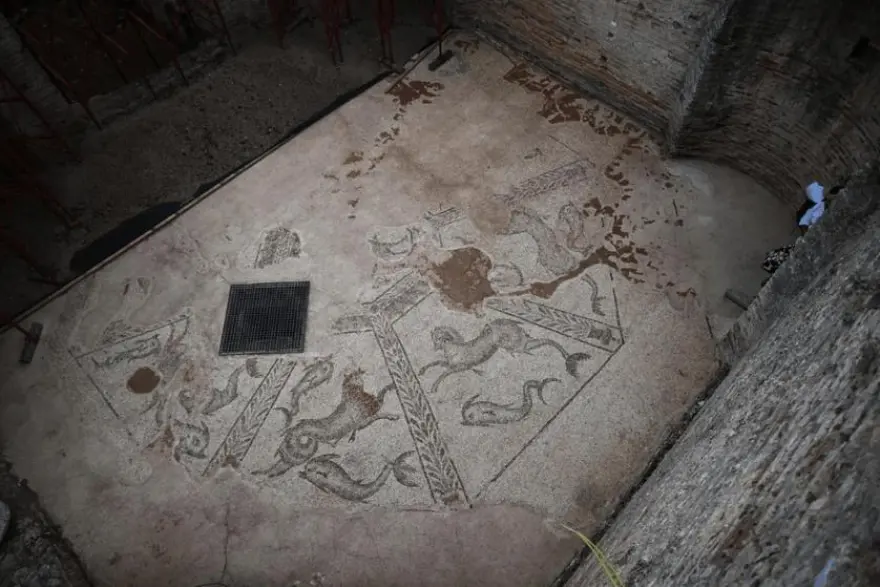
The project includes works to restore, protect and showcase the monument, including the partial reconstruction of sections of the masonry and vaulting, the restoration of openings and the repositioning of fallen architectural members, the uncovering and protection of the mosaic floor through the construction of a new shelter, the creation of a visitor route and the landscaping of the surrounding area. The proposed solutions are intended to provide immediate protection and the long-term preservation of the authentic elements, while also ensuring safe access. The visitor route must serve the objectives of visitation and accessibility without, however, placing a burden on the original floors, mosaics and their additions, or limiting the possibility of their future conservation.
Ask me anything
Explore related questions




