





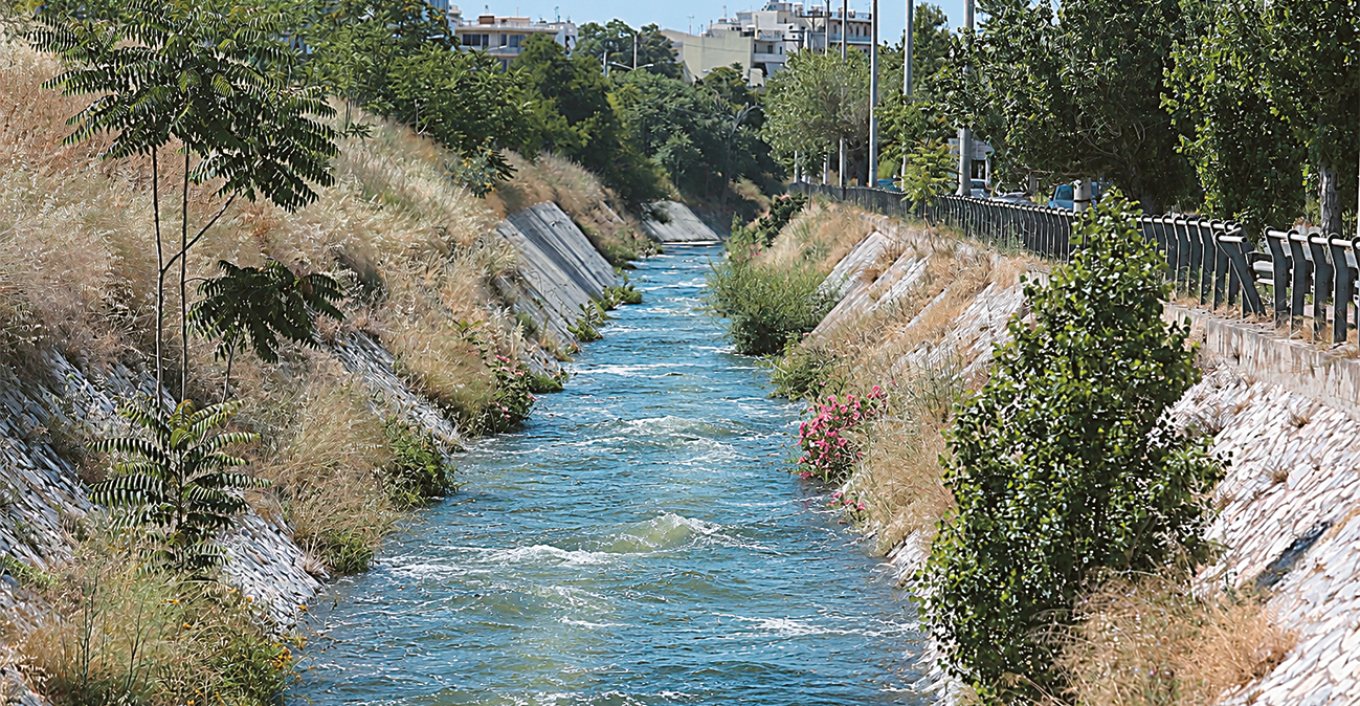
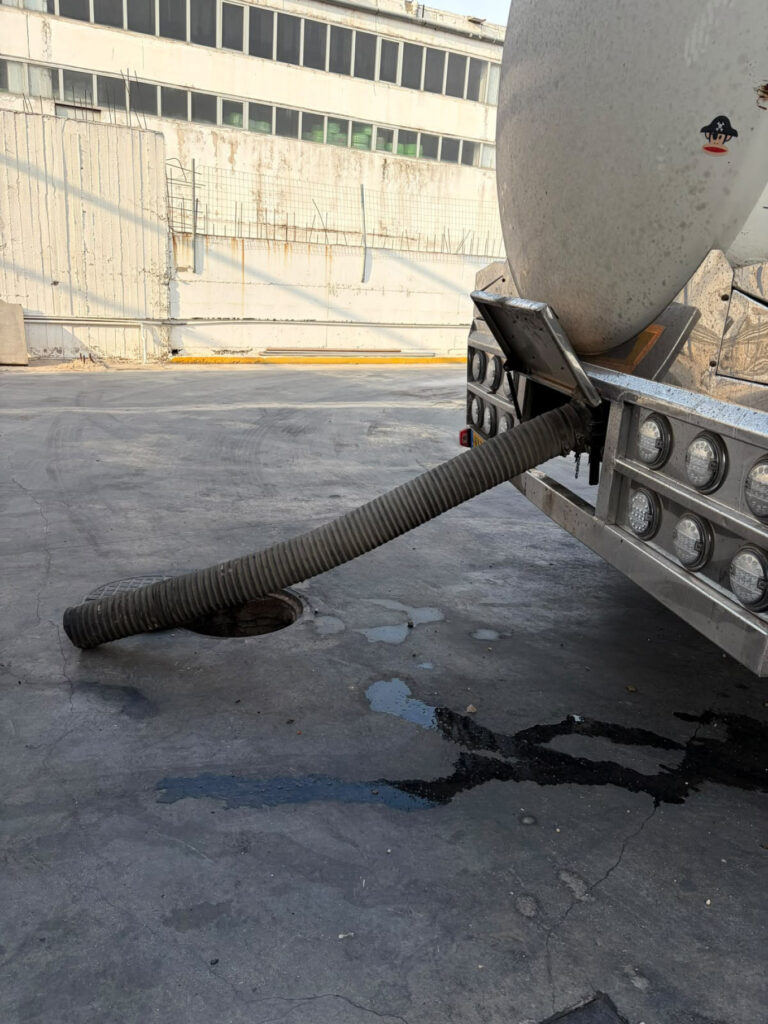
A tanker carrying liquid industrial waste from one of Greece’s largest food manufacturers, Papadopoulou, was caught emptying its load into a storm drain that feeds the Kifissos river in Athens, according to environmental inspectors and police.
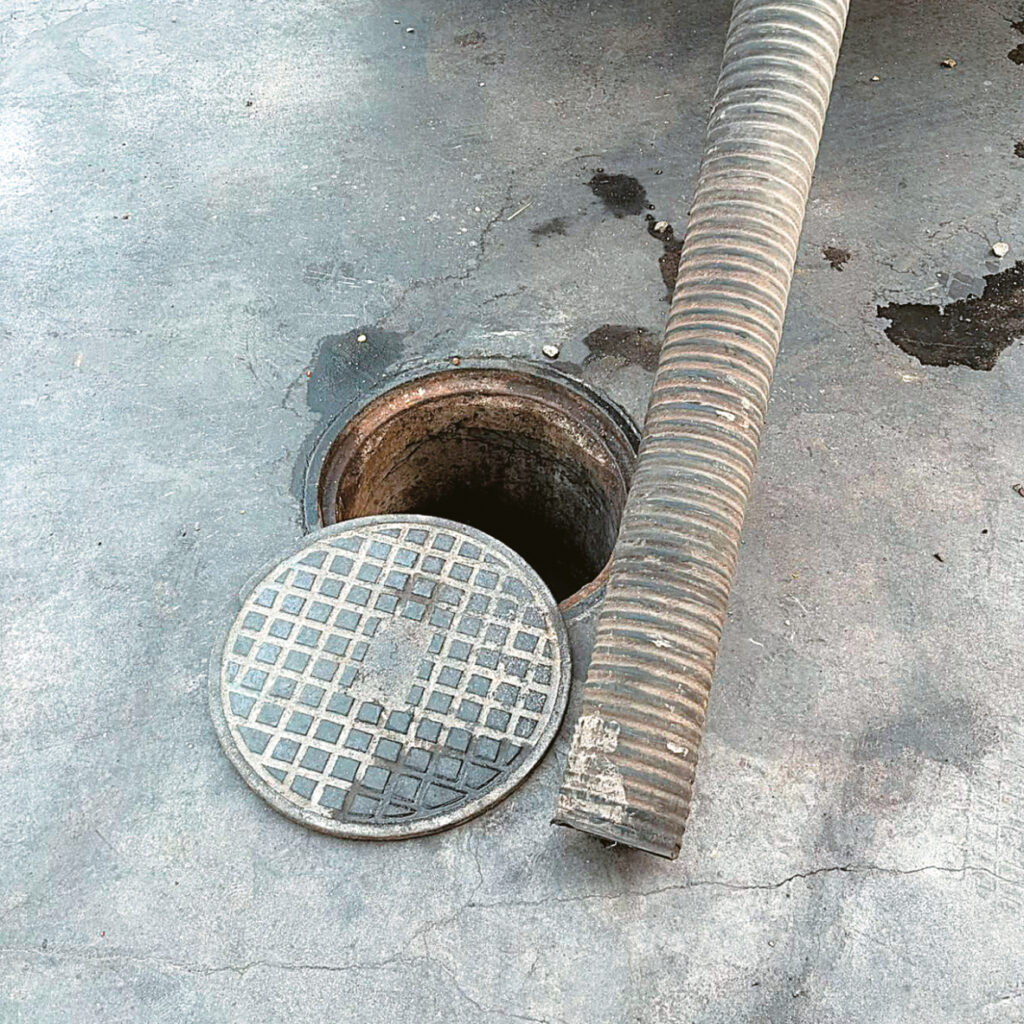
The vehicle was stopped last week in an operation by the Attica Police waste dumping prevention unit. It was parked in the forecourt of a petrol station on the service road of Kifissos Avenue, the motorway that runs alongside the river, in the western suburb of Egaleo. The site once housed a car wash. According to the findings of Environment Ministry inspectors and police, the drain did not connect to an ordinary sewer but discharged straight into the river.
The interception followed surveillance of trucks transporting industrial and domestic waste, launched at the start of the summer after an anonymous tip-off to the ministry’s environmental inspectorate.
The tanker, operated by haulage firm Karatzas, was carrying about 16 cubic metres of liquid waste collected from the Papadopoulos biscuit factory on Petrou Ralli Avenue in Tavros, south-west Athens. Investigators say the driver did not have the required paperwork.
Who controlled the route?
Papadopoulos has said the vehicle was not its own but belonged to a contracted transport company responsible for collecting wastewater from the Tavros plant and taking it to the Metamorfosi wastewater treatment centre in north Athens, run by the Athens Water Supply and Sewerage Company (EYDAP). The company says compliance with environmental and regulatory requirements was its partner’s responsibility.
Outsourcing, however, cannot serve as a shield. For a manufacturer of this size, the question is not only who emptied the tanker, but who oversaw the route, the cost and the final destination of the waste leaving its premises.
Sources with detailed knowledge of the case estimate that at least half the wastewater collected from the biscuit maker ended up in the Kifissos. The rest reached the Metamorfosi plant, but was logged as domestic sewage rather than industrial waste.
A company with genuine environmental responsibility would also have built an on-site pretreatment unit for its effluent years ago, at no great expense.
The cost gap between legal disposal and illegal dumping is real, but does not appear large enough on its own to explain the choice made by a business of this industrial scale.
Proper handling involves transport, reception and treatment, as well as analysis, sampling and documentation. When a load fails to meet the specifications of EYDAP’s treatment centre, it must also be pretreated to correct its acidity and reduce its organic load.
Checks after the fact
This is why the case cannot be dismissed as a footnote. It exposes a fragmented inspection regime that usually springs into action only after the damage is done.
If the investigation’s findings are confirmed, the case will be about more than one rogue hauler. It will raise serious questions about how a major manufacturer managed its liquid waste for years, and whether it systematically exploited a system with no meaningful tracking, in which domestic and industrial effluent can travel the same route.
Inspectors should therefore examine not only quantities, weighbridge tickets, invoices, payments and deliveries to the Metamorfosi plant, but also any discrepancies in transport orders and possible tax violations.
There is also the question of why the authorities did not review in time the environmental terms and actual waste practices of a plant that remained dependent on tankers. Judging by the outcome, the absence of updated terms and systematic oversight left room for a practice that should have been abandoned years ago.
The initial findings show why the case is serious. Sources familiar with the tests report a pH of 4.8, against the range of 6 to 9 that EYDAP reportedly accepts.
Chemical oxygen demand allegedly reached 25,000 mg per litre, against a target limit of 1,000 mg. Suspended solids stood at 4,500 mg rather than 500 mg, and phosphates at 25 mg rather than 10 mg. The figures await confirmation from final laboratory analysis.
Starving the river of oxygen
The picture so far points to waste from dough residues and washings, with an extremely high organic load from sugars, flour, sourdough and other organic matter that ends up in the water.
In a stream, such a load uses up dissolved oxygen and puts further pressure on an already damaged ecosystem, depriving fish and other aquatic life of the conditions they need to survive.
“The Kifissos has a characteristic small fish, with populations recorded as far upstream as Mount Parnitha, where the water is cleaner and cooler,” said a person familiar with the river’s long decline. “But its numbers have fallen. It cannot survive where there is pollution, and seems to seek out the edges of the stream, where the current is faster and the water more oxygenated.”
A university research programme monitoring water quality along the Kifissos, from its upper reaches downstream, has recorded elevated pollutants, particularly during periods of rain. Rainfall explains sediment washed down from Parnitha, the mountain north of Athens where the river rises, but not the organic and inorganic loads that point to industrial pollution.
The same source said industrial loads are not handled like domestic sewage at the Metamorfosi plant. If pretreated and within specifications, they are delivered to a dedicated industrial waste chamber and piped via a main sewer to the Psyttalia treatment plant, on an islet off Piraeus. Domestic sewage, by contrast, goes into the plant’s own biological treatment unit without anyone checking it.
A record of a tanker entering the plant does not prove what it carried, where it came from, or whether it was acceptable. Each load needs to be linked to a producer, an analysis, a quantity, a loading time and a final recipient. Otherwise, legal entry can serve as an alibi.
A system without a trail
On paper, a tanker’s arrival at Metamorfosi looks like proof of lawful disposal. In practice, according to the information, EYDAP logs the vehicle’s entry rather than a full digital record of each load: when it was loaded, how much, from which producer and where it was ultimately delivered. At the end of each month, all that remains is a summary of arrivals, and with it a critical gap. Nobody can say with certainty which load went where.
Without a unique load number, the same entry can be presented as proof by more than one producer. And when the same hauler collects from both apartment blocks and factories, a generic “sewage” label can completely obscure the origin.
A load that would require checks at the industrial waste chamber can appear as domestic. If confirmed, this amounts to a mechanism that effectively launders the identity of the waste.
The same gap explains the limits of any penalties. Official sources estimate that if the manufacturer is fined, the penalty will not be heavy relative to its size. Inadequate tracking and missing paperwork are treated as administrative breaches, attracting a corrective action plan and a possible fine. For the dumping itself, the penalty may cover only the load proven on that particular day, not earlier runs that cannot be documented.
The sources did not give a figure, but expect it to be low and unrelated to the company’s turnover. They attribute this to the plant reportedly falling under Category B, subject to Standard Environmental Commitments, rather than categories A1 or A2, which carry far stricter environmental requirements.
As a result, inspections are triggered by complaints rather than carried out preventively, with limited sampling resources and almost no ability to prove past violations.
The Karatzas haulage firm
The investigation is being extended to Karatzas, the haulier the manufacturer worked with, and to the record of its tankers at the Metamorfosi plant. Working with EYDAP, the authorities are cross-checking collections from premises against entries logged at the plant.
Reliable information indicates that the Papadopoulos name first appeared in the plant’s records immediately after the case came to light, which confirms the gap in the system.
According to the information, a pipeline in the area’s informal industrial zone is connected to the trunk sewer running alongside the Kifissos and serves other small manufacturers, including tanneries, but reportedly never reached the Papadopoulos plant. A formal connection would require pretreatment, a flow meter, a sampling chamber and continuous analysis, precisely the trail now missing from the monitoring system.
Leaky tracking systems
“Tools to prevent this kind of illegal disposal existed but were never fully implemented,” an official source said. “A tracking system was designed with GPS, dedicated software and electronic registration of every load, from the moment of loading, recorded on the driver’s mobile phone, to arrival at the licensed receiving facility. Each load would have carried a unique number and its entire route could have been checked afterwards.”
The system was completed as a pilot with EYDAP but never rolled out. According to the information, it met resistance from the tanker industry, as full traceability would have curbed illegal disposal as well as the scope for concealing journeys and tax documents.
Nor has the Electronic Waste Register filled the gap. Its central weakness is that it works in aggregate and after the event: a business can declare in spring 2026, for example, what it handled over the whole of 2025. It is not a real-time tool capable of showing that a load has just been collected, is heading in a given direction and has been delivered to a specific recipient.
What is needed, therefore, is a single system giving each load a unique digital identity, with GPS on every tanker, electronic sealing at loading and unloading, records of the quantity, type and origin of the waste, and a link to the licensed recipient. It should trigger automatic alerts when a vehicle strays from its planned route or stops at a suspicious location, such as beside a stream.
That way, if a tanker stopped near the Kifissos instead of heading to a treatment plant, the authorities would not have to rely on a chance tip-off or a spot check by an inspector working without adequate support. They would have the data, an instant alert and the ability to intervene as the offence was taking place.
Ask me anything
Explore related questions




