





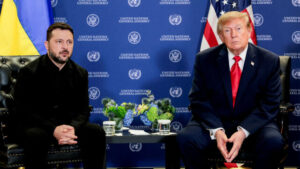
New details have emerged about the background to Donald Trump’s agreement with Vladimir Putin to increase Russian diesel exports to the US and international markets. According to Axios, the US president’s decision was directly linked to Volodymyr Zelensky’s refusal to halt Ukrainian attacks on Russian refineries.
According to a US official with direct knowledge of the discussions, Trump decided to proceed with the agreement with Putin after Kyiv ignored approximately six US requests to stop strikes on Russian refining facilities.
The deal, announced by Trump himself, provides for the shipment of more than 300,000 tonnes of Russian diesel, alongside the easing of certain US sanctions affecting Russian energy exports. The announcement prompted a strong reaction from Zelensky, who described it as “unfair” and “dishonest”, arguing that it provides Moscow with economic relief while the war continues.
“Zelensky Is Misreading the Situation”
The US official who spoke to Axios argued that Ukraine’s insistence on striking Russian refineries has caused frustration at the White House. According to the same source, Zelensky is “misreading the situation”, as continued attacks are undermining the good relationship he had built with Trump over recent months.
Ukrainian strikes on Russian energy facilities have proved particularly effective, restricting Russia’s refining capacity and causing problems in its domestic fuel market. Moscow responded by imposing restrictions on diesel exports, placing further pressure on an international market already strained by the war in Iran. The impact of these developments on US fuel prices appears to have been a key factor for Trump.
According to Axios, the US president had asked Kyiv to unilaterally halt attacks on Russian refineries, believing that the strikes were contributing to rising prices for American consumers.
Zelensky’s Proposal That Trump Rejected
Zelensky had proposed a reciprocal agreement on energy infrastructure to Trump and US envoys Steve Witkoff and Jared Kushner.
Specifically, he said Ukraine was prepared to stop attacking Russian refineries if Russia halted strikes on Ukrainian power plants.
Trump rejected the proposal because, according to the US official, the president did not consider the two types of attacks equivalent. He wanted Kyiv to suspend its strikes without linking the decision to a corresponding commitment from Moscow.
Behind the Scenes of the Eight-Hour Talks in Miami
Tensions peaked during talks held in Miami on Friday. During approximately eight hours of discussions, Steve Witkoff and Jared Kushner informed the Ukrainian delegation that Donald Trump was about to speak with Vladimir Putin and was planning to lift sanctions affecting Russian diesel exports.
According to Axios, the US negotiators told the Ukrainians that the decision had been made after Kyiv refused to respond to Washington’s repeated appeals to end the attacks on refineries.
A Ukrainian official claimed that, during the discussions, a warning was issued that Trump could cut off US intelligence sharing with Ukraine if the same tactics continued. The US side denies that any such threat was made.
According to the US official’s account, Witkoff and Kushner reminded their Ukrainian counterparts that the US provides Ukraine with weapons and intelligence. They argued that, within the framework of this cooperation, Kyiv should not take actions that drive up costs for American consumers. As the source put it, the refinery attacks “hurt Russia, but they also hurt the US”.
The Deal Came as Talks on Ending the War Were Underway
The dispute over diesel erupted just as US envoys had begun a new round of contacts with Ukrainian and European officials on a possible agreement to end the war.
The discussions in Miami focused on security guarantees that the US, Europe and NATO could provide to Ukraine as part of a future agreement. New proposals on territorial issues were also examined, alongside a broader post-war plan for Ukraine that would include funding for reconstruction, rebuilding the Ukrainian Armed Forces and ways to address the budget deficits caused by the war.
A roadmap for Ukraine’s accession to the European Union, its future relationship with NATO and the possibility of creating a new security framework between Europe and Russia were also discussed.
Witkoff and Kushner also presented potential energy deals with Russia, which Washington believes could both lower international energy prices and serve as an incentive for Moscow to make concessions in peace negotiations.
Source: Axios
Putin Did Not Commit to Resuming Negotiations
Despite the diesel agreement, Vladimir Putin did not commit to an immediate resumption of negotiations with Ukraine. During his approximately 90-minute telephone conversation with Trump, the Russian president avoided giving a concrete answer on returning to the negotiating table.
His foreign policy adviser, Yuri Ushakov, argued that recent Ukrainian attacks on Moscow and other Russian cities during Russia’s parliamentary elections had “undermined the possibility of an immediate resumption of the negotiation process”. According to Ushakov, Putin said that Moscow “will consider when negotiations can resume”.
Despite the renewed tensions between Washington and Kyiv, Witkoff and Kushner are considering travelling to both Moscow and Kyiv next week to continue discussions on the new US plan.
The Russian diesel agreement, however, adds another point of contention to already difficult negotiations. Ukraine believes that easing energy sanctions strengthens Russia economically, while the Trump administration is prioritising efforts to contain fuel prices in the US and is simultaneously seeking to use energy agreements as a negotiating tool with Moscow.
Ask me anything
Explore related questions




