





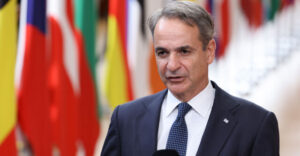
Six European countries, including Greece, are preparing to demand that the European Union postpone the introduction of its new emissions trading system (ETS2) until at least 2030, according to Politico, as Prime Minister Kyriakos Mitsotakis presses EU leaders for changes to European energy policy and measures to tackle soaring energy prices.
According to the report, Italy, Greece, Poland, the Czech Republic, Hungary and Slovakia are drafting a joint letter calling for a further delay to the implementation of ETS2, citing surging energy costs and disparities in electricity prices between EU member states.
Five European diplomats confirmed the plans to Politico. The initiative follows a European Commission proposal to postpone the introduction of ETS2 from 2027 to 2028. However, the six countries are seeking a more substantial delay, pushing the launch back to at least 2030.
The planned letter also comes in response to an appeal made earlier in the day by Nordic countries in support of the Emissions Trading System (ETS).
One diplomat cautioned that the joint letter had not yet been finalised, adding that an updated position was expected, potentially including further comments from Italy.
Mitsotakis warns of the risk of European deindustrialisation
Against this backdrop, Mitsotakis used discussions with fellow European leaders to call for an urgent overhaul of key aspects of the EU’s ETS.
According to a Greek official who spoke to Politico and relayed the prime minister’s remarks during the closed-door meeting, Mitsotakis warned that maintaining the current system without substantial reforms posed serious risks to European industry.
“Without a significant revision of the emissions trading system, we risk the deindustrialisation of Europe,” he said.
The Greek prime minister stressed that the scheme should remain a central component of the EU’s decarbonisation strategy, while arguing that it needed to be adapted to changing circumstances.
“While it must remain a cornerstone of the EU’s decarbonisation strategy, it cannot operate as though the world has not changed since it was adopted,” he said.
Calls for greater flexibility to support households and businesses
Mitsotakis also expressed opposition to the current wording of the draft European Council conclusions, arguing that they failed to adequately address the urgency of the situation created by rising energy prices.
According to the Greek official cited by Politico, the prime minister told his counterparts that “the conclusions, in their current form, do not reflect the urgency of the energy crisis”.
He placed particular emphasis on the need for greater fiscal flexibility, allowing member states to introduce measures to shield households and businesses from rising energy costs.
“We need greater flexibility within the existing fiscal framework to provide targeted, tailored and temporary support measures for vulnerable households and businesses,” he said.
The prime minister’s calls for reform of the emissions trading system and additional support for households and businesses come as negotiations between EU member states over energy policy continue, with the six-country initiative on ETS2 still in the preparatory stages.
Ask me anything
Explore related questions




