





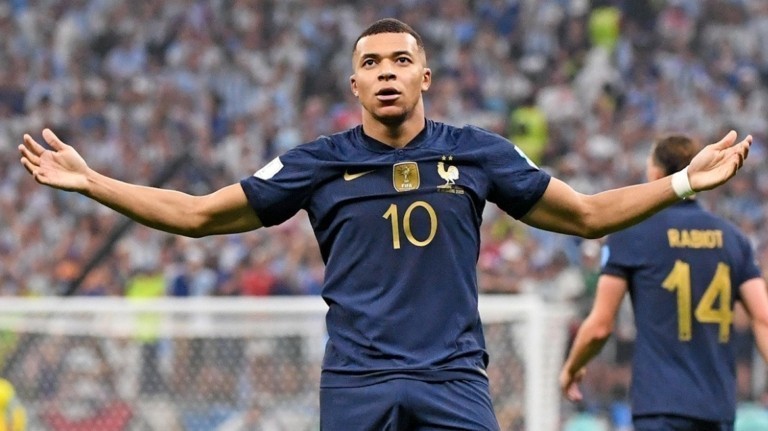
The Real Madrid star faces a growing backlash after referring to a figure in an internet meme as a ‘Chinese dictator’, prompting three Chinese companies to cut ties, social media restrictions and the suspension of LaLiga broadcasts.
French football superstar Kylian Mbappé has apologised following a major backlash in China over comments apparently referring to Mao Zedong as a dictator, after several Chinese companies terminated their sponsorship agreements with the Real Madrid forward.
The controversy, which erupted after footage from an interview circulated online, has rapidly escalated into a commercial and diplomatic dispute, with China’s state television suspending broadcasts of Spanish league football, social media platforms restricting the player’s accounts and major international brands facing questions over their association with him.
The 27-year-old France captain issued an apology on Tuesday, 27 October, acknowledging that his comments had caused offence among Chinese supporters and communities around the world.
“My comment was ill-judged, and I now understand that it hurt many people in China and in Chinese communities around the world,” Mbappé wrote on X.
“I apologise to everyone my words have upset. This was absolutely not my intention. I have deep respect for the Chinese people and their history, and I am sincerely sorry.”
His apology came after three Chinese companies confirmed they were ending their commercial relationships with the footballer, while Spain’s LaLiga also expressed regret over the incident.
The internet meme that triggered the controversy
The dispute began with a video clip from an interview connected to the French online programme The Bridge, in which Mbappé was asked which internet meme featuring himself had made him laugh the most.
The footballer recalled an image in which his face had been digitally superimposed on another person’s body.
Two major Chinese brands have dropped Kylian Mbappé after a video appeared to show him calling Mao Zedong a “Chinese dictator.” Drinks giant Dongpeng and dairy producer Mengniu terminated their sponsorship deals, accusing the French football star of offending Chinese national sentiments.
— Clash Report (@clashreport) October 27, 2026
He described the figure as “some guy – I think he’s a Chinese dictator”, without specifically identifying Mao Zedong.
The image was widely interpreted as depicting Mao, the revolutionary leader who founded the People’s Republic of China in 1949 and remained its dominant political figure until his death in 1976.
Mbappé also explained that he had shared the meme with friends while playing online video games.
Similar images have circulated among football supporters for months, portraying the French international as various historical and military leaders. The jokes are partly connected to perceptions of his considerable influence within the teams he represents.
Although the clip spread rapidly across Chinese social media, the footage has not been independently authenticated.
In China, references to Mao remain highly sensitive, and jokes about the former leader can provoke strong criticism, particularly among nationalist social media users.
Three Chinese companies terminate sponsorship agreements
The backlash quickly moved beyond social media, with major Chinese businesses announcing the immediate termination of their partnerships with Mbappé.
Energy drinks producer Dongpeng Beverage, also known as Eastroc Beverage, was among the first companies to sever its commercial relationship with the player.
The company said it maintained a zero-tolerance policy towards behaviour that offended national sentiment and confirmed that all cooperation with Mbappé would end immediately.
At least three Chinese firms are cutting ties with French soccer star Kylian Mbappé, after he made some comments apparently referring to Mao Zedong, the founding leader of Communist China, as a dictator. Read more: https://t.co/qd82vIcIjn
— ABC News (@ABC) October 27, 2026
Chinese dairy giant Mengniu issued a similar announcement, stating that it strongly opposed comments or actions that hurt the feelings of the Chinese people.
A third company, Shanghai Milkground Food Tech, which produces dairy products and cheese, also confirmed that it was terminating its agreement with the French international.
The companies did not explicitly mention Mao Zedong in their statements, but their announcements followed the widespread circulation of the controversial footage.
The decisions represent a significant commercial setback for Mbappé, whose popularity in China has helped make him an attractive advertising figure for international and domestic brands.
During the 2026 World Cup, Chinese television audiences regularly saw advertisements featuring AI-generated images of Mbappé promoting Dongpeng energy drinks.
Chinese television suspends LaLiga broadcasts
The controversy has also affected Spanish football’s presence in one of its most important international markets.
According to Chinese media reports, state broadcaster CCTV suspended broadcasts of LaLiga matches and content involving Mbappé following the dispute.
Advertisements and promotional videos featuring the French player were also removed.
The restrictions extended to Chinese social media, where Mbappé’s accounts faced limitations and promotional material was withdrawn.
Chinese platform Xiaohongshu, internationally known as RedNote, confirmed that its content partnership with Mbappé had already ended in 2024. It subsequently announced the removal of promotional material associated with the player and restrictions preventing his account from gaining new followers.
The controversy also dominated Weibo, China’s major social media platform, where several topics concerning Mbappé became trending searches.
Some users demanded that the footballer be blacklisted in China, while others called on companies to remove his image from products and advertisements.
LaLiga apologises as Real Madrid declines to comment
The response has placed additional pressure on Spain’s LaLiga, which has spent years building commercial relationships with Chinese broadcasters, sponsors and football supporters.
League president Javier Tebas issued a public apology, expressing regret over the offence caused by Mbappé’s comments.
UPDATE: Mbappé Breaks Silence – Apologises To China Over ‘Dictator’ Joke Hours after losing millions in Chinese sponsorships and sparking a diplomatic row, Real Madrid star Kylian Mbappé has apologized for his “ill-judged” joke about former Chinese leader Mao Zedong. The 27-year-old took to X on Tuesday: “During a recent interview, I reacted to an image of myself. My comment was ill-judged, and I now understand that it hurt many people in China and in Chinese communities around the world.” “I apologise to everyone my words have upset. This was absolutely not my intention. I have deep respect for the Chinese people and their history, and I am sincerely sorry.”
— Why It Is Trending (@trendingblog247) October 27, 2026
Tebas said LaLiga was working directly with its Chinese partners to address the situation and protect the relationship between Spanish football and its supporters in China.
“A relationship built over so many years cannot be damaged by a single episode,” he said.
The Spanish league’s response reflects concern that the controversy could affect clubs and commercial partners beyond Real Madrid.
Real Madrid, meanwhile, declined to comment on the controversy.
Dior, On Holding and other international brands face scrutiny
Beyond his Chinese sponsorship agreements, Mbappé maintains a wide-ranging portfolio of international commercial partnerships, making the controversy potentially significant for several global businesses.
The French forward has longstanding associations with luxury fashion house Dior, part of the LVMH group, and has previously promoted Swiss watchmaker Hublot.
Chinese media reported that Dior had removed some social media posts featuring the player, although the company had not publicly announced the termination of its relationship with him.
Swiss sportswear company On Holding, which recently agreed a ten-year partnership with Mbappé, also came under scrutiny after posts featuring him reportedly disappeared from its Chinese social media account.
The company’s shares faced selling pressure during Tuesday’s trading, falling by as much as 5.2% in pre-market dealings.
Shares in Chinese businesses associated with Mbappé also declined. Eastroc Beverage fell by as much as 4.1% in Shanghai, while Mengniu lost approximately 3% in Hong Kong.
However, there has been no confirmed announcement that On Holding, Dior or Mbappé’s other international partners have terminated their contracts.
On Holding and hotel group Accor had not immediately responded to requests for comment, while Lego said it could not comment. A Lego building set featuring Mbappé remained available on the company’s Chinese website on Tuesday.
China’s Foreign Ministry responds to the controversy
The dispute also prompted a response from the Chinese government.
Foreign Ministry spokesman Guo Jiakun was asked about the controversy during a regular press briefing.
He said that words or actions hurting the feelings of the Chinese people would naturally encounter opposition from different sections of Chinese society.
Chinese state-backed media also criticised the incident.
The Global Times questioned the remarks attributed to Mbappé, while China Daily highlighted the risks faced by international celebrities whose commercial success depends partly on maintaining positive relations with Chinese audiences.
The episode illustrates the sensitivity surrounding China’s revolutionary history and the commercial consequences that can follow when prominent international figures become involved in politically charged controversies.
Previous boycotts involving the NBA and international brands
Mbappé is not the first internationally recognised sporting figure to face commercial repercussions following controversy in China.
In 2019, the NBA became embroiled in a major dispute after Daryl Morey, then general manager of the Houston Rockets, published a social media message supporting pro-democracy protesters in Hong Kong.
The incident led to the suspension of some broadcasts, the withdrawal of commercial partnerships and a prolonged deterioration in relations between the American basketball league and Chinese stakeholders.
International fashion and sportswear companies, including H&M and Nike, have also faced consumer boycotts in China over their positions on cotton sourcing and human rights concerns in Xinjiang.
Luxury brands have likewise encountered criticism over advertising campaigns, cultural sensitivities and commercial disputes.
The recurring controversies demonstrate how quickly consumer sentiment in China can affect international businesses, particularly when political identity and national pride become central to online debate.
Mbappé’s difficult week after losing the Ballon d’Or to Harry Kane
The controversy unfolded immediately after another disappointment for Mbappé, who missed out on the 2026 Ballon d’Or on Monday, 26 October.
The Real Madrid forward attended the awards ceremony at the London Palladium, where England captain Harry Kane won football’s most prestigious individual honour.
Kane became the first Englishman to receive the men’s award since Michael Owen in 2001, following a remarkable season in which he scored 73 goals in 65 appearances for Bayern Munich and England.
Mbappé finished second in the voting, ahead of Barcelona’s Lamine Yamal, who placed third.
The French striker had previously expressed confidence in his performances, telling L’Équipe in September that nobody had been better than him during the previous season.
The following morning, Kane posted a message on X which read:
“Work hard in silence. Let your success make the noise.”
Work hard in silence. Let success be your noise. 🏆
— Harry Kane (@HKane) October 26, 2026
While there is no evidence that the message was directed at Mbappé, it emerged as the Frenchman’s controversy in China continued to attract international attention.
With major Chinese sponsorship agreements already cancelled, broadcasts suspended and criticism continuing online, Mbappé’s apology has become an important attempt to contain the damage to his reputation in one of world football’s largest commercial markets.
Ask me anything
Explore related questions




