





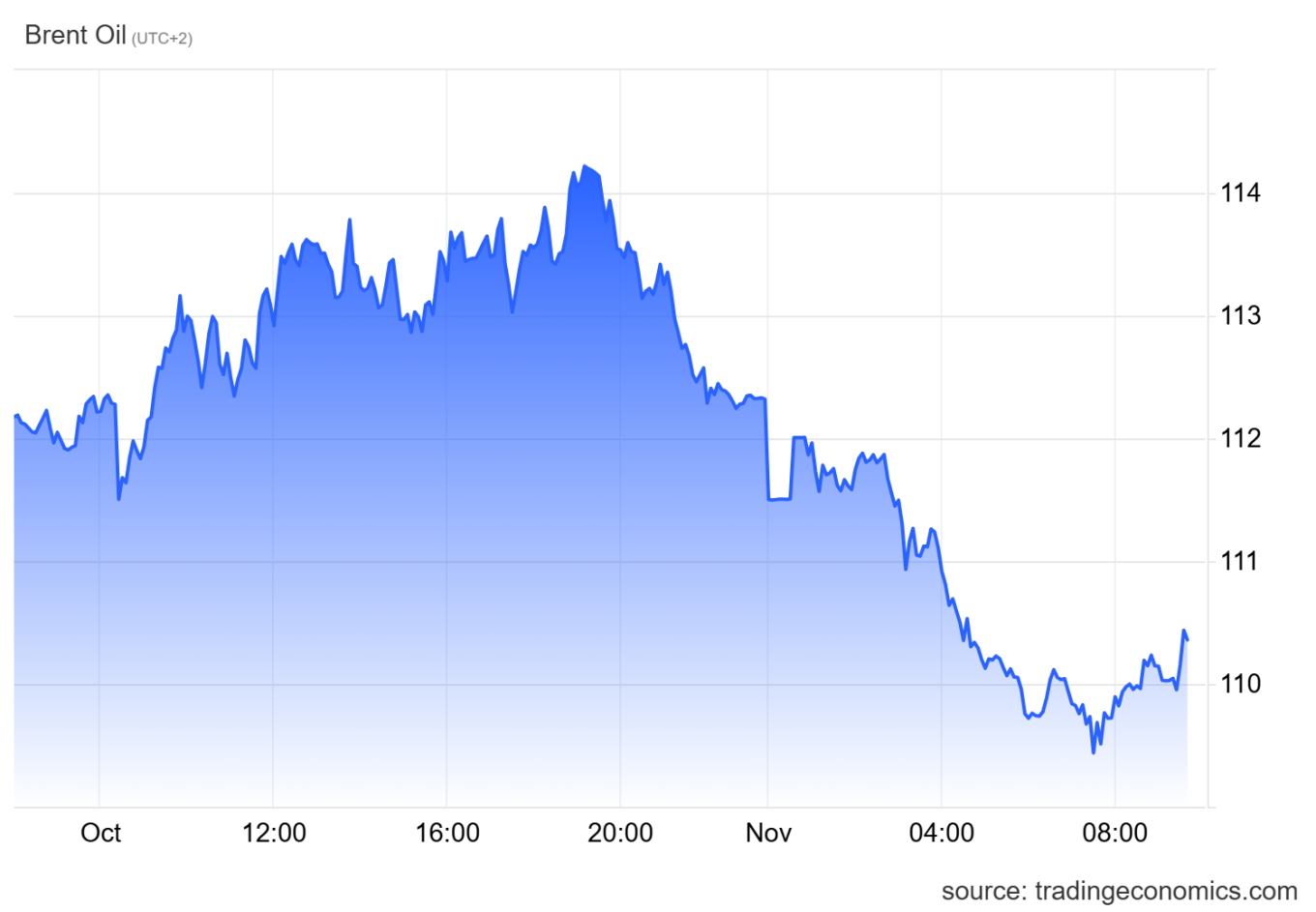
Brent crude prices fell by more than 3% at one point on Monday, dropping to $110 a barrel and wiping out the previous week’s gains. Investors are weighing signs of diplomatic efforts to end the conflict in the Middle East against fears that US military operations against Iran could resume.
According to reports, US President Donald Trump intends to give diplomacy more time before deciding whether to resume strikes against Iran. The decision is expected to be made after Tuesday’s midterm elections in the United States.
Meanwhile, diplomatic contacts between Qatar and Iran continued for a third consecutive day, as Gulf countries stepped up efforts to prevent further escalation of the crisis in the region.
Tehran’s threats keep uncertainty high
Despite diplomatic initiatives, tensions remain high. Tehran has repeatedly warned that any new attack against Iran would trigger retaliation against American and Israeli targets in neighbouring countries.
The prospect of a fresh military escalation remains a key source of uncertainty for the oil market, as any widening of the conflict could affect energy flows and exports from the Middle East.
OPEC+ leaves production targets unchanged
On the supply side, OPEC+ agreed over the weekend to keep its existing production targets unchanged through December.
The organisation continues to monitor conditions in the global oil market, assessing the balance between supply and demand. The decision to maintain quotas suggests that, for now, OPEC+ remains focused on monitoring developments, with no changes to its planned output.
Ask me anything
Explore related questions




