





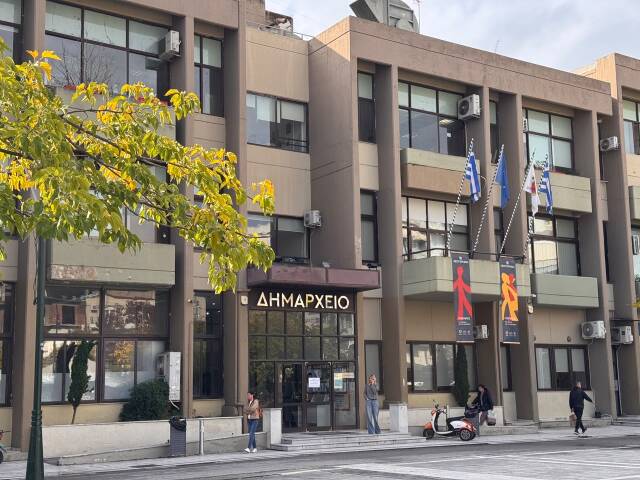
A statement by the Hellenic Police (ELAS) concerning an operation by its Internal Affairs Division, which resulted in 11 arrests, has revealed how the criminal ring operating inside the Katerini Building Authority since December 2025 functioned, with the involvement of both authority employees and private-sector engineers.
It is recalled that a total of 11 people were arrested in Monday’s operation: four employees of the Building Authority and seven private-sector professionals, including surveyors, civil engineers, mechanical engineers, and architects.
In addition to the 11 people arrested, another 64 individuals are named in the case file. Among them are an employee of another public service and a building inspector.
The investigation that led to the operation by the Northern Greece Internal Affairs Division of the Security Forces was launched following a complaint. After the complaint was received, investigators established that a criminal group had been operating since last December, with employees allegedly “issuing administrative acts illegally or irregularly, or expediting their processing in exchange for money or other benefits.”
According to the Hellenic Police, the illegal transactions took place both inside the Katerini Building Authority’s offices and in external locations. In several cases, the money was handed over directly at the employees’ desks.
The ELAS announcement reveals the role played by the private-sector engineers, whose signatures and professional stamps lent an appearance of legitimacy to technical studies and topographical diagrams prepared by the employees involved in the Building Authority. This allowed the illegal payments to be presented as fees for the provision of engineering services.
The money was handed over mainly in cash, often inside envelopes, diaries, and other objects, while members of the ring used hand gestures and coded expressions when discussing the amounts they were to receive. In some cases, the money was delivered through third parties or even sent in parcels through courier companies, with relatives listed as recipients, in order to avoid directly linking the individuals involved to the transactions.
The members of the group also attempted to “launder” the money, either by using cash for everyday transactions and purchases or through games of chance and betting, in an effort to conceal its true origin and make it appear legitimate.
The investigation so far has uncovered 151 illegal transactions through which members of the ring obtained or received €138,000, as well as items such as electrical appliances, computers, mobile phones, and furniture.
Police officers involved in the operation found and seized €264,000 in homes, cars, offices, and business premises. Some of the money was stored in a total of 30 envelopes. They also seized securities with a total nominal value of €420,000, 38 British gold sovereigns, four gold coins, jewelry, and valuables.
The Hellenic Police announcement on the ring operating inside the Katerini Building Authority
The Northern Greece Internal Affairs Division of the Security Forces dismantled a criminal group comprising employees of a Building Authority and private individuals, who allegedly engaged in illegal activities and facilitated the processing of cases involving construction activity in exchange for financial and material benefits.
In order to put an end to their activities, a large-scale police operation was carried out in the early hours of Monday, November 2, 2026, in areas of Northern Greece and in Athens. A total of 11 people were arrested as part of the operation: four employees of a municipal Building Authority in Northern Greece and seven private individuals working in professions related to construction activity, including surveyors, civil engineers, mechanical engineers, and architects.
A case file was compiled against them for, as applicable, bribery of a public official in exchange for an act or omission contrary to their duties, committed repeatedly; repeated bribery of a public official; breach of duty; participation in a criminal group; forgery; obtaining a false certification through deception; issuing a false certification and falsification; bribery and receiving bribes in the private sector; disobedience; as well as violations of legislation on the prevention and suppression of money laundering, the regulation of the gambling market, and narcotics.
A further 64 individuals whose identities have been established are also included in the case file. Among them are an employee of another public service and a building inspector, for whom evidence emerged of involvement in separate cases of breach of duty and bribery, respectively.
The investigation was preceded by a relevant complaint. After being brought to the attention of the prosecutor supervising the Northern Greece Internal Affairs Division of the Security Forces, the Thessaloniki Court of Appeals Prosecutor, it was forwarded to a Prosecutor’s Office of First Instance for criminal assessment, and a preliminary investigation was ordered.
As established during a lengthy and thorough preliminary investigation, which included the use of special investigative measures, employees of the Building Authority and private individuals working in professions related to construction activity had allegedly formed a criminal group at least as far back as December 2025, with the aim of committing criminal offenses related to their official duties and obtaining illegal financial benefits.
More specifically, exploiting their official positions and responsibilities, the employees allegedly issued administrative acts illegally or irregularly, or expedited their processing in exchange for money or other benefits. The transactions took place both at their workplaces and in external or private locations, while in several cases the money was handed over directly at their offices.
The private-sector engineers also played a particular role. According to the findings of the investigation, they contributed to the operation of the ring by using their professional status to facilitate the processing of the cases in question.
More specifically, the employees involved even undertook the preparation of technical studies and topographical diagrams, as well as carrying out procedures required for the issuance of administrative acts. The private-sector engineers, through their signatures and professional stamps, gave the relevant documents the required formal validity and an appearance of legitimacy.
In this way, the illicit financial benefits were presented as fees for the provision of engineering services. The private-sector engineers allegedly knew how the ring operated and actively participated, either by receiving a share of the financial benefits or by securing preferential treatment and faster processing of their clients’ cases, without paying the amounts required of other applicants.
To make their activities more difficult to detect, the members of the ring took measures to conceal both the money and their communications with one another. Payments were made mainly in cash, often inside envelopes, diaries, and other everyday objects, while the members used hand gestures and coded expressions in their discussions to indicate the amounts being exchanged.
In some cases, the money was delivered through third parties or even sent in parcels via courier companies, with their relatives listed as recipients, in order to avoid directly linking them to the transactions.
At the same time, according to the investigation, the illegal proceeds were concealed through the use of cash for everyday transactions and the purchase of assets. Some of the money was also allegedly channeled through the banking system and gambling and betting companies, with the aim of concealing its true origin and presenting it as legitimate income.
The investigation to date has identified 151 alleged criminal offenses, in connection with which illicit financial and material benefits totaling €137,932.58 were requested or received. Of this amount, €4,760.58 corresponded to material goods, such as electrical appliances, computers, mobile phones, and furniture.
Searches were carried out at homes, vehicles, business premises, and employees’ offices, as well as on the suspects themselves. The following items were found and seized:
- Cash totaling €264,440, some of which had been carefully separated and placed inside 30 envelopes;
- Securities with a total nominal value of €420,000;
- 38 British gold sovereigns and four gold coins;
- Jewelry and valuables;
- Seven narcotic tablets without a medical prescription;
- A mechanical stamp bearing a circular seal and wording certifying the authenticity of a signature;
- Eight professional stamps belonging to civil engineers;
- Numerous diaries, notebooks, and sheets of paper containing handwritten notes;
- Numerous electronic devices, including desktop computer towers, laptops, tablets, mobile phones with SIM cards, hard drives containing digital data, and portable USB storage devices; and
- Documents relating to the case under investigation.
The Northern Greece Internal Affairs Division of the Security Forces also notified the Authority for Combating Money Laundering from Criminal Activities.
The arrested individuals will be brought before the competent prosecutorial authority, together with the case file compiled against them.
Ask me anything
Explore related questions




