





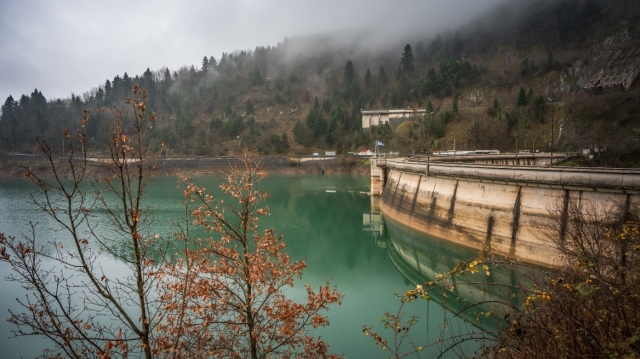
This year marks 67 years since the tragedy that left its mark on the creation of Lake Plastiras. It was a shipwreck on the lake in December 1959 that claimed the lives of 20 people, workers from Neochori, plunging the local community into mourning.
Mr George Karantonis, a teacher and president of the Neochori Youth Cultural Association, and the grandson of one of those who drowned, has spent four years researching the disaster. He is now presenting its history for the first time to the Athens-Macedonian News Agency (AMNA). Drawing on documents, testimonies, photographs and other material previously unknown to the public, Mr Karantonis has helped bring the tragedy back into the collective memory.
In 1959, the ambitious Tavropos Dam project had begun filling the Nevropoli plateau with water. Less than two months after the artificial lake was flooded, a new reality had taken shape in the area. Farmland, grazing land and roads were submerged by rainwater.
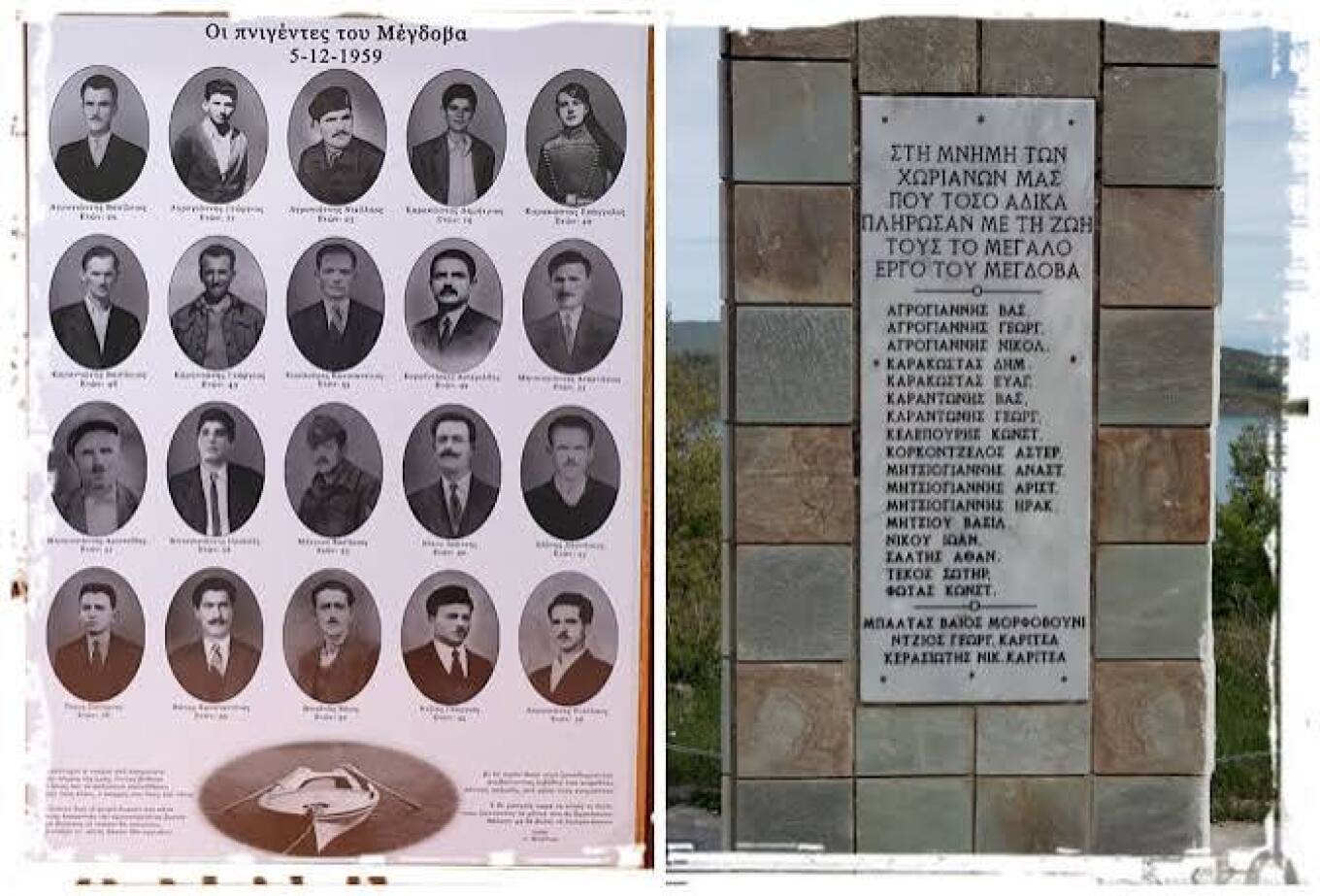
The connection between the villages and Karditsa via Tsardaki was cut off. At the time, a resident of Neochori bought a boat and began operating daily services between Tsardaki and Neochori, providing transport for people living in the surrounding area. Life in the Nevropoli region had entered a new era. No one could have imagined that the creation of the lake – a project intended to generate electricity and provide drinking and irrigation water to the entire Karditsa plain and beyond – would lead to an accident on a scale the area had never witnessed before.
On 5 December 1959, the eve of the feast of Saint Nicholas, 20 people – most of them workers on the lake project – set off from the Tsardaki area, carrying gifts and supplies for their families. They planned to cross to the opposite shore, where the Neochori Botanical Garden now stands, so they could celebrate Saint Nicholas’ Day at home. None of those aboard the ill-fated boat would ever complete the journey.
With Nevropoli now flooded, it was the quickest way for them to reach their homes. There were no roads: the existing routes had been cut off by the water, while new ones had yet to be built.
Boats were the only means of communication between western and eastern Nevropoli. The weather was particularly severe that day. Despite being urged not to board and instead to spend the night in Tsardaki, where there was a café and grocery shop, the group ignored the warnings and set off.
Before they had covered even half the distance, the overloaded boat was unable to withstand the strong winds and harsh weather conditions and capsized. All 20 people on board drowned. None of them could swim, including the boatman. There were no life jackets or other safety measures, and the water was freezing. Only one person tried to save himself, but to no avail.
The bodies were eventually found at the bottom of the lake, after a long period of searching by teams of divers. The news shocked the whole of Greece, and the region was plunged into mourning. It was the deadliest freshwater maritime disaster in the country up to that point.
In 2019, at the initiative of Panagiotis Nanos, then newly elected mayor of Lake Plastiras and a writer on local history, a two-day conference was held to mark the 60th anniversary of the lake’s creation. The first day was dedicated to the first victims. In a statement to AMNA, Mr Nanos said:
“History is a valuable resource for the development of a region. The story of the lake’s creation, as well as the victims of the tragic shipwreck, are part of an ambitious project that changed the destiny of our home. We collected valuable photographs and other material, which now form a permanent exhibition at the Botanical Garden.
“These are records of the agricultural production and economic life of our area, a plateau whose history was also marked in more recent times by the National Resistance and the partisan airfield. Beyond the unjust loss of the 20 men – 17 of whom came from Neochori – the construction of the lake deprived local communities of fertile farmland. Residents lost vital sources of income, leading to mass emigration.
“Today, Lake Plastiras is a source of life, a solid foundation for economic and tourism development, and an integral part of our area’s identity. The memory of those who lost their lives so unjustly remains alive in our local communities.
“2027 will mark 100 years since the first delegation brought to the area by Plastiras visited to assess whether the project and the creation of the lake were feasible. That was the beginning. The municipality will publish a commemorative volume, which will include a chapter dedicated to the tragic accident, featuring rare photographs.”
Source: Athens-Macedonian News Agency (AMNA)
Ask me anything
Explore related questions




