





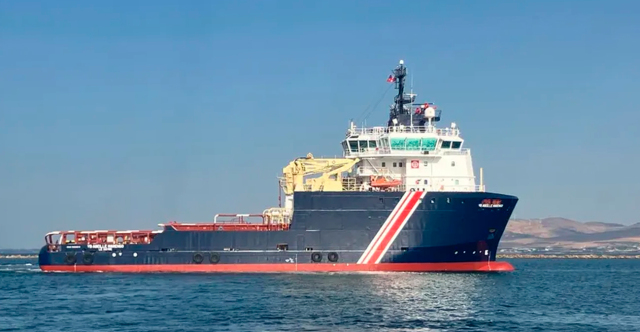
France sent a fresh notification to the “coastal” states late yesterday evening concerning the survey work by the French vessel Abeille Marengo, under the NAVTEX issued by the Heraklion Station. According to reports, the move was intended to overcome a problem that appeared to have emerged following yesterday’s announcement by the Turkish Foreign Ministry and the Turkish NAVTEX issued beforehand.
Turkish Foreign Minister Hakan Fidan struck a reassuring tone in a statement to Manolis Kostidis, SKAI’s correspondent in Istanbul, saying that “everything is normal, everything is fine”. Turkish diplomatic sources, according to the same report, maintained that the issue that had arisen had now been resolved.
Greek diplomatic sources, however, were quick to respond to his remarks, stressing: “Turkey’s internal handling of the matter is no concern of ours. Greece is the only country with the authority to grant permits. It has acted as it was required to under international law and will continue to do so.”
France’s role
Yesterday, it appeared that the understanding reached with the mediation of the French side had been overturned, as Ankara was demanding that an application for authorisation of the survey work be submitted to the Turkish authorities, arguing that simple notification was not sufficient.
Such a demand was clearly problematic, since Turkey was simultaneously issuing warnings that all surveys throughout the Eastern Mediterranean – including, of course, those in areas of Greece’s delimited Exclusive Economic Zone (EEZ) – would have to be authorised and co-ordinated by the Turkish authorities.
A diplomatic source points out that Hakan Fidan was away from Ankara yesterday, visiting the occupied territories, and that there may have been confusion over the substance of the understanding reached with the French, as well as the specific handling arrangements required.
According to reports, the French side sent a fresh notification yesterday to both Ankara and Nicosia. Among other things, it clarified that, through this survey, France “is not taking a position on issues or claims concerning maritime zones” put forward by either side. It remains unclear whether the notification also included the coordinates of the survey route, as the Turkish side had initially demanded.
Athens nevertheless believes that, given the international climate, the new political environment in the United States following the midterm elections, the process of forming a government in Israel with the support of Arab parties, the strong and widespread reaction from the EU and major regional players to the Turkey-Libya Memorandum, and the fact that Turkey is hosting the major climate conference in Antalya, Ankara is unlikely to opt for serious escalation.
Instead, a response through the usual means of harassing the survey vessel over the radio is considered highly likely. Turkey has done this in the past, including in the Aegean, during surveys in international waters and on the Greek continental shelf for the electricity interconnection with the Aegean islands.
For now, everyone is waiting for the vessel to set sail and resume its survey work, in order to establish whether the understanding reached and the additional clarifications provided by the French side will be sufficient. The aim would be to give Turkey a pretext to avoid appearing to back down from its central position that authorisation must be sought from its own authorities, while also preventing an escalation of tensions.
Such an escalation would have consequences not only for Greece and the GSI project itself, but also for Turkey.
Ask me anything
Explore related questions




