





Washington tells Ankara, Athens and Nicosia that no country has grounds to object to such infrastructure projects, as a French survey vessel prepares to begin work.
Excerpt: The United States has stepped into the diplomatic dispute over the Greece-Cyprus electricity interconnector, warning against objections to the project as a French research vessel prepares to enter contested waters in the eastern Mediterranean.
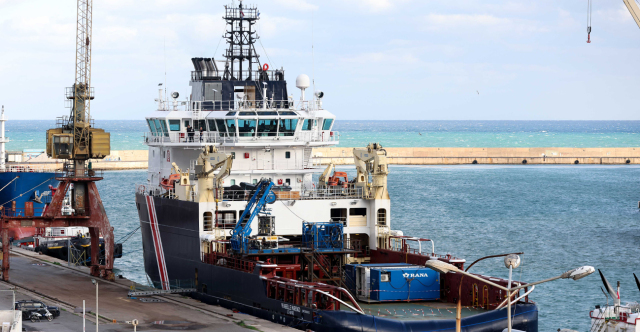
The United States has launched a diplomatic intervention aimed at ensuring that survey operations for the Greece-Cyprus electricity interconnector proceed without further disruption, as the French vessel Abeille Marengo prepares to reach the designated survey area within hours.
The American initiative follows intensive diplomatic negotiations intended to consolidate understandings reached in recent days through French mediation and prevent another confrontation with Turkey over the resumption of work on the project.
According to information obtained by protothema.gr, Washington is communicating its position through US diplomatic missions in Ankara, Nicosia and Athens, delivering a message consistent with the stance outlined by US Secretary of State Marco Rubio during his visit to the Greek capital.
The American position is unequivocal: “In projects of this kind, there is no justification for any party to raise an objection.”
As the message to Ankara is being conveyed verbally, US Ambassador to Turkey Tom Barrack is expected to handle the communication.
French diplomatic intervention and Turkey’s counter-NAVTEX
The American intervention comes as a political dispute has developed in Athens over the nature of France’s communication with Turkey concerning the forthcoming surveys.
The controversy, which began on Sunday, has focused not on the substance or outcome of the French notification but on whether it took the form of a “note verbale”, the standard diplomatic instrument used to communicate information and formal positions between governments.
France’s latest communication with Ankara took place on Friday, after indications emerged that the project could face further obstacles following Turkey’s issuance of a counter-NAVTEX, a maritime navigational warning challenging the notices issued by Greece and Cyprus.
The full content of the French communication remains unknown, beyond an indication that France does not involve itself in “questions concerning claims over maritime zones”.
It is also unclear whether the notification contained further operational details, including the coordinates of the vessel’s planned survey route.
Although providing such information would not constitute an application for authorisation by the company conducting the surveys, Ankara could potentially use it to argue that Turkey also has a role in approving operations in the area.
Turkey may seek to publicise that position by issuing another NAVTEX once the surveys begin.
The central fact, however, is that the company submitted requests for survey authorisation exclusively to Greece and Cyprus. Both countries subsequently issued their respective NAVTEX notices on Friday.
This appears to have been a principal factor behind Ankara’s objections and its subsequent response.
Greece insists notification does not amount to a request for Turkish consent
Responding to opposition criticism over France’s written communication with Turkey, a well-informed source stressed that the notification had been purely informative and carried no implications for the allocation of maritime jurisdiction.
“Following the authorisation of the surveys by Greece, written communication took place with countries in the region. This was for information purposes and did not constitute a request for permission or consent,” the source said.
The same source emphasised that notifying third countries does not amount to recognising their jurisdiction over maritime areas.
“Informing third parties does not imply recognition of the maritime jurisdiction of third countries. This is also clear from the distinction between, on the one hand, the company’s submission of an application to Greece and the issuance of a NAVTEX by the Greek authorities and, on the other, the simple notification to Turkey, which subsequently issued a counter-NAVTEX,” the source explained.
The distinction is central to Athens’ position that the authorisation process remains separate from diplomatic communications intended to avoid operational misunderstandings.
Legal disagreement over notification and consent
The legal implications of notifying third countries about submarine cable surveys remain disputed, even among specialists in international law.
One school of thought maintains that such surveys require authorisation from the relevant coastal state because they indirectly concern the continental shelf, over which coastal states possess rights ab initio and ipso facto, meaning from the outset and automatically, without the need for a formal declaration.
According to this interpretation, notifying a third party is not only unnecessary but could establish an undesirable precedent by creating the impression that continental shelf jurisdiction is being exercised jointly before maritime boundaries have been delimited.
A different interpretation holds that surveys conducted for the laying of submarine cables do not require the authorisation or consent of coastal states.
Supporters of this position argue that cable-laying surveys should not be classified as marine scientific research, a category for which the United Nations Convention on the Law of the Sea provides a role for coastal states.
They also contend that these operations do not concern the continental shelf in the same legal sense.
Moreover, maritime boundaries in parts of the Eastern Mediterranean remain undelimited, with overlapping continental shelf claims by several coastal states.
Under this interpretation, notification serves a practical purpose, facilitating communication and maritime safety without establishing any legal precedent or implying recognition of another country’s jurisdiction.
Turkey’s challenge to Greek NAVTEX jurisdiction
The dispute also reflects a longstanding disagreement between Greece and Turkey over responsibility for issuing navigational warnings.
Turkey systematically challenges the geographical area within which Greece exercises NAVTEX responsibilities, which Athens identifies with the Athens Flight Information Region, or FIR.
Ankara argues that no agreement has established the relevant boundaries and consequently claims responsibility for a much broader maritime area.
The zone claimed by Turkey corresponds to the outer limits of its “Blue Homeland” doctrine, extending as far as the middle of the Aegean Sea and across extensive areas of the Eastern Mediterranean.
Against this background, the forthcoming operations of the Abeille Marengo represent a practical test of whether the latest diplomatic understandings can prevent renewed disruption.
With the French vessel expected in the survey area within hours, the intervention by Washington adds a further diplomatic dimension to efforts to ensure that work on the Greece-Cyprus electricity interconnector can proceed without additional obstacles.
Clarify the specific US messageTighten the legal analysis
Ask me anything
Explore related questions




