





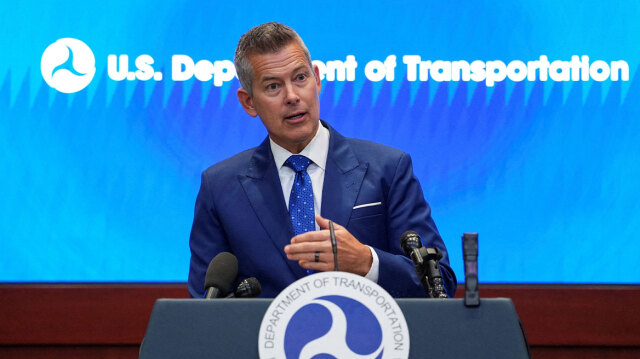
United States Transportation Secretary Sean Duffy said the technical failure that occurred on Friday night, grounding thousands of flights across the country, was linked to maintenance work on ageing copper cables within the aviation system, although he stressed that the precise cause of the malfunction remains unknown.
Speaking at a press conference, Duffy said there was no indication that the disruption had been caused by a cyberattack originating from a foreign country. “We don’t believe that, because once we were able to isolate the work that was being done at this remote location, all of our systems came back online,” he explained. “We don’t believe at all that this was a cyberattack. This is an FAA system that didn’t respond… at that moment, either our contractor didn’t respond or the equipment didn’t respond, and that caused the outages.”
The Transportation Secretary also clarified that the problem was unrelated to the upgrade of the SMART platform carried out in recent days.
Watch the US Transportation Secretary’s press conference:
Duffy calls for additional funding: “How much longer are we going to wait?”
The Transportation Secretary reiterated his appeal to Congress for additional funding to modernise the US’ air traffic control systems. He said that $12.5 billion has already been spent, but stressed that further investment is needed to bring the total to $50 billion. “I hope they rise to the demands of the moment,” he said, referring to Congress, before asking: “How much longer are we going to wait, America?”
He also emphasised that the United States has “the safest and busiest airspace in the world”.
A spokesperson for the US Department of Transportation said cancellations and delays would continue throughout Saturday, although conditions were expected to improve on Sunday.
Earlier on Saturday, Duffy said in a post on X that flights were “slowly returning to normal this morning” following the chaos on Friday night, when thousands of flights were grounded at the direction of the Federal Aviation Administration (FAA). The nationwide ground stop was imposed shortly before 11pm on Friday, Greek time, and lifted at approximately 3.30am on Saturday.
Here’s the latest: Operations are slowly returning to normal this morning. Planes are pushing back, taxiing, and taking off, and it is safe to fly. We are in close coordination with the airlines to support the ongoing recovery. You will continue to see some delays and cancellations as carriers reschedule flights and reposition aircraft/crews where they are needed most. Our top priority right now is making sure travelers get home safely to their families as quickly as possible. To our air traffic controllers, pilots, and flight crews who are working around the clock: the nation thanks you for your professionalism and dedication to the flying public. We’ll be holding a press briefing to share additional updates at 10:30AM ET at USDOT headquarters. Please continue to check your flight status directly with your airline, and visit https://t.co/5jvR1ktpk5 for real-time airport updates.
— Secretary Sean Duffy (@SecDuffy) November 14, 2026
In his post on X, Duffy said authorities were “working closely with airlines to support the ongoing recovery”, but warned passengers that they would “continue to see some delays and cancellations” as efforts to restore normal operations continued.
“Our top priority right now is ensuring that travellers get home safely to their families as quickly as possible. To the air traffic controllers, pilots and flight crews who are working around the clock: your country thanks you for your professionalism and dedication to the travelling public.”
According to flight-tracking website FlightAware, nearly 6,000 flights within, into or out of the United States had been affected by cancellations or delays so far on Saturday.
At the time of publication, 3,807 flights had been cancelled and another 2,145 delayed.
The nationwide ground stop was lifted on Friday night, US time, but widespread disruption and a growing backlog of flights have continued since then.
Delta Air Lines, United Airlines and American Airlines have recorded the highest numbers of cancellations, with 652, 553 and 520 flights respectively, according to FlightAware.
Chicago O’Hare International Airport, Hartsfield-Jackson Atlanta International Airport and John F. Kennedy International Airport in New York have recorded the highest numbers of cancellations, according to the flight-tracking website.
Ask me anything
Explore related questions




