





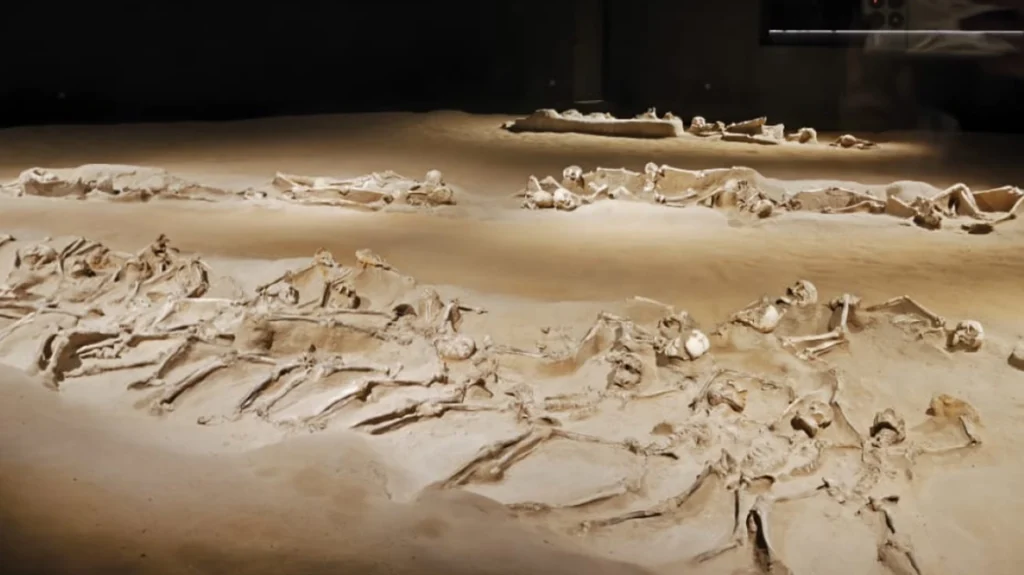
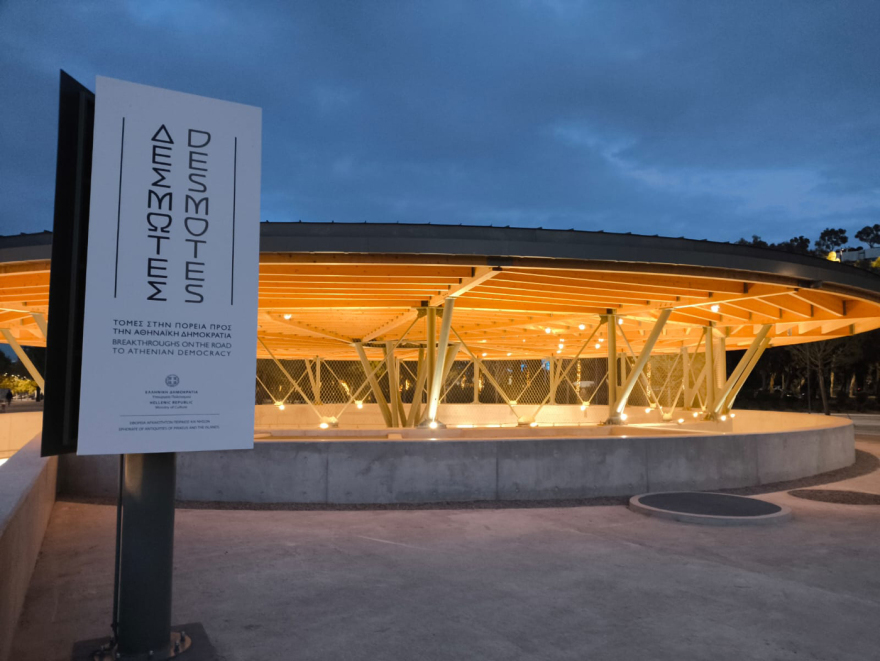
An age-old ordeal came to an end today for the famous “Phaleron Prisoners”: the 79 men who were executed and buried in the Attic soil during the second half of the 7th century BC, with their hands bound behind their backs or even chained to one another. They were discovered in 2016 during construction work on the Stavros Niarchos Foundation Cultural Center, constituting an archaeological find of major international significance. From now on, they will rest for eternity there, at the Esplanade, the site of their original burial, inside a specially designed underground museum enclosure that allows members of the public to view them.
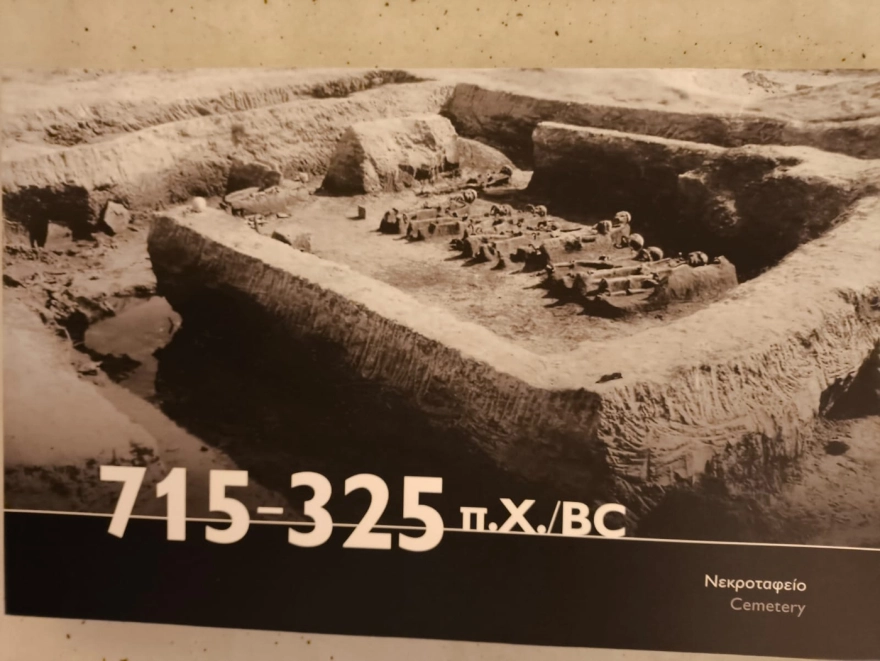
The iron-shackled men, who were found laid out in three rows and had suffered fatal blows to the head, are burials from a large cemetery discovered in the area. They are associated with the period of political turmoil that began in the early 7th century BC and continued into the 6th century BC.
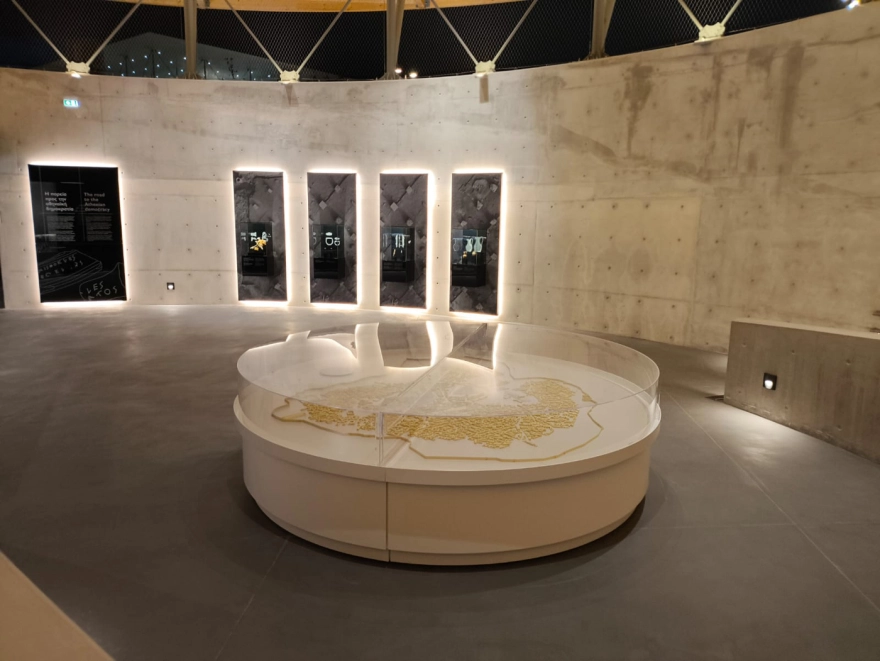
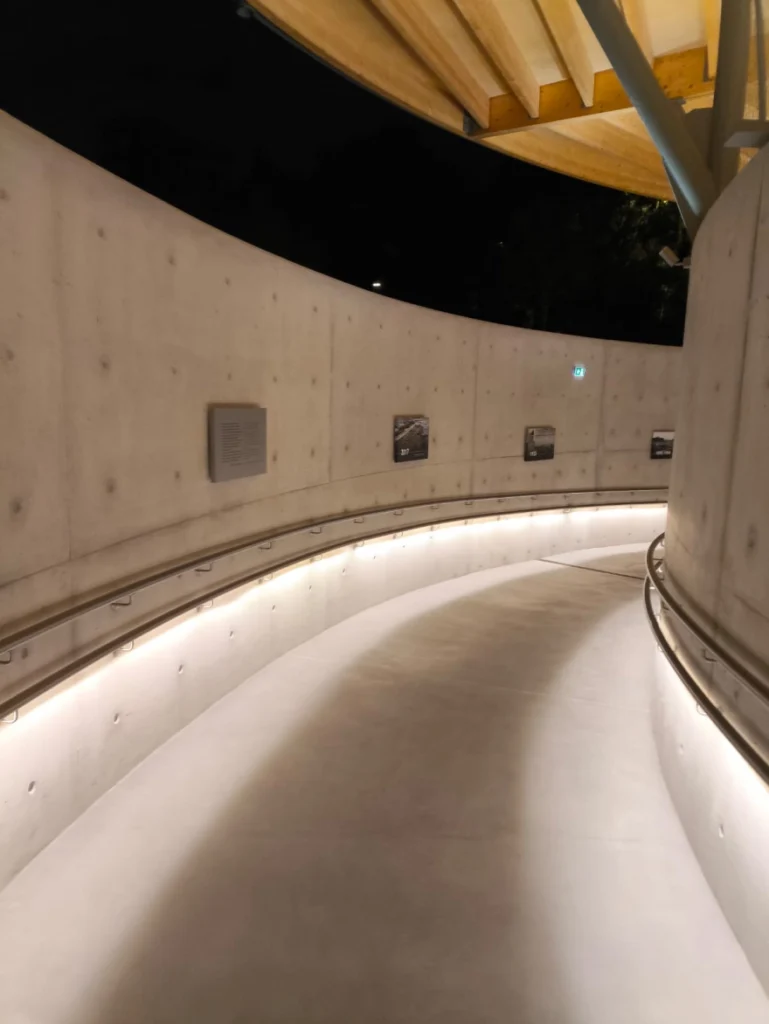
The visitor’s first experience of this impressive new archaeological and museum space is a spiral journey from light into darkness and then back into the light, from life to death and back to life again. As we descend into the ancient underworld, we encounter a series of depictions of the area, from antiquity to the present day. Next, an interactive display made of hinged cubes, together with a unique large-scale model illustrating the urban development of Athens, immerses us in the atmosphere of the period and prepares us for what we are about to see…
The corridor covering the next few metres is completely dark and leads to a breathtaking sight. Before us lie the skeletons of the Prisoners, in exactly the same positions and postures in which they were buried centuries ago, within an impressive architectural landscape made of sand and stone and subtly illuminated. The ancient Prisoners have finally found their permanent resting place, while also offering modern visitors important lessons in history and archaeology. Visitors now have the opportunity to see them from a relatively close distance, through a large glass wall surrounding the space.
However, it took a full ten years from their discovery for the plan to protect and showcase them to be completed. Although it was decided in 2016 that they should remain at the site where they were found, alongside the construction of the protective enclosure, major delays and the deterioration that threatened them because of the condition of the ground led the Ministry of Culture, in 2020, to decide on their temporary removal and transfer to a nearby prefabricated enclosed structure until the works could be completed.
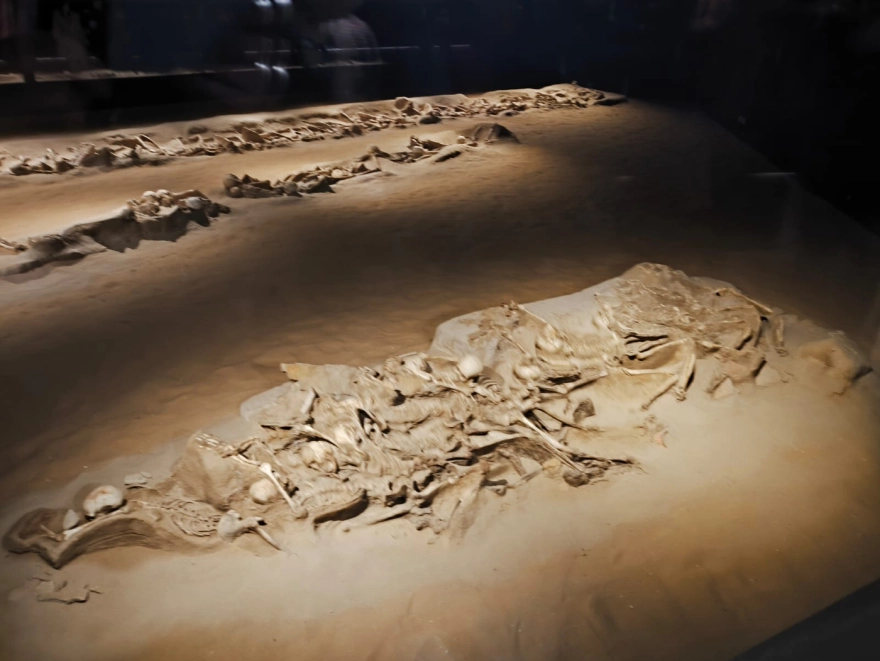
Both their relocation, which was completed in March 2023, and their subsequent return to the site required a huge, specially designed operation involving exceptionally delicate handling to ensure their integrity. It is worth noting that the method used to remove and reinstall them constitutes a worldwide case study and will be made available to other countries for similar projects.
Ask me anything
Explore related questions




