

×
GreekEnglish

×
  • Politics
  • Diaspora
  • World
  • Lifestyle
  • Travel
  • Culture
  • Sports
  • Cooking
Saturday
02
May 2026
weather symbol
Athens 12°C
  • Home
  • Politics
  • Economy
  • World
  • Diaspora
  • Lifestyle
  • Travel
  • Culture
  • Sports
  • Mediterranean Cooking
  • Weather
Contact follow Protothema:
Powered by Cloudevo
> World

How Did Paleolithic People Cook? Greece’s Franchthi Cave provides some insight

Others include the Shanidar Cave, which is located in the northwestern Zagros Mountains of Iraq

Newsroom December 1 11:54

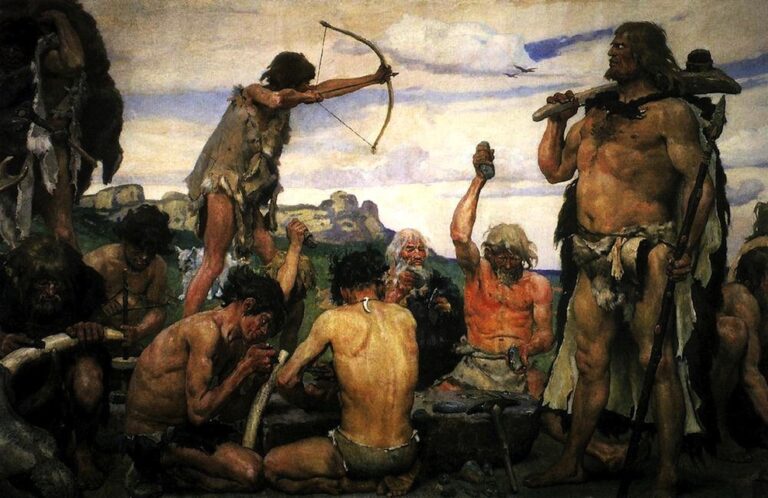
A study of charred plant remains, dating as far back as 70,000 years ago has revealed how Paleolithic people prepared foods to make them more palatable, according to a Haaretz report.

A team of researchers led by University of Liverpool archaeologist Ceren Kabukcu used a scanning electron microscope to analyze plant fragments processed by Neanderthals between 70,000 and 40,000 years ago in Shanidar Cave, which is located in the northwestern Zagros Mountains of Iraq, as well as plants cooked by humans around 12,000 years ago in Greece’s Franchthi Cave.

>Related articles

The secrets of Tsiknopempti BBQ for perfect grilling of every meat

Here are the Top 2 gelato makers qualified for the World Final of Gelato Festival World Masters

Yannick Alléno: The luxury of a dish lies in its taste, not in excess

They found that both Neanderthals and early modern humans made foods that contained multiple ingredients, primarily pulses, such as lentils, as well as nuts and grasses. “The evidence from one fragment supports this idea that Neanderthals, much like the later Homo sapiens (early modern humans), were cooking plants,” Kabukcu says. “Our evidence is also supported by previous studies that were done on plant starches trapped in the tartar preserved on Neanderthal teeth found in burials from the same [Shanidar] site.”

Both groups prepared their foods by soaking, pounding, and grinding the plants, many of which were naturally bitter due to the alkaloids and tannins in seed coats. Such techniques would have reduced, but not eliminated, the bitter taste, Kabukcu says.

source archaeology.org

Ask me anything

Explore related questions

#cooking#Paleolithic era
> More World

Follow en.protothema.gr on Google News and be the first to know all the news

See all the latest News from Greece and the World, the moment they happen, at en.protothema.gr

> Latest Stories

Partial climbdown by Iran: Says “yes” to negotiations without lifting the naval blockade, puts nuclear issues and the opening of Hormuz on the table

May 2, 2026

The 5-year-old boy who had his finger amputated at a kindergarten in Evosmos was operated

May 1, 2026

Iran submits new proposal to US to end the war

May 1, 2026

Rain and strong winds bring a cooler start to May

May 1, 2026

New Euroepean pharmaceutical hub in Tripoli

May 1, 2026

1.7 million euros would be made by the circuit from the half ton of skunk found in Igoumenitsa

May 1, 2026

Eurovision 2026: 95,000 tickets already sold to fans from 75 countries

May 1, 2026

Heavy traffic on national highways as May Day weekend getaway continues – Delays also reported on Attiki Odos (Livefeed)

May 1, 2026
All News

> Greece

In reverence, the emotional deposition in Jerusalem, see photos & video

The Holy Temple of the Resurrection opened after many days due to the war between Israel and Iran

April 10, 2026

In the final stretch for the accreditation of joint master’s degrees: Aiming for their launch in the coming academic year

April 10, 2026

Schedule for Epitaph Procession today (10/4)

April 10, 2026

Perfect weather for Easter excursions, according to Tsatrafyllia’s forecast

April 10, 2026

Easter in Greece: The customs that continue in Greek tradition – From Nafpaktos to Corfu

April 10, 2026
Homepage
PERSONAL DATA PROTECTION POLICY COOKIES POLICY TERM OF USE
Powered by Cloudevo
Copyright © 2026 Πρώτο Θέμα



