The current tensions in the Aegean and Eastern Mediterranean are neither new nor a consequence of ancient history. Their origins can be traced to 1973, when Turkey first contested the Greek continental shelf. Since then, in the aftermath of Turkey’s invasion of Cyprus and its hardened stance towards Hellenism, the scope of that challenge has widened to encompass a broad range of rights associated with Greek sovereignty at sea and in the air. With the Imia crisis of 1996, Turkey went so far as to reject Greek sovereignty over territory which previous international agreements (the Lausanne Treaty of 1923, the Italo-Turkish Agreements of 1932 and the Paris Treaty of 1947) had, taken all in all, made Greek.
Greece’s position is straightforward and, since the return of democracy in 1974, consistent. Greece wants stability in the Aegean and Eastern Mediterranean and views the international legal order as its guarantor. All bar three of the islands in the Aegean (Bozcaada, Gökçeada and Tavşan) are Greek. They are home to a sizeable population: just over half a million people. Respect for the international treaties and agreements that underpin this settlement is, accordingly, essential in Greek eyes.
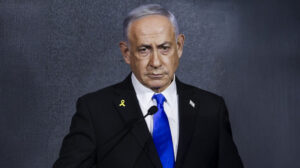
Greeks have reacted with alarm to the nationalist rhetoric emanating from President Recep Tayyip Erdoğan and his circles: crudely revanchist comments by Turkish Vice President Fuat Oktay are but the latest examples. To take Erdogan’s statements at face value, the Lausanne Treaty itself is now in doubt. This should raise a general alarm, beyond Greek shores.
LEGAL ARGUMENTS
Developments in international law since the 1950s have complicated matters, creating an overlay of new sovereign rights on top of prior agreements. After failing to exclude the Aegean from its scope, Turkey has notoriously refused to ratify the UN Convention on the Law of the Sea (UNCLOS) of 1982. It has done this primarily to frustrate the rights afforded to the Greek islands in the Aegean and Eastern Mediterranean. In 1995, the Turkish Parliament, extraordinarily, declared that extension of the territorial waters of Greece’s Aegean islands to 12 nautical miles (a right under UNCLOS) would constitute a ‘casus belli’. Despite all that, Turkey has declared its own exclusive economic zone (EEZ) in the Black Sea, agreeing its boundaries with the other coastal states, and has asserted its right to 12 nautical miles of territorial waters there and in the Eastern Mediterranean. Greeks point out that Turkey thus recognises the fundamental provisions of UNCLOS as customary international law, binding on all.
Covid-19 impact on global tourism could reduce world’s GDP by $2.2 trillion
There’s only one name left on the 2020 list of hurricane names – Next up: The Greek alphabet
The Greek response has been measured. Greece has not asserted its sovereign rights to 12 nautical miles of territorial waters in the Aegean (though it has now done so in the Ionian), and has long indicated its readiness to negotiate the delimitation of the continental shelf, which, in practical terms, also means its EEZ. Recent discoveries of gas in the Eastern Mediterranean add fuel and urgency to the Greek position, without fundamentally altering it. In delimiting its EEZ with other states, Greece has proceeded circumspectly: it has not, for example, used the coordinates of Kastellorizo in its partial delimitation with Egypt.
In seeking de-escalation, Greece is clear about what it wants. Above all, it wants a negotiation with Turkey, but one in which both parties have reached prior agreement to allow the International Court of Justice (ICJ) to arbitrate in the event that negotiations reach an impasse. Arbitration is surely going to be necessary: although Greece has compromised in its partial delimitation of the EEZ border with Egypt, it is hard to imagine Greek or Turkish politicians making the necessary compromises for a deal between them.
The court’s jurisprudence suggests that it will determine the issue in a way that gives neither side everything it wants. Given Turkey’s rejection of ICJ jurisdiction, a prior agreement to go to arbitration is essential (the ICJ’s disavowal of competence in Greece’s 1976 case proves the point). Furthermore, though some in NATO find this surprising, Greece does not want negotiations to begin while Turkish threats continue – whether in the form of Ankara’s increasingly abusive rhetoric or its attempts to create alternative facts at sea, by sending its survey ship, Oruç Reis, and accompanying frigates to probe in waters claimed by Turkey.
Read more: Rusi.org
Ask me anything
Explore related questions