

×
GreekEnglish

×
  • Politics
  • Diaspora
  • World
  • Lifestyle
  • Travel
  • Culture
  • Sports
  • Cooking
Wednesday
07
Oct 2026
weather symbol
Athens 17°C
  • Home
  • Politics
  • Economy
  • World
  • Diaspora
  • Lifestyle
  • Travel
  • Culture
  • Sports
  • Mediterranean Cooking
  • Weather
Contact follow Protothema:
Powered by Cloudevo
> World

The last of the Siberian Unicorns: What happened to the Mammoth-sized one-horned beasts of Legend?

The origin of myths

Newsroom September 30 11:03

Δείτε περισσότερα άρθρα μας στα αποτελέσματα αναζήτησης

Add Protothema.gr on Google

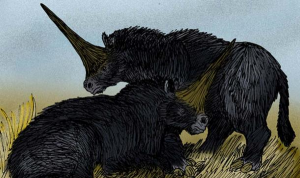
Elasmotherium, also known as the Giant Rhinoceros or the Giant Siberian Unicorn, is an extinct species of rhino that lived in the Eurasian area in the Late Pliocene and Pleistocene eras. They have been documented from 2.6 million years ago, but the most recent fossils come from around 29,000 years ago. The best known of this species, the E. sibiricum , was the size of a mammoth, covered in hair, and is thought to have had a large horn protruding from its forehead, hence the title “Siberian Unicorn”. According to early estimated descriptions, the beast stood around 2 meters (6.56 ft.) tall, 4.5 meters (14.76 ft.) long, and weighted an impressive 4 tonnes.

Deciphering the Siberian Unicorn’s Story

The species, Elasmotherium, was first named in 1808 by Johan Fischer von Waldheim, the Dirécteur Perpétuel of the Natural History Museum at Moscow University. All he produced to argue his case was the lower jaw, donated to the museum by Yekaterina Romanovna Vorontsova-Dashkova. But from this, the species was named and studied further.

See Also:

Orthodox Church petitions UN over Hagia Sophia

>Related articles

Former head of Germany’s intelligence service arrested on accusations of espionage

EuroLeague: Teams reject NBA proposal, expansion remains an open issue

How air travel in the EU is changing: The 25 major changes and new passenger rights

Russia warns Turkey over downing of Armenian Su-25 jet, saying it would retaliate

In March 2016, a beautifully preserved skull was found in the Pavlodar region of Kazakhstan proving that the animal lived until the Pleistocene era, some 29,000 years ago, instead of the previously held belief that they had died out 350,000 years ago. Based on the size and condition of the skull, it has been suggested that it was a very old male, but it is uncertain how the beast died.

Read more: ancient-origins

Ask me anything

Explore related questions

#animal#beasts#discovery#horns#legend#mammoth#mystery#siberia#unicorn#world
> More World

Follow en.protothema.gr on Google News and be the first to know all the news

See all the latest News from Greece and the World, the moment they happen, at en.protothema.gr

> Latest Stories

Marco Rubio arrives in Athens to a warm welcome from Greek Foreign Minister

October 6, 2026

Greek PM announces €95m electricity subsidy for energy-intensive industry

October 6, 2026

Marinakis: €900 million in extra VAT revenue this year, and €1.2 billion given in additional measures

October 6, 2026

Lawyer for one of seven men accused in Cornell gang rape case asks special prosecutor to step aside

October 6, 2026

Kallithea alarm lifted after two apartment blocks evacuated over suspected picric acid vials

October 6, 2026

10 years after Brexit, Britain knocking on the door it had slammed shut

October 6, 2026

“Popularity doesn’t grant immunity”, says Finance Minister about 18 influencers, rappers and models facing gambling charges

October 6, 2026

Search under way for British tourist missing in Imbros Gorge on Crete

October 6, 2026
All News

> Greece

In reverence, the emotional deposition in Jerusalem, see photos & video

The Holy Temple of the Resurrection opened after many days due to the war between Israel and Iran

April 10, 2026

In the final stretch for the accreditation of joint master’s degrees: Aiming for their launch in the coming academic year

April 10, 2026

Schedule for Epitaph Procession today (10/4)

April 10, 2026

Perfect weather for Easter excursions, according to Tsatrafyllia’s forecast

April 10, 2026

Easter in Greece: The customs that continue in Greek tradition – From Nafpaktos to Corfu

April 10, 2026
Homepage
PERSONAL DATA PROTECTION POLICY COOKIES POLICY TERM OF USE
Powered by Cloudevo
Copyright © 2026 Πρώτο Θέμα



