

×
GreekEnglish

×
  • Politics
  • Diaspora
  • World
  • Lifestyle
  • Travel
  • Culture
  • Sports
  • Cooking
Saturday
11
Jul 2026
weather symbol
Athens 32°C
  • Home
  • Politics
  • Economy
  • World
  • Diaspora
  • Lifestyle
  • Travel
  • Culture
  • Sports
  • Mediterranean Cooking
  • Weather
Contact follow Protothema:
Powered by Cloudevo
> technology

Inbreeding study reveals why humans don’t have sex with their relatives

Prehistoric humans developed surprisingly sophisticated social and mating networks and deliberately sought partners beyond their families

Newsroom November 9 04:07

Δείτε περισσότερα άρθρα μας στα αποτελέσματα αναζήτησης

Add Protothema.gr on Google

Even 34,000 years ago, our ancestors knew having sex with their relatives was a bad idea. Analysis of ancient human remains found in Russia has revealed that even among an extremely small society, incest did not take place.

The study, led by Cambridge University and the University of Copenhagen, says prehistoric humans developed surprisingly sophisticated social and mating networks and deliberately sought partners beyond their families.

The study has led to speculation that this could partly explain why anatomically-modern humans proved more successful than other species such as Neanderthals that did not avoid inbreeding.

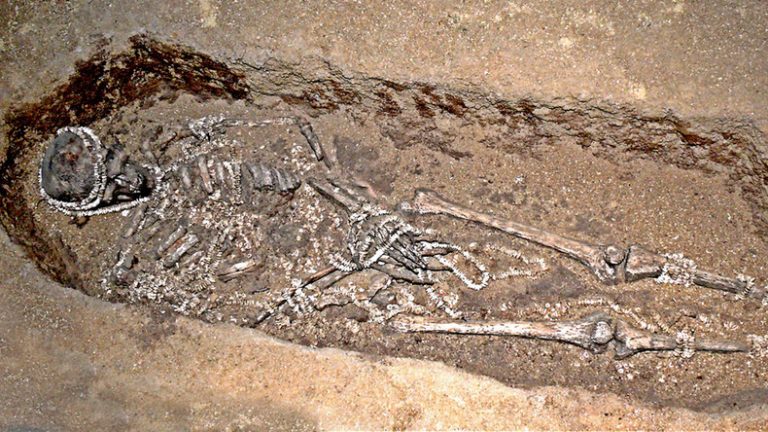
Researchers examined genetic remains of four anatomically-modern humans from Sunghir, an Upper Paleolithic site in Russia. Unusually for finds from this period, the people were found buried together.

To the researchers’ surprise, the individuals were not closely related in genetic terms. At the very most, they were second cousins. This is true even in the case of two children who were buried head-to-head in the same grave.

Objects and jewelry found buried with the remains suggest they may have developed rules, ceremonies and rituals to accompany the exchange of mates between groups which perhaps foreshadowed modern marriage ceremonies.

Professor Eske Willerslev, fellow at St John’s College, Cambridge, said in a statement: “What this means is that even people in the Upper Paleolithic, who were living in tiny groups, understood the importance of avoiding inbreeding.

“The data that we have suggest that it was being purposely avoided. This means that they must have developed a system for this purpose. If small hunter–gatherer bands were mixing at random, we would see much greater evidence of inbreeding than we have here.”

>Related articles

Greece unveils national AI Act framework: what changes for citizens, businesses and government

After the Moon and Mars, scientists set their sights on Titan: The ambitious plan for a human mission to Saturn’s largest moon

Reversal in the Aigio thriller: The unknown DNA and unanswered questions in the death of mother and son

By comparison, genomic sequencing of a Neanderthal individual from the Altai Mountains who lived about 50,000 years ago indicated inbreeding was not avoided.

It led researchers to speculate that an early, systematic approach to preventing inbreeding may have helped anatomically-modern humans to thrive, compared with other hominins.

Source: rt

Ask me anything

Explore related questions

#anthropology#Cambridge University#dna#family#genetics#Inbreeding#incest#Neanderthal#science#technology#University of Copenhagen
> More technology

Follow en.protothema.gr on Google News and be the first to know all the news

See all the latest News from Greece and the World, the moment they happen, at en.protothema.gr

> Latest Stories

‘Dr Death’: the Russian prison doctor accused of torturing Ukrainian POWs

July 11, 2026

11-hour Berlin hostage drama ends as special forces free supermarket cashier

July 11, 2026

14 Greek Hotels That Get Barefoot Luxury Right

July 11, 2026

Marfin case: accused woman to return to Greece and plead not guilty as two suspects prepare defence for Tuesday

July 11, 2026

“His head and shoulders were sticking out of the plane” – the thriller on the Ryanair flight makes headlines in global media

July 11, 2026

The plan for cheaper petrol and diesel this summer: curbing fuel price hikes with a discount at the pump

July 11, 2026

Greece unveils national AI Act framework: what changes for citizens, businesses and government

July 11, 2026

Toxic pufferfish cull: 22 questions and answers on the pilot programme paying fishermen 5.33 euros per kilo

July 11, 2026
All News

> Greece

In reverence, the emotional deposition in Jerusalem, see photos & video

The Holy Temple of the Resurrection opened after many days due to the war between Israel and Iran

April 10, 2026

In the final stretch for the accreditation of joint master’s degrees: Aiming for their launch in the coming academic year

April 10, 2026

Schedule for Epitaph Procession today (10/4)

April 10, 2026

Perfect weather for Easter excursions, according to Tsatrafyllia’s forecast

April 10, 2026

Easter in Greece: The customs that continue in Greek tradition – From Nafpaktos to Corfu

April 10, 2026
Homepage
PERSONAL DATA PROTECTION POLICY COOKIES POLICY TERM OF USE
Powered by Cloudevo
Copyright © 2026 Πρώτο Θέμα



