





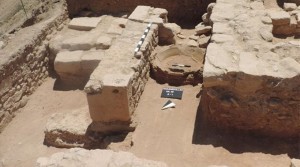
A large citadel wall of the classical period, which defines and protects the north face of a monumental edifice, known as the royal palace of the last royal dynasty of ancient Paphos, was unearthed during the excavations conducted by the University of Cyprus at Palepaphos, near the Sanctuary of Aphrodite Paphia.
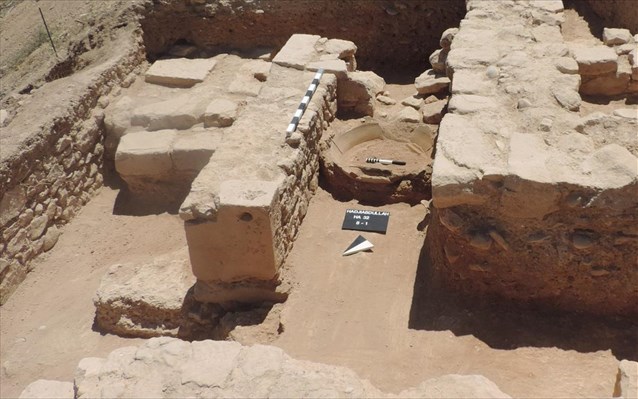
The wall, the masonry of which is of excellent quality, extends for over 80 meters on the plateau of Hadjiabdoulla and many of its segments are preserved to a height of a meter and a half.
It is a complex work of defensive architecture which consists of a three-meters wide main wall and long and narrow cross walls, which are built against the main wall and extend almost to the edge of the cliff.
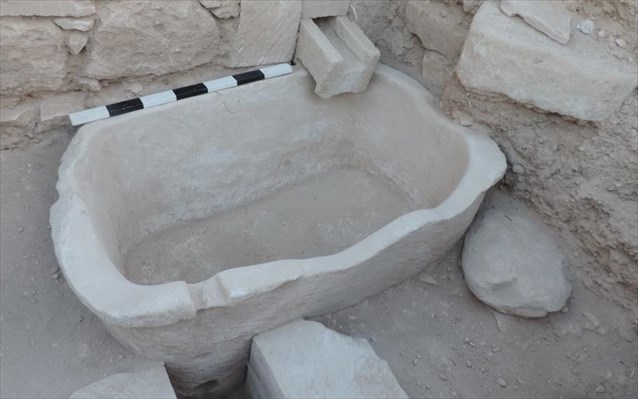
The compartments created between cross walls and terrace walls were not just emply spaces. They were used for storage and for the industrial facilities of the palace. Two large storage vessels were discovered on the site, as well as numerous fragments of local and imported vessels.
The excavations conducted under the direction of Professor Maria Iakovou lasted five weeks.The aim of the archaeological project of Palaepaphos, which is run by Ms. Iakovou, is to define the urban web of the capital of the ancient kingdom of Paphos, located on the plateaus around the sanctuary of Aphrodite.
Ask me anything
Explore related questions




