






By Marianne Thyssen

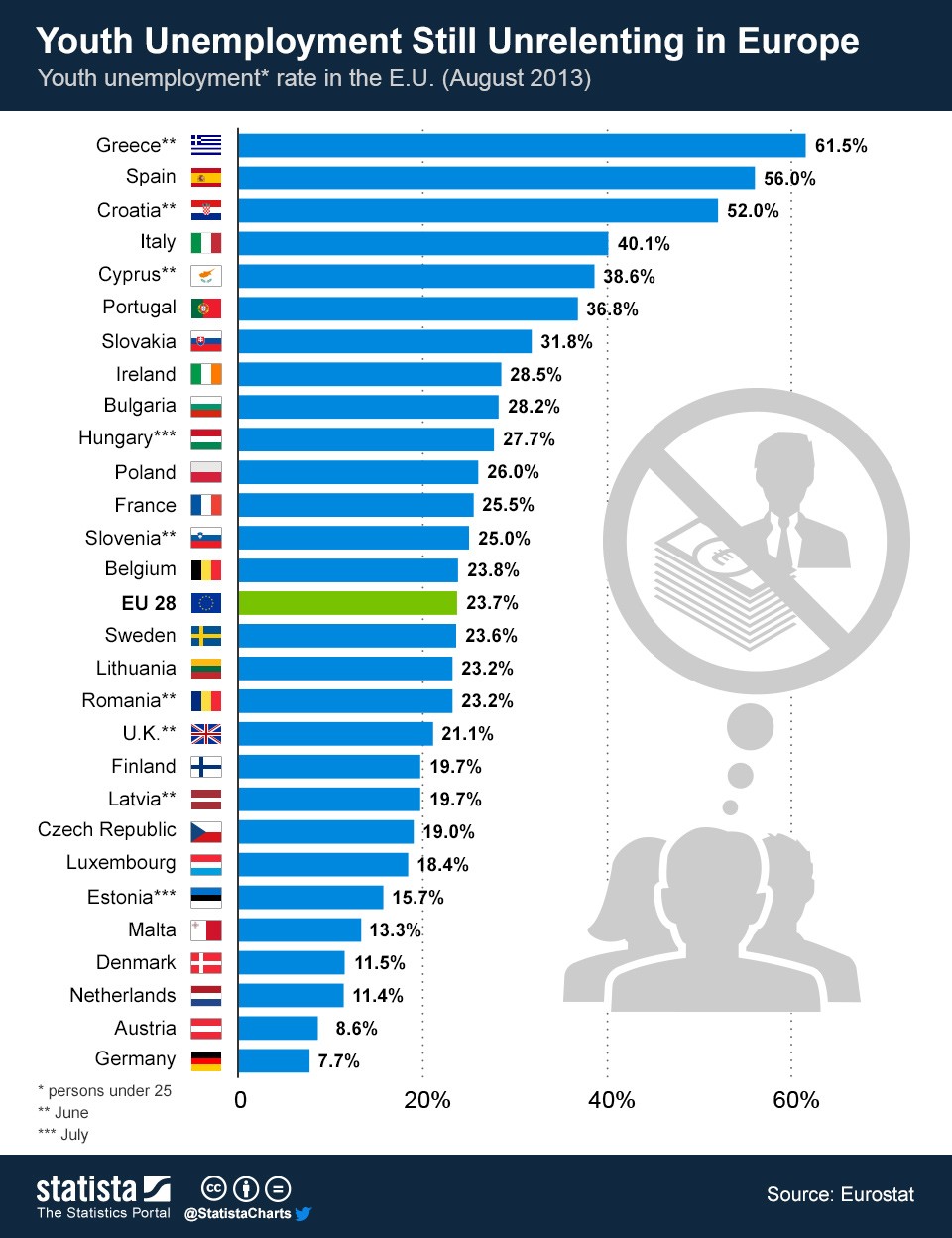
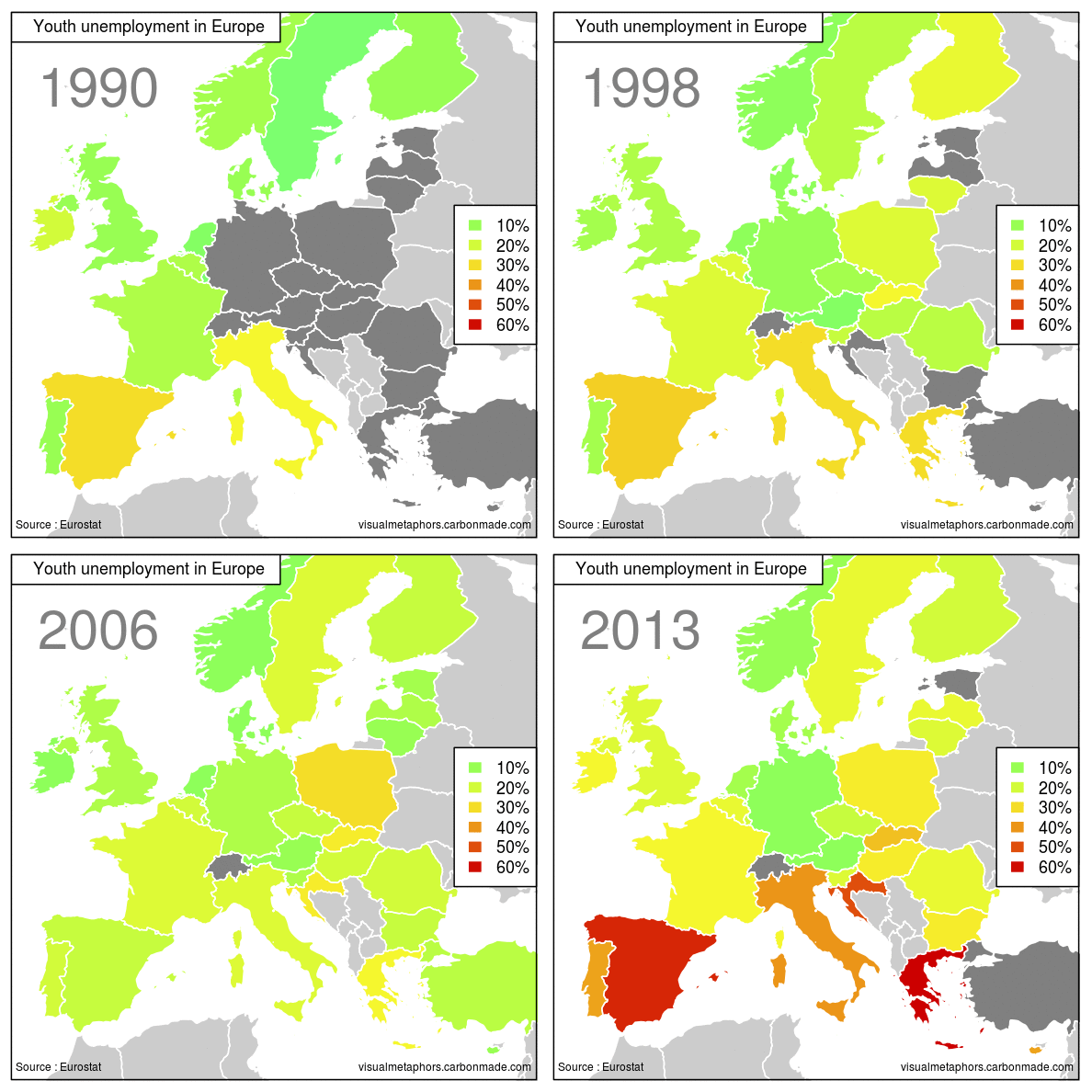
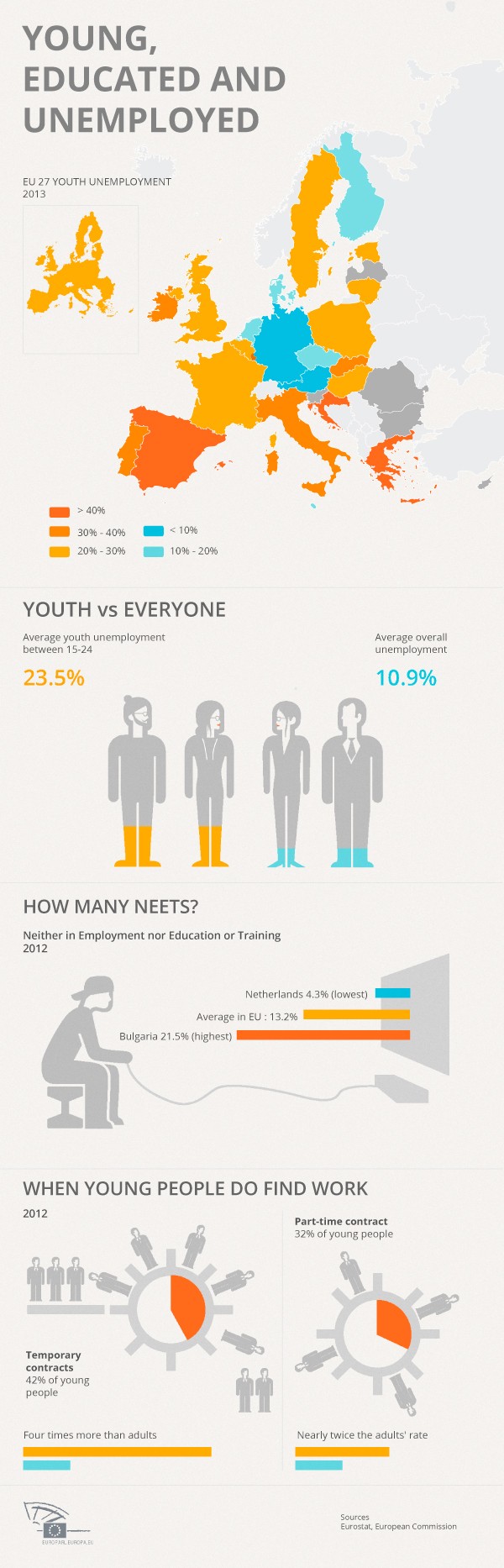
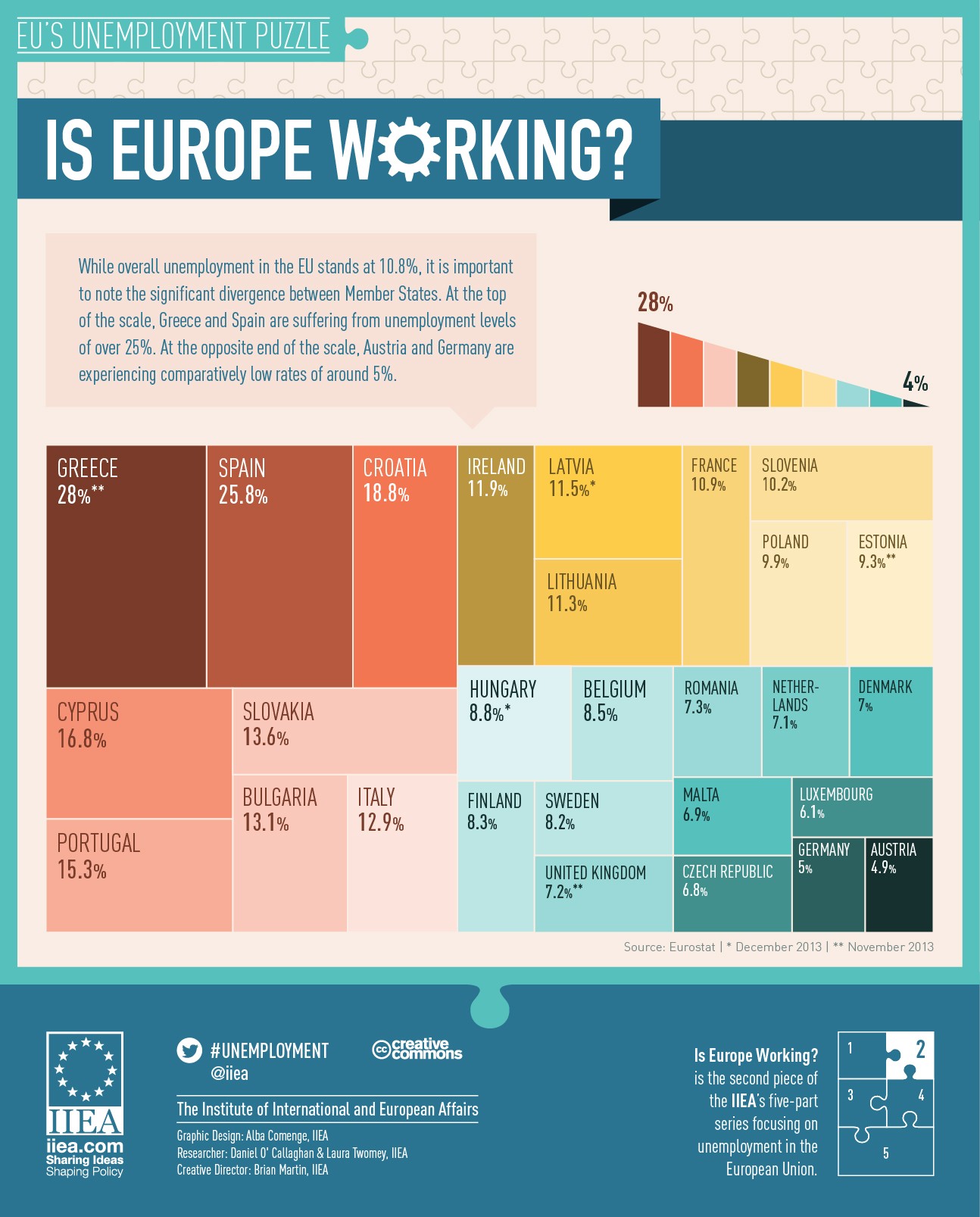
It is unacceptable that today more than every fifth young person on the labour market cannot find a job. Despite being the generation with the highest education attainment ever, today’s young have paid the highest price for the crisis. The pace of job creation has decreased as companies lack confidence in the business environment and access to the financial resources to hire new staff. However, high levels of unemployment co-exist with 2 million unfilled vacancies, an indicator that some people lack the right skills or the mobility to take up available jobs. EU growth is further hampered by the increasing numbers of people who are working below their potential. These people are often excluded from opportunities to upgrade their skills.
Labour markets have to be more efficient but also more inclusive and fairer. Nobody should be left vulnerable. Too many undeclared workers are today in very precarious, unacceptable situations, with no social protection. These situations affect all types of population, including young people.
This Commission has made a clear commitment: We want a fresh start for Europe.
Our first priority is to give a new push for job creation. This is why we have placed support to Investments, mobilising more than 315 billion euro in additional investments in strategic areas through the Investment Plan, and structural reforms at the heart of the Commission’s policy response.
Support for structural reforms: Youth Guarantee
This investment offensive must and will lead to new jobs. This is an important step to prevent a lost generation. But it is not enough. We can and will do more. The Youth Guarantee is at the core of our efforts to smoothen school-to-work transitions. The Youth Guarantee is now becoming a reality and has led to bold structural reforms. Member States strengthened, for example, the capacity of Public Employment Services, adopted incentives to stimulate job creation or took measures to improve Vocational Education and Training systems. The fact that all EU Member States presented Youth Guarantee Implementation plans last year shows a shared commitment to tackling youth unemployment and inactivity.
But we cannot afford to be complacent: In 2014 most Member States received country-specific recommendations under the European Semester process, on further reforms needed to implement the Youth Guarantee and to improve the functioning of their labour markets.
Accelerate the pre-financing through the Youth Employment Initiative
The European Union actively supports Member States in implementing the Youth Guarantee. With regard to EU financial support, the Youth Employment Initiative, with a budget of 6.4 billion euros for the next few years, and the European Social Fund, are of key importance. These instruments will not be sufficient to fully roll out the Guarantee schemes but they provide important support, which has to be used swiftly and to the best possible result. So far, the Commission has undertaken a number of steps to support Member States in the programming and implementation of the Youth Employment Initiative, including frontloading the initiative. In addition, the Commission intends to launch an additional proposal to increase pre-financing payments to Member States under the YEI. This measure is intended to address difficulties some Member States may have to implement the YEI on the ground due to lack of liquidity. Ensuring that people in Europe have the skills they need and are able to adapt to the jobs of the future is a key element of our strategy against youth unemployment. The Commission has also taken other steps to promote investments in skills and to ensure the provision of adequate skills through the Quality Framework for Traineeships and particularly the European Alliance for Apprenticeships.
European Alliance for Apprenticeships
Far too many of our young people have left school and university with good results but know the inside of employment agencies better than that of a workplace.
We therefore need to provide young people with the skills that make them attractive for employers. Technical, entrepreneurial and innovative skills that can help companies grow; but also transversal skills like language skills that will allow them to be mobile, and adapt to labour market developments and career changes that are increasingly becoming the norm.
Strengthening dialogue and cooperation between the education and training sector, employers and public authorities is an urgent must. This is the only way to ensure that what people learn in education and training is what employers are looking for. High-quality vocational education and training systems – including work-based learning and in particular apprenticeships – have proven to provide the right skills for the labour market: countries that operate such systems, such as Denmark, Germany and the Netherlands, have managed to keep youth unemployment low during the crisis years. We therefore need to significantly strengthen and scale up the European Alliance for Apprenticeships, thus enhancing the quality and image of vocational education and training in Europe. This will be part of the actions I plan to undertake during my mandate. To this end, we need to mobilize the business community, and in particular SMEs, to engage stronger in the training of young people. Particular attention must be paid to the role of vocational education and training in helping integrate women and vulnerable groups, such as disabled, minorities and immigrants, on the labour market.
Through European initiatives like ‘Your first Eures Job’ and ‘Erasmus+’, we can boost the mobility of apprentices, and strengthen learning and labour market experiences abroad. A strong EURES can make a significant contribution to supporting fair mobility across Europe. The great interest generated by “Your first EURES job”, which helps young people aged 18 to 30 to find a job in another Member State, demonstrates the need for special support to youth mobility. The Commission will continue focusing on labour mobility as vacancies and skills mismatches persist. This calls for more support for mobility of workers and continued efforts to bring down remaining obstacles. As announced on 16 December in front of the European Parliament, the Commission will present towards the end of 2015 a set of initiatives contributing to a more efficient and fairer labour mobility. The package aims at supporting labour mobility and tackling abuse by means of better coordination of social security systems, and the targeted review of the Posting of Workers Directive.
Boosting Job Creation through investment: Entrepreneurship
Entrepreneurship can be a successful path out of unemployment and inactivity. Social entrepreneurship is a particularly appealing option for young people who wish to “make a change”. Considering that younger people in Europe tend to be more dynamic and have stronger preference for self-employment than the average population, we should do everything to exploit the full potential of entrepreneurship to fight youth unemployment and – at the same time – to boost Europe’s growth potential.
Young entrepreneurs face specific challenges, such as difficulties in accessing finance, lack of awareness, lack of entrepreneurial skills and experience, limited networks as well as regulatory and administrative barriers. To address potential bottlenecks, the Commission will make use of the EUR 315 billion Investment Plan to boost microfinance and social entrepreneurship through the development of the microfinance and social investment markets. In addition, microfinance and social entrepreneurship finance under the EaSI Microfinance/EaSI Social entrepreneurship programs are effective tools for facilitating access to finance. Experience shows that, especially for young people, these initiatives work best if offered as a package with targeted business development services to address potential skills shortages.
Undeclared work
Preventing and fighting undeclared work, as well as helping undeclared workers to integrate the labour market, is also crucial in having a fair and well-functioning labour market. This is essential to improve the quality of employment and to boost formal job creation. All Member States have made efforts to prevent undeclared work or to transform undeclared work to regular employment. The Commission has proposed in 2014 to set up a European Platform on undeclared work bringing together various national enforcement authorities, to improve cooperation at EU level by sharing information and best practice. My goal is that in a few years’ time, national authorities across Europe will also be able to work hand in hand, on the ground, to combat all forms of undeclared work
Social partners
Ladies and gentlemen, social partners can and must play a central role in addressing all these challenges. The Commission will continue to support them in taking up these important responsibilities. As part of there-launching of EU social dialogue, we plan to organise a high level conference on 5 March in Brussels. Constructive and responsible social dialogue is a cornerstone of the European social market economy, and should be strengthened not only at European but also at national level. It is a prerequisite to well-functioning inclusive labour markets combining competitiveness and fairness.
Ask me anything
Explore related questions




