

×
GreekEnglish

×
  • Politics
  • Diaspora
  • World
  • Lifestyle
  • Travel
  • Culture
  • Sports
  • Cooking
Thursday
18
Jun 2026
weather symbol
Athens 30°C
  • Home
  • Politics
  • Economy
  • World
  • Diaspora
  • Lifestyle
  • Travel
  • Culture
  • Sports
  • Mediterranean Cooking
  • Weather
Contact follow Protothema:
Powered by Cloudevo
> Culture

Ancient Greeks painted their gods in vibrant colours (PHOTOS)

Scholars and art lovers are slowly getting warmer to the idea of "statuary polychromy"

Newsroom February 1 08:06

Δείτε περισσότερα άρθρα μας στα αποτελέσματα αναζήτησης

Add Protothema.gr on Google

For 15 years now, the traveling exhibition Gods in Colour, has been constantly moving from one city of the world to another, challenging the long-established idea that ancient art is a celebration of ‘pure marble white’.
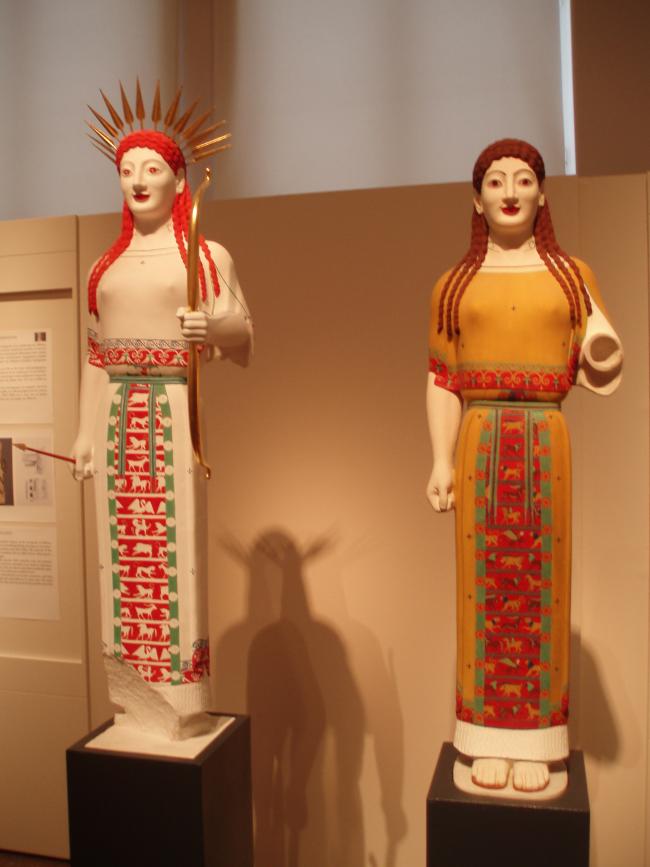
NFstatues_peplos_kore_as_athena-artemis

(The Peplos Kore of the Acropolis museum, recreated in vibrant colour as Athena and Artemis)

The exhibition is the love child of the German archaeologist Vinzens Brinkmann, who has been researching ancient polychromy since the early 1980s. Brinkmann, along with other archaologists, have been using ultra-violet light to trace colour on marble statues which retain no signs of their original decorations. The technique has managed to confirm what had been suspected for at least a couple of centuries, since pioneering Hellenist, historian and archaeologist Johann Joachim Winckelmann published his two-volume history of ancient art in 1764: that ancient art would have been a riot of colour and glitzy decoration.

Last week, BBC revisited the issue, after the end of yet another successful run of Gods in Color, this time in San Francisco (it has previously been, among other cities, in Mexico City, Oxford, Vienna, Stockholm, Berlin, Madrid, Amsterdam, Istanbul, Rome and of course, Athens, at the National Archaeological Museum).
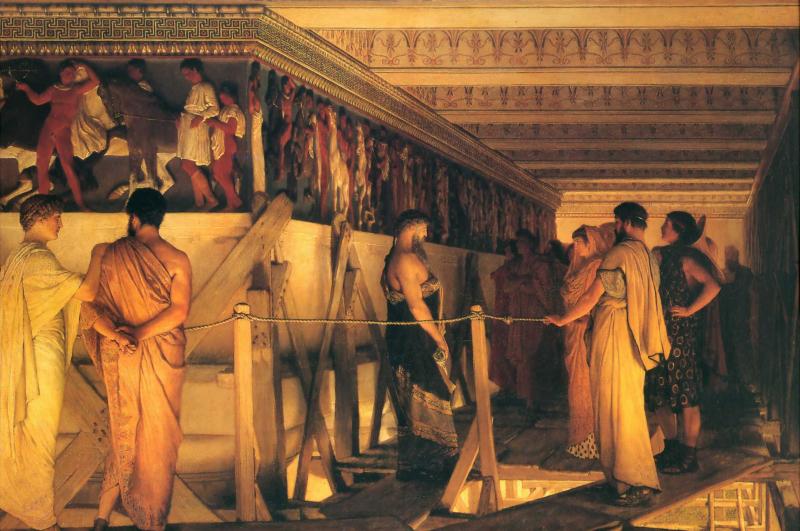
1868_Lawrence_Alma-Tadema_-_Phidias_Showing_the_Frieze_of_the_Parthenon_to_his_Friends_1

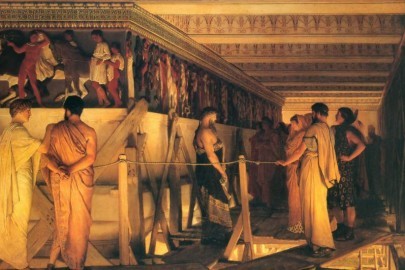
Written by Natalie Haynes, the BBC story focuses on a 1868 painting by Lawrence Alma – Tadema, titled ‘Phidias Showing the Frieze of the Parthenon to his Friends’. It depicts the sculptor, one of the most significant artists of the classical era, presenting his work on what is now considered one of the most important monuments in the world. What caused a stir at the time was that the painter chose to present the sculptures in vibrant colours, something that was considered a kind of sacrilege.

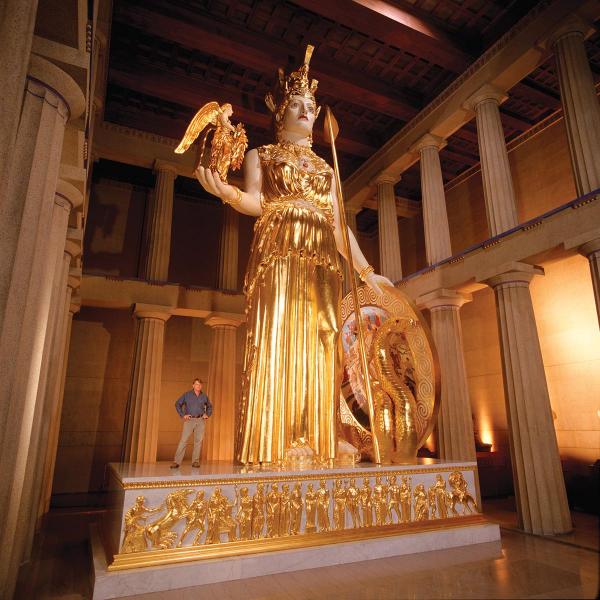
Phidias also created a huge statue of Athena Parthenos to stand inside the Parthenon, which has acquired legendary status since its destruction, though a modern day replica in Nashvill, by Alan LeQuire is acknowledged as the larger indoors statue in the world. It is covered in gold and ivory, as the original was, evidence of the multicolor nature of Ancient art. Other evidence comes from roman murals, depicting painted statues.
>Related articles

Greece has some of Europe’s cleanest swimming waters: Ranked second, just behind Cyprus

Unique image: The western pediment of the Parthenon has been completed after 220 years

Temperatures rise, meltemi winds persist, where it will rain today

lequire_athena-2

Despite all evidence and historical analysis, the idea of colored statues still unsettling for an audience long educated to consider classical Greek art as a sea of white serenity. But, as Natalie Haynes writes, “the global audience for Brinkmann’s Gods in Colour exhibition has surely proved that there is an appetite for modern recreations of the brightness of ancient statuary.”

Source: neoskosmos.com

Ask me anything

Explore related questions

#acropolis#ancient greece#archaeology#art#culture#Exhibition#greece#Greeks#history#museum
> More Culture

Follow en.protothema.gr on Google News and be the first to know all the news

See all the latest News from Greece and the World, the moment they happen, at en.protothema.gr

> Latest Stories

Greece has some of Europe’s cleanest swimming waters: Ranked second, just behind Cyprus

June 18, 2026

OSE: First upgraded section of Athens–Thessaloniki railway enters service – When traffic will be suspended on the Lianokladi–Larissa section

June 18, 2026

AI, decarbonisation and future skills take centre stage at Imperial College Alumni event during Posidonia 2026

June 18, 2026

Sweeping inspections in urban planning offices for money laundering, assets and bank accounts under scrutiny

June 18, 2026

Unique image: The western pediment of the Parthenon has been completed after 220 years

June 18, 2026

Top 10 European destinations with the most complaints about bed bugs and dirty beds, Athens also on the list

June 18, 2026

Minimum Admission Threshold: Vacant seats, the paradox at the Hellenic Military Academy, and pressure on regional Universities

June 18, 2026

Tax incentive for hedge funds from London, Asia and the Middle East – Goal: Turn Athens into an investment hub

June 18, 2026
All News

> Greece

In reverence, the emotional deposition in Jerusalem, see photos & video

The Holy Temple of the Resurrection opened after many days due to the war between Israel and Iran

April 10, 2026

In the final stretch for the accreditation of joint master’s degrees: Aiming for their launch in the coming academic year

April 10, 2026

Schedule for Epitaph Procession today (10/4)

April 10, 2026

Perfect weather for Easter excursions, according to Tsatrafyllia’s forecast

April 10, 2026

Easter in Greece: The customs that continue in Greek tradition – From Nafpaktos to Corfu

April 10, 2026
Homepage
PERSONAL DATA PROTECTION POLICY COOKIES POLICY TERM OF USE
Powered by Cloudevo
Copyright © 2026 Πρώτο Θέμα



