

×
GreekEnglish

×
  • Politics
  • Diaspora
  • World
  • Lifestyle
  • Travel
  • Culture
  • Sports
  • Cooking
Tuesday
04
Aug 2026
weather symbol
Athens 34°C
  • Home
  • Politics
  • Economy
  • World
  • Diaspora
  • Lifestyle
  • Travel
  • Culture
  • Sports
  • Mediterranean Cooking
  • Weather
Contact follow Protothema:
Powered by Cloudevo
> technology

The Mystery of the missing mass under the Indian Ocean might have been solved

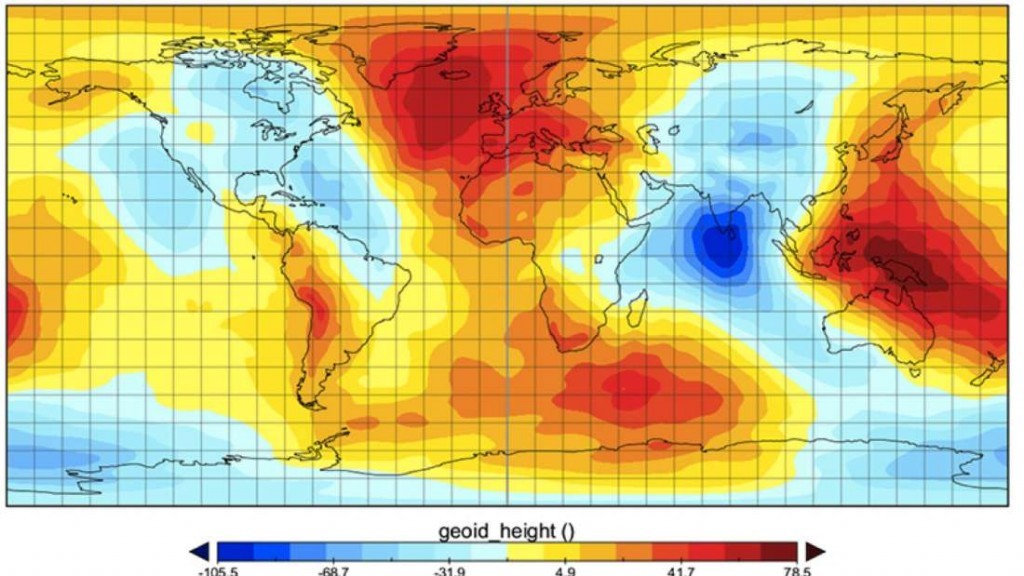
A map referred as a "geoid" has long found that there's a massive piece of mass –more than 100 meters in depth– missing from under the Indian Ocean

Newsroom February 1 10:32

Δείτε περισσότερα άρθρα μας στα αποτελέσματα αναζήτησης

Add Protothema.gr on Google

No matter what you might have learned in physics lessons, the Earth is not a perfect sphere. The gravitational potential across its surface can vary quite a bit, due to the density of the material under your feet. Whether you’re in Melbourne or Montreal, you might have different material below you.

The map of this gravitational potential is called the “geoid” and it reveals something quite peculiar – there’s a big chunk of mass missing underneath the Indian Ocean. Its cause has been an enduring mystery, however researchers now suggest that the mantle beneath the Indian subcontinent has a lot more hot and light material than expected. The new research is reported in Geophysical Research Letters.

“The existence of the Indian Ocean geoid low is one of the most outstanding problems in Earth Sciences,” lead author Professor Attreyee Ghosh, from the Indian Institute of Science, said in a statement. “It is the lowest geoid/gravity anomaly on Earth and so far no consensus existed regarding its source. It is remarkable as it means that there is some mass deficit in the deep mantle that’s causing the low.”

If the ideal geoid is seen as a perfect sphere, the Indian Ocean geoid low (IOGL) would be equivalent to a depression of over 100 meters (328 feet). Scientists had previously suggested that beneath the cause of the anomaly was an ancient oceanic plate that sunk below the Indian plate millions of years ago. This explanation left many unconvinced and the team searched for alternative ideas. They looked at how seismic waves propagate through the Earth’s interior and found that there seemed to be low-density material under the IOGL. But where does that material come from?

They believe it comes from the African superplume, a large upwelling in the mantle that is literally (but slowly) splitting Africa apart. The hot material from the superplume appears to be getting deflected eastward and stopping at the IGLO.

>Related articles

After OpenAI, Anthropic Also Reports Incident: Three Claude AI Models Escaped a Closed Testing Environment and Hacked Organisations

Oil hits $100 a barrel for the first time since May, putting pressure on bonds

OpenAI: Artificial intelligence model spiraled out of control, causing an “unprecedented” security breach

“Most of the existing theories have tried to explain this negative anomaly with the help of cold, dense oceanic plates that sank into the mantle in the past,” says Professor Ghosh. “Our study explains this low with hotter, lighter material stretching from a depth of 300 kilometers (186 miles), up to ~900 kilometers (~559 miles), in the northern Indian Ocean, most likely stemming from the African superplume.”

The team plans to study how the IOGL has evolved over time in the hopes that this will provide more supporting evidence for their hypothesis.

Source: iflscience.com

Ask me anything

Explore related questions

#continent#gap#Indian ocean#map#science#technology
> More technology

Follow en.protothema.gr on Google News and be the first to know all the news

See all the latest News from Greece and the World, the moment they happen, at en.protothema.gr

> Latest Stories

Interministerial meeting at Maximos Mansion under Mitsotakis tomorrow on compensation for wildfire victims

August 4, 2026

“Her parents never wanted their marriage,” wife’s aunt says of Afghan man accused of killing British woman in Kypseli

August 4, 2026

Drought is drying out the Kalochori wetland – See photos

August 4, 2026

Thanos Plevris submits Mitsotakis’ proposal for an EU asylum suspension mechanism to the EU Council

August 4, 2026

Infections worrying Europe: What the new ECDC report shows

August 4, 2026

Price de-escalation in supermarkets in July: Which products saw the biggest reductions

August 4, 2026

Mojtaba Khamenei: Three scenarios for the fate of Iran’s “paper leader” and the power struggle in Tehran

August 4, 2026

Greek-owned vessel hit in the Strait of Hormuz – One seafarer missing

August 4, 2026
All News

> Greece

In reverence, the emotional deposition in Jerusalem, see photos & video

The Holy Temple of the Resurrection opened after many days due to the war between Israel and Iran

April 10, 2026

In the final stretch for the accreditation of joint master’s degrees: Aiming for their launch in the coming academic year

April 10, 2026

Schedule for Epitaph Procession today (10/4)

April 10, 2026

Perfect weather for Easter excursions, according to Tsatrafyllia’s forecast

April 10, 2026

Easter in Greece: The customs that continue in Greek tradition – From Nafpaktos to Corfu

April 10, 2026
Homepage
PERSONAL DATA PROTECTION POLICY COOKIES POLICY TERM OF USE
Powered by Cloudevo
Copyright © 2026 Πρώτο Θέμα



