

×
GreekEnglish

×
  • Politics
  • Diaspora
  • World
  • Lifestyle
  • Travel
  • Culture
  • Sports
  • Cooking
Sunday
28
Jun 2026
weather symbol
Athens 30°C
  • Home
  • Politics
  • Economy
  • World
  • Diaspora
  • Lifestyle
  • Travel
  • Culture
  • Sports
  • Mediterranean Cooking
  • Weather
Contact follow Protothema:
Powered by Cloudevo
> technology

A Galaxy orbiting our own just appeared out of nowhere!

Scientists have found what looks like an exceedingly small galaxy in the orbit around our own Milky Way Galaxy

Newsroom January 14 07:26

Δείτε περισσότερα άρθρα μας στα αποτελέσματα αναζήτησης

Add Protothema.gr on Google


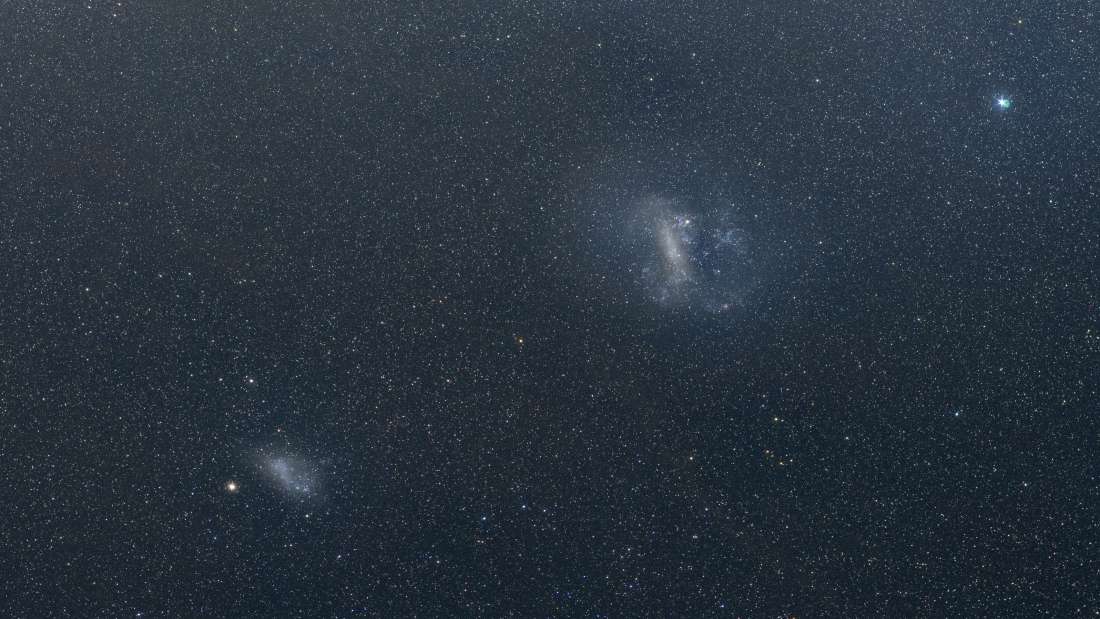
Scientists have found what looks like an exceedingly small galaxy in the orbit around our own Milky Way Galaxy, which had previously avoided detection. Named Hydrus 1, it’s located about 90,000 light-years from Earth, between two other satellites of our galaxy – the Small and Large Magellanic Clouds (SMC and LMC).

It was found using the Dark Energy Camera (DECam) on the Blanco Telescope in Chile. A paper describing the findings, available on arXiv, has been submitted to the Monthly Notices of the Royal Astronomical Society for publication. It was led by Sergey Koposov from Carnegie Mellon University (CMU) in Pennsylvania.

>Related articles

Greek prime minister and defence minister to inaugurate new cyber defence centre as Athens strengthens its digital shield

Elon Musk & SpaceX: How the “failed idea” and the Russians’ “NO” led to the launch of a $2 trillion company

Incredible: A single dose of a well-known substance “woke up” the brain of an 80-year-old woman with Alzheimer’s disease

“We report the discovery of a nearby dwarf galaxy in the constellation of Hydrus, between the Large and the Small Magellanic Clouds,” the authors wrote in their paper.

Hydrus 1 is a dwarf galaxy, described as being ultra-faint. It’s only about 326 light-years across, which is pretty paltry when compared to our Milky Way, which is 100,000 light-years across. It’s so small that it might actually be a globular cluster, a loose collection of stars. This will help astronomers understanding the surroundings of milky way more easily.

Read more HERE

Ask me anything

Explore related questions

#astronomy#earth#galaxy#orbit#planet#science#space#stars#technology#telescope
> More technology

Follow en.protothema.gr on Google News and be the first to know all the news

See all the latest News from Greece and the World, the moment they happen, at en.protothema.gr

> Latest Stories

University entrance score estimates for 247 departments: Engineering schools expected to rise, declines seen elsewhere

June 28, 2026

Arrests made following fatal shooting range tragedy in Malevizi; Investigators examine authenticity of victim’s signature

June 28, 2026

Fire breaks out at Hotel in Omonia, guests being rescued

June 28, 2026

New U.S. strikes target Iran again, hitting Sirik near the Strait of Hormuz

June 28, 2026

Dozens of Ukrainian drones headed for Moscow intercepted, city mayor says

June 28, 2026

Climate change ‘undoubtedly responsible’ for the severity of Western Europe’s heatwave, scientists say

June 28, 2026

Hope amid the ruins in Venezuela: Newborn rescued alive 32 hours after earthquake, watch the video

June 27, 2026

Greek Defence Industry: A last major opportunity and the open challenge of the 25% local participation rule

June 27, 2026
All News

> Greece

In reverence, the emotional deposition in Jerusalem, see photos & video

The Holy Temple of the Resurrection opened after many days due to the war between Israel and Iran

April 10, 2026

In the final stretch for the accreditation of joint master’s degrees: Aiming for their launch in the coming academic year

April 10, 2026

Schedule for Epitaph Procession today (10/4)

April 10, 2026

Perfect weather for Easter excursions, according to Tsatrafyllia’s forecast

April 10, 2026

Easter in Greece: The customs that continue in Greek tradition – From Nafpaktos to Corfu

April 10, 2026
Homepage
PERSONAL DATA PROTECTION POLICY COOKIES POLICY TERM OF USE
Powered by Cloudevo
Copyright © 2026 Πρώτο Θέμα



