

×
GreekEnglish

×
  • Politics
  • Diaspora
  • World
  • Lifestyle
  • Travel
  • Culture
  • Sports
  • Cooking
Friday
05
Jun 2026
weather symbol
Athens 26°C
  • Home
  • Politics
  • Economy
  • World
  • Diaspora
  • Lifestyle
  • Travel
  • Culture
  • Sports
  • Mediterranean Cooking
  • Weather
Contact follow Protothema:
Powered by Cloudevo
> World

Incredible! Scientists create sound that vaporises water (video)

they believe is the loudest possible underwater sound

Newsroom May 23 11:15

Δείτε περισσότερα άρθρα μας στα αποτελέσματα αναζήτησης

Add Protothema.gr on Google

Scientists have discovered what they believe is the loudest possible underwater sound — a sound so powerful that it can vaporize water on contact.
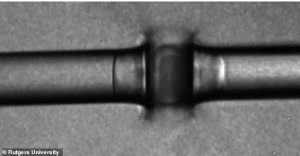
It’s not the sound of a massive underwater earthquake, nor is it the sound of a pistol shrimp snapping its claws louder than a Pink Floyd concert. It is, in fact, the sound of a tiny water jet — about half the width of a human hair — being hit by an even thinner X-ray laser.

>Related articles

Scientists discover new fault in Africa that could split the continent in two

Three things scientists fear for 2026

The mysteries of the ancient treasure: New theory for the Antikythera Mechanism

You can’t actually hear this sound, because it was created in a vacuum chamber. That’s probably for the best, considering that, at around 270 decibels, these rumbling pressure waves are even louder than NASA’s loudest-ever rocket launch (which measured about 205 decibels). However, you can see the sound’s microscopically devastating effects in action, thanks to a series of ultra-slow-motion videos recorded at the SLAC National Accelerator Laboratory in Menlo Park, California, as part of a new study.

In the video above, which was filmed in about 40 nanoseconds (40 billionths of a second), the pulsing laser immediately splits the water jet in two, vaporizing the fluid that it touches while sending powerful pressure waves wobbling down either side of the jet. These waves create more waves and, by about 10 nanoseconds in, fizzing black clouds of collapsing bubbles form on each side of the cavity.

more at LiveScience.com

Ask me anything

Explore related questions

#scientists#underwater sound#vaporise water
> More World

Follow en.protothema.gr on Google News and be the first to know all the news

See all the latest News from Greece and the World, the moment they happen, at en.protothema.gr

> Latest Stories

Everything is changing in school canteens: Processed meats and soft drinks banned, portion sizes reduced

June 5, 2026

Eurozone economy contracted by 0.2% in the first quarter, complicating ECB interest rate plans

June 5, 2026

Strong explosion at Constanța port in Romania caused by sea drone; Authorities investigating possible additional devices

June 5, 2026

Pierrakakis announces Increase in protected bank account limit to €1,600 from €1,250

June 5, 2026

No signs of aircraft fuel shortage in Europe in the coming months, says Tzitzikostas

June 5, 2026

International Yacht & Aviation Award 2026 to a Greek design firm

June 5, 2026

Former wife and alleged mastermind behind the murder of a Polish Professor in Agia Paraskevi dies by suicide in prison, leaves note to her children

June 5, 2026

How nature and sustainability shape luxury hospitality

June 5, 2026
All News

> Greece

In reverence, the emotional deposition in Jerusalem, see photos & video

The Holy Temple of the Resurrection opened after many days due to the war between Israel and Iran

April 10, 2026

In the final stretch for the accreditation of joint master’s degrees: Aiming for their launch in the coming academic year

April 10, 2026

Schedule for Epitaph Procession today (10/4)

April 10, 2026

Perfect weather for Easter excursions, according to Tsatrafyllia’s forecast

April 10, 2026

Easter in Greece: The customs that continue in Greek tradition – From Nafpaktos to Corfu

April 10, 2026
Homepage
PERSONAL DATA PROTECTION POLICY COOKIES POLICY TERM OF USE
Powered by Cloudevo
Copyright © 2026 Πρώτο Θέμα



