×
GreekEnglish

×
  • Politics
  • Diaspora
  • World
  • Lifestyle
  • Travel
  • Culture
  • Sports
  • Cooking
Saturday
06
Dec 2025
weather symbol
Athens 18°C
  • Home
  • Politics
  • Economy
  • World
  • Diaspora
  • Lifestyle
  • Travel
  • Culture
  • Sports
  • Mediterranean Cooking
  • Weather
Contact follow Protothema:
Powered by Cloudevo
> Culture

The Philistines were likely of Greek origin, according to new DNA evidence

According to scientists there was a European-related gene flow that took place during the transition from the Bronze to the Iron Age

Newsroom October 15 11:01

The Ancient Egyptians are thought to have been descendants of the Ancient Cretans. The Palestinians have claimed the same. Scientists are searching for the truth, but the evidence is growing towards this theory.

In the case of the Philistines, however, the tribe that was accused more than any other in the Hebrew texts, the investigation provided tangible evidence that they were not only related to the Ancient Greeks, but may have been their descendants.

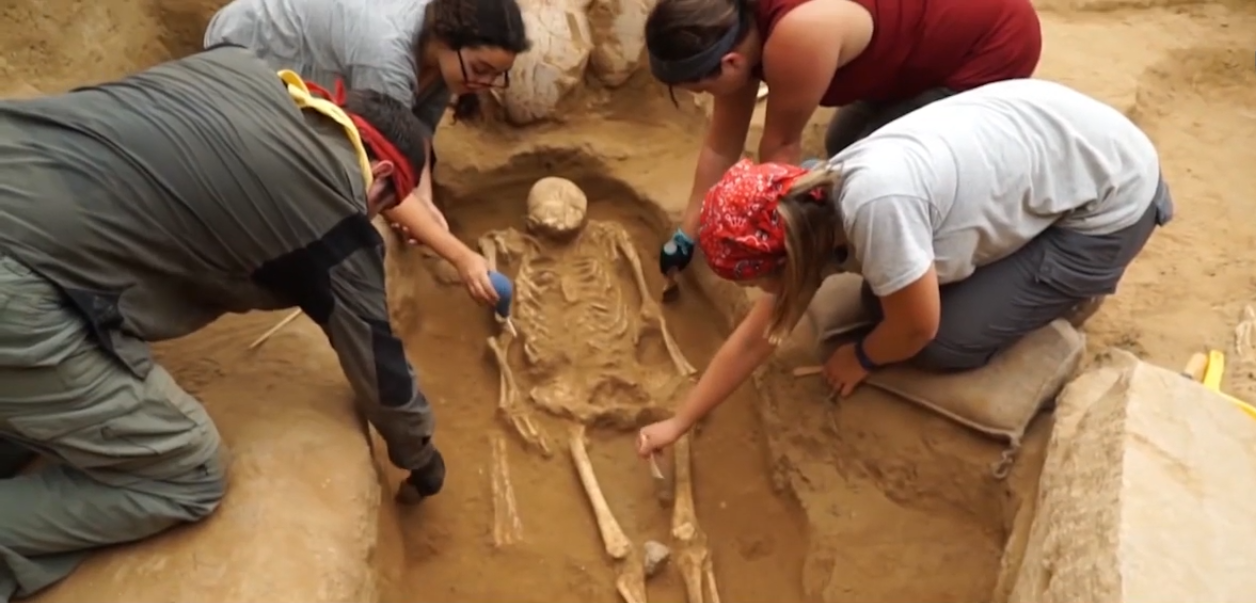
According to DNA found in a large mass grave of Philistines, the tribe was proven not to be indigenous, but they had migrated to the area of ​​today’s Middle East in 1,200 BC, from southern Europe and probably the Aegean, as at that time, the Greeks were powerful and crossed the Mediterranean with their ships.

The genetic findings came from skeletons discovered by archaeologists in Israel in 2016, including the bones of newborns buried under Philistine homes.

The Philistines were one of the great enemies of the Israelites, as they are always referred to as criminals in the Bible, with the giant Goliath being a prime example.

“Our study showed for the first time that the Philistines migrated to this area in the 12th century BC”, said Daniel Master, director of the Leon Levy mission to Ashkelon, a coastal city where the first Philistine cemetery was found.

“We did not prove it by presenting a similar style of ceramics, we did not show it by looking at texts, we showed it by looking at the DNA of the people themselves”, added the head of the scientific team.

See Also:

Never underestimate the intelligence of trees

“We can see in Ashkelon new DNA coming from this migratory population that is really changing the whole region”, he said, in an effort to highlight the significance of the discovery.

The Ashkelon team sent more than 100 skeletal specimens to the German Max Planck Institute for the Science of Anthropological History. The DNA was found in ten people, especially in the bones of the inner ear.

>Related articles

Papastavrou: The ministerial meeting of the Greece, Cyprus, Israel and the USA group in Washington in April

European Commission handbook depicts the East Aegean islands and the Dodecanese as Turkish

Anger in Cyprus over the UN Secretary General’s envoy: She described the occupied territories as the “Turkish” side of Cyprus

The findings, published Wednesday in the journal Science Advances, showed three stages: before migration, after migration, and after a thinning of the genetic imprint in the local population, a few hundred years later.

“Although genetic modeling suggests southern Europe as a region of origin, there are some limitations to the 3,000-year-old DNA test”, said Michael Feldman, an archaeologist who worked on the study at Max Planck.

“This ancestral element comes from Europe or more specifically from southern Europe. The ancestors of the Philistines must have traveled to the Mediterranean and arrived in Ashkelon sometime between the end of the Bronze Age and the beginning of the Iron Age”, Feldman said. “We could say a lot more if we had more data, for example we could pinpoint the source of this migration,” he added.

Ask me anything

Explore related questions

#aegean sea#archaeology#culture#discovery#dna#europe#greece#Greeks#israel#Max Planck Institute#mediterranean#Middle East#Philistines#world
> More Culture

Follow en.protothema.gr on Google News and be the first to know all the news

See all the latest News from Greece and the World, the moment they happen, at en.protothema.gr

> Latest Stories

The secret lives of Putin’s hidden children: Growing up in wealth and isolation

December 6, 2025

Mitsotakis from Markopoulo: The government is open to dialogue with farmers — they should come with representation and clear demands

December 6, 2025

Analysis by The New York Times: Trump turns his back on Europe, treats it as an enemy, and downgrades it to a hub of decline

December 6, 2025

The murders that changed the map of the Greek Mafia: The bloody path that started from the chief godfather Stefanakos and reached up to Zambounis who was gassed with 97 bullets

December 6, 2025

Greece on the European economic map: signals of reward, early debt repayment and Pierrakakis’ nomination for the Eurogroup

December 6, 2025

Farmers across Greece are toughening their stance as they reinforce their roadblocks

December 6, 2025

History has treated her unfairly”: The 400-year mystery surrounding Shakespeare’s wife and son

December 6, 2025

Clash between two professors over a female student: Vulgar flyers, phone calls for “dates,” and slashed tires

December 6, 2025
All News

> Economy

Greece on the European economic map: signals of reward, early debt repayment and Pierrakakis’ nomination for the Eurogroup

International interest in Greek banks, with significant developments in funding and debt reduction, while Pierrakakis' candidacy highlights the country's stability

December 6, 2025

The Greeks take center stage again in 2025 – Targeted acquisitions and “smart” vessel sales

December 5, 2025

Christmas Bonus 2025: What applies to private sector employees

December 5, 2025

Netflix buys Warner Bros. for $82.7 billion: How the mega deal closed

December 5, 2025

Positive signs on the Athens Stock Exchange, heading for its fourth consecutive weekly rise

December 5, 2025
Homepage
PERSONAL DATA PROTECTION POLICY COOKIES POLICY TERM OF USE
Powered by Cloudevo
Copyright © 2025 Πρώτο Θέμα