

×
GreekEnglish

×
  • Politics
  • Diaspora
  • World
  • Lifestyle
  • Travel
  • Culture
  • Sports
  • Cooking
Saturday
16
May 2026
weather symbol
Athens 24°C
  • Home
  • Politics
  • Economy
  • World
  • Diaspora
  • Lifestyle
  • Travel
  • Culture
  • Sports
  • Mediterranean Cooking
  • Weather
Contact follow Protothema:
Powered by Cloudevo
> World

Hubble’s “magnum opus”: most precise measurement of universe’s expansion (photo)

We have known for the better part of a century that the universe is expanding by the observation that galaxies are moving away from us

Newsroom May 20 11:00

Δείτε περισσότερα άρθρα μας στα αποτελέσματα αναζήτησης

Add Protothema.gr on Google

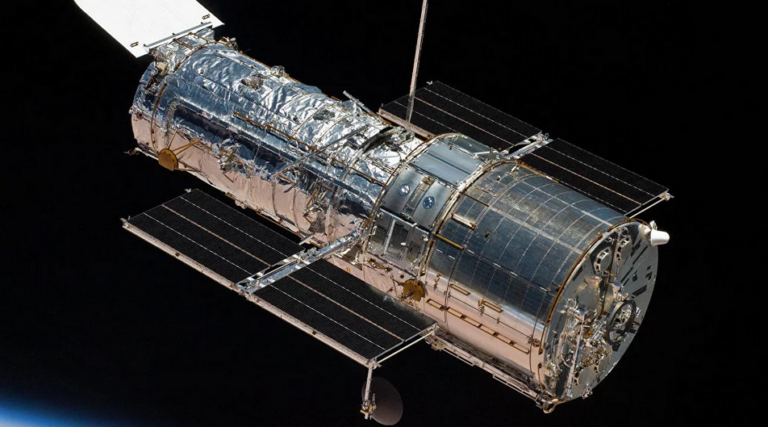
NASA has released a huge new report that astronomers are calling Hubble’s magnum opus. Analyzing 30 years of data from the famous space telescope, the new study makes the most precise measurement yet of how fast the universe is expanding.

Astronomers have known for the better part of a century that the universe is expanding, thanks to the observation that galaxies are moving away from us – and the farther away they are, the faster they’re traveling. The speed at which they’re moving, relative to their distance from Earth, is a figure called the Hubble constant, and measuring this value was one of the primary missions of the space telescope of the same name.

See Also:

The stone head of Guatemala that history wants to forget

To measure the Hubble constant, astronomers study distances to objects whose brightness is known well – that way, the dimmer it appears, the farther away it is. For relatively close objects within our galaxy or in nearby ones, this role is filled by Cepheids, a class of stars that pulse in a predictable pattern. For greater distances, astronomers use what are called Type Ia supernovae – cosmic explosions with a well-defined peak brightness.
>Related articles

Ebola outbreak in Uganda

Fraport Greece: 3.2% increase in passenger traffic in April despite the impact of the Middle East

Trump’s “digital lockdown” in Beijing: Why he was forced to leave his phone on Air Force One for two days

In the last few decades, measurements of these objects has allowed astronomers to calculate the Hubble constant to be around 70 km (43.5 miles) per second per megaparsec (/s/Mpc). Essentially, a galaxy one megaparsec (about 3.3 million light-years) from Earth will be moving away at 70 km per second, and that speed grows by 70 km/s for each megaparsec away.

Read more: New Atlas

Ask me anything

Explore related questions

#astronomy#astrophysics#galaxy#Hubble Space Telescope#nasa#physics#science#space#technology#universe#world
> More World

Follow en.protothema.gr on Google News and be the first to know all the news

See all the latest News from Greece and the World, the moment they happen, at en.protothema.gr

> Latest Stories

Everything is changing for electric scooters: Full ban for minors and speed limiters to become mandatory

May 16, 2026

Unsettled weather today with African dust, where it will rain

May 16, 2026

AADE targets €3.2 billion in overdue debts – Artificial intelligence and digital tools deployed in the fight

May 16, 2026

The scenarios police are examining in the case of the 24-year-old woman who fell from the 7th floor in Piraeus – Her partner’s testimony

May 16, 2026

ND Conference: Mitsotakis’ dilemmas and the… three-digit phone call – The side conversations, vouchers and late-night gatherings

May 16, 2026

13th AGON International Archaeological and Cultural Documentary Festival: Coming with 62 films from around the world

May 16, 2026

Jury failed to reach a verdict: Harvey Weinstein trial ends in mistrial

May 15, 2026

“A Port for Everyone”: ThPA S.A. supports women victims of violence and their children

May 15, 2026
All News

> Greece

In reverence, the emotional deposition in Jerusalem, see photos & video

The Holy Temple of the Resurrection opened after many days due to the war between Israel and Iran

April 10, 2026

In the final stretch for the accreditation of joint master’s degrees: Aiming for their launch in the coming academic year

April 10, 2026

Schedule for Epitaph Procession today (10/4)

April 10, 2026

Perfect weather for Easter excursions, according to Tsatrafyllia’s forecast

April 10, 2026

Easter in Greece: The customs that continue in Greek tradition – From Nafpaktos to Corfu

April 10, 2026
Homepage
PERSONAL DATA PROTECTION POLICY COOKIES POLICY TERM OF USE
Powered by Cloudevo
Copyright © 2026 Πρώτο Θέμα



