

×
GreekEnglish

×
  • Politics
  • Diaspora
  • World
  • Lifestyle
  • Travel
  • Culture
  • Sports
  • Cooking
Saturday
25
Jul 2026
weather symbol
Athens 27°C
  • Home
  • Politics
  • Economy
  • World
  • Diaspora
  • Lifestyle
  • Travel
  • Culture
  • Sports
  • Mediterranean Cooking
  • Weather
Contact follow Protothema:
Powered by Cloudevo
> World

Inside-out asteroids: A practical method for creating space habitats

Yet, one step closer to sci-fi

Newsroom December 21 07:01

Δείτε περισσότερα άρθρα μας στα αποτελέσματα αναζήτησης

Add Protothema.gr on Google

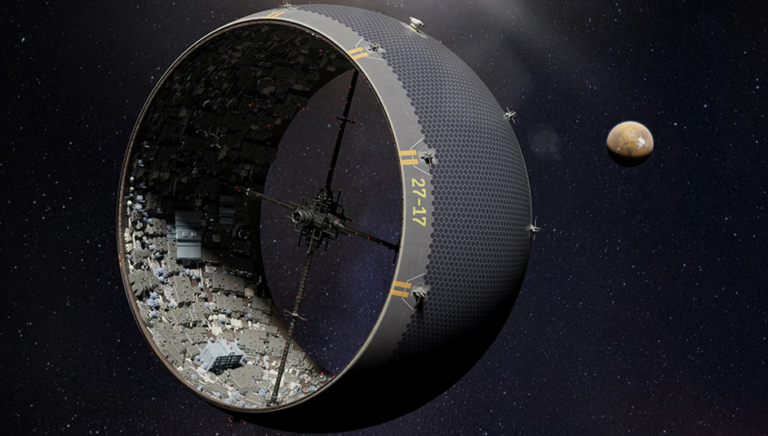
Some folk baked a lot of bread during lockdowns. Others assembled a team of scientists and figured out a practical way to turn asteroids into space habitats, by spinning them inside out and creating giant rotating, Manhattan-sized city-rings.

In the latter group are a team of University of Rochester scientists, who turned their attentions to a “wildly theoretical” paper now published in the journal Frontiers in Astronomy and Space. The challenge they set themselves: how to create a city-sized space habitat people could live on permanently, without the massive expense and challenge of launching all the materials into space from Earth.

See Also:

>Related articles

“There is no time to lose”: Greece pushes for Mount Olympus to be added to UNESCO’s World Heritage List

Greek Patriot missiles in Saudi Arabia intercepted two ballistic missiles launched from Yemen

Fiery nightmare in France: Seven municipalities evacuated as wildfire approaches Bordeaux

“Ukraine is not an ally”, says Croatian President Milanovic who rejected training Ukrainian troops

Asteroids represent big piles of materials, decided the team: “all those flying mountains whirling around the sun might provide a faster, cheaper, and more effective path to space cities,” says co-author and Professor of Physics and Astronomy Adam Frank. The trouble is, they’re nowhere near big enough to provide a useful amount of gravity. That’s a big deal; extended periods in zero- or low-gravity cause a range of health issues in astronauts, so the team decided on a minimum of 0.3g – a third or so less than you’d get living on Mars.

Read more: New Atlas

Ask me anything

Explore related questions

#science#space#technology#world
> More World

Follow en.protothema.gr on Google News and be the first to know all the news

See all the latest News from Greece and the World, the moment they happen, at en.protothema.gr

> Latest Stories

“There is no time to lose”: Greece pushes for Mount Olympus to be added to UNESCO’s World Heritage List

July 25, 2026

Greek Patriot missiles in Saudi Arabia intercepted two ballistic missiles launched from Yemen

July 25, 2026

Fiery nightmare in France: Seven municipalities evacuated as wildfire approaches Bordeaux

July 25, 2026

Campaign for lower supermarket prices begins – Discounts of up to 20% starting August 31

July 25, 2026

Unsettled weather continues today – Highest-level alert for the Sporades & Evia

July 25, 2026

“It’s impossible to extinguish the fire”: Madrid firefighters face defeat as two huge blazes burn out of control

July 24, 2026

President Trump slams EU’s new fine on Google: America is not Europe’s ‘piggy bank’

July 24, 2026

Presidential Palace hosts reception marking the 52nd anniversary of the restoration of democracy

July 24, 2026
All News

> Greece

In reverence, the emotional deposition in Jerusalem, see photos & video

The Holy Temple of the Resurrection opened after many days due to the war between Israel and Iran

April 10, 2026

In the final stretch for the accreditation of joint master’s degrees: Aiming for their launch in the coming academic year

April 10, 2026

Schedule for Epitaph Procession today (10/4)

April 10, 2026

Perfect weather for Easter excursions, according to Tsatrafyllia’s forecast

April 10, 2026

Easter in Greece: The customs that continue in Greek tradition – From Nafpaktos to Corfu

April 10, 2026
Homepage
PERSONAL DATA PROTECTION POLICY COOKIES POLICY TERM OF USE
Powered by Cloudevo
Copyright © 2026 Πρώτο Θέμα



