

×
GreekEnglish

×
  • Politics
  • Diaspora
  • World
  • Lifestyle
  • Travel
  • Culture
  • Sports
  • Cooking
Thursday
11
Jun 2026
weather symbol
Athens 28°C
  • Home
  • Politics
  • Economy
  • World
  • Diaspora
  • Lifestyle
  • Travel
  • Culture
  • Sports
  • Mediterranean Cooking
  • Weather
Contact follow Protothema:
Powered by Cloudevo
> World

China discovers strange glass beads on moon that may contain billions of tons of water

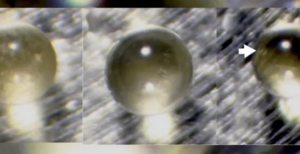
The tiny glass spherules, collected in lunar soil samples and brought to Earth by China's Chang'e-5 mission in December 2020

Newsroom March 29 02:43

Δείτε περισσότερα άρθρα μας στα αποτελέσματα αναζήτησης

Add Protothema.gr on Google

Chinese researchers may have discovered billions of tons of water inside strange glass spheres buried on the moon, and they could be used as a future water source for moon bases, a new study suggests.

The tiny glass spherules, collected in lunar soil samples and brought to Earth by China’s Chang’e-5 mission in December 2020, could be so abundant that they store up to 330 billion tons (300 metric tons) of water across the moon’s surface, the new analysis, published March 28 in the journal Nature Geoscience, shows.

The glass spherules, also known as impact glasses or microtektites, form when meteorites smash into the moon at tens to hundreds of thousands of miles per hour, blasting chunks of lunar crust into the air. Inside these airborne plumes, silicate minerals heated to molten temperatures by the force of the impact combine to form tiny glass beads that are sprinkled like crumbs over the surrounding landscape.

See Also:

>Related articles

Socrates and Confucius “met” in Athens in a celebration of Greek and Chinese culture

NASA’s “Quiet Concorde” to be tested at supersonic speeds for the first time, could cut New York–London flight time to four hours

Air leak on the International Space Station: Astronauts prepare for possible evacuation

World “population bomb” may never go off as feared, finds study

The moon’s soil contains oxygen, which means that the beads do too. When struck with ionized hydrogen atoms (protons) from solar wind, the oxygen in the molten spheres reacts to form water that is sucked inside the silicate capsules. Over time, some of the spheres become buried beneath lunar dust particles, known as regolith, and are trapped underground with the water still inside.

Read more: Live Science

Ask me anything

Explore related questions

#china#glass#moon#science#space#technology#water
> More World

Follow en.protothema.gr on Google News and be the first to know all the news

See all the latest News from Greece and the World, the moment they happen, at en.protothema.gr

> Latest Stories

Trump: We will hit Iran very hard tonight; at some point we will take Kharg Island and other oil facilities

June 11, 2026

Bad weather front approaching: Seven regions at highest risk, according to Tsatrafyllias forecast

June 11, 2026

Five Greek beaches listed among 10 Best in Europe in 2026

June 11, 2026

Emergency weather deterioration bulletin with heavy rain, squalls, and thunderstorms

June 11, 2026

Threats from Ankara regarding the French military presence in Cyprus: We have the power to deliver the most severe response

June 11, 2026

8 Attica Beaches That Athenians Love and Visitors Rarely Find

June 11, 2026

USA: Doctors refuse help to trans people seeking to return to their biological sex

June 11, 2026

From today’s heat and humidity to tomorrow’s thunderstorms and hail

June 11, 2026
All News

> Greece

In reverence, the emotional deposition in Jerusalem, see photos & video

The Holy Temple of the Resurrection opened after many days due to the war between Israel and Iran

April 10, 2026

In the final stretch for the accreditation of joint master’s degrees: Aiming for their launch in the coming academic year

April 10, 2026

Schedule for Epitaph Procession today (10/4)

April 10, 2026

Perfect weather for Easter excursions, according to Tsatrafyllia’s forecast

April 10, 2026

Easter in Greece: The customs that continue in Greek tradition – From Nafpaktos to Corfu

April 10, 2026
Homepage
PERSONAL DATA PROTECTION POLICY COOKIES POLICY TERM OF USE
Powered by Cloudevo
Copyright © 2026 Πρώτο Θέμα



