In late April, the Iberian Peninsula experienced a widespread power outage that plunged Spain and Portugal into darkness for several hours. This unprecedented event raised concerns across Europe about the stability and resilience of national power grids, especially as many countries accelerate their transition to renewable energy sources. While Spain has since restored its systems, experts warn that similar incidents could occur elsewhere, including Greece, and possibly with greater risk.
The Spain Blackout: A Technical Failure
The blackout in Spain was not caused by a natural disaster or a single catastrophic event but was a result of a complex technical failure. According to analyses by energy specialists and data from companies like Skeleton, the incident was triggered by a sudden drop in voltage — known as a loss of inertia — in the grid. Such a loss can occur when the system’s ability to maintain stable frequency and voltage is compromised, especially during high demand or sudden changes in supply.
Specifically, the event involved a rapid five-second “infarction” in the system, which caused the entire grid to collapse in order to protect infrastructure from more extensive damage. The failure was partly due to the aging of the network infrastructure and its inability to handle the increased integration of renewable energy sources, which, while vital for a sustainable future, introduce new challenges to grid stability.

Are European Power Grids Prepared?
Experts have long warned that many European countries’ power grids are operating at critical thresholds. Even nations like Germany, which is at the forefront of renewable integration, have not made sufficient investments in modernizing their electrical infrastructure over the past decades. The lack of modern, resilient infrastructure increases the risk of cascading failures, especially as the energy landscape shifts.
The recent incident in Spain exemplifies how delicate these systems can be. It underscores the importance of upgrading grid infrastructure to handle variable renewable energy and the increasing complexity of energy flows across borders.
The Risks Facing Greece
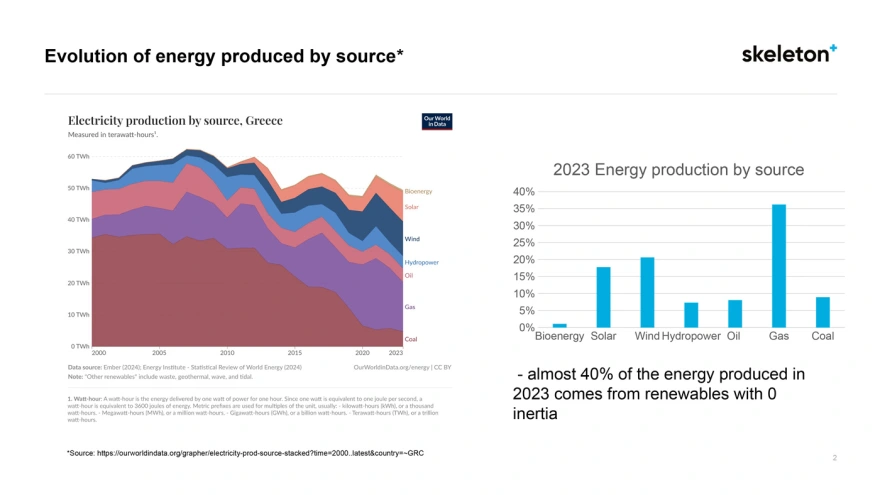
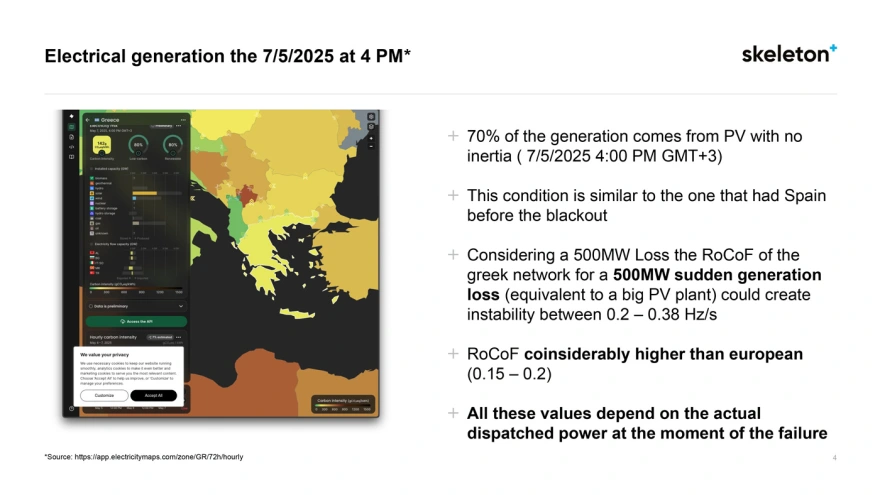
According to Taavi Madiberk, President and CEO of Skeleton, Greece faces even greater risks than Spain did before its blackout. Data indicates that Greece’s grid is in a particularly vulnerable state, with low voltage stability and limited recent investments in modernization. Despite being one of the largest producers of renewable energy within the Eurozone, Greece’s infrastructure is reportedly less prepared to manage the demands of a modern, renewable-heavy grid.
Madiberk warns that Greece’s current grid stability levels are at the lowest in Europe, making it more susceptible to sudden failures. The combination of aging infrastructure, high renewable penetration, and limited investment creates a “perfect storm” that could lead to major outages if not addressed proactively.
Preventive Measures and Future Solutions
Experts agree that the solution lies in significant investment and policy commitment. Upgrading the power grid requires substantial capital, but the costs of inaction could be far higher — both economically and socially. Technologies such as advanced energy storage systems, upgraded transmission infrastructure, and smart grid management are vital to ensuring stability.
Skeleton offers innovative solutions, including high-capacity supercapacitors manufactured within Europe, designed to prevent incidents like the Spanish blackout from recurring. However, these technical solutions need to be complemented by political will and strategic planning.
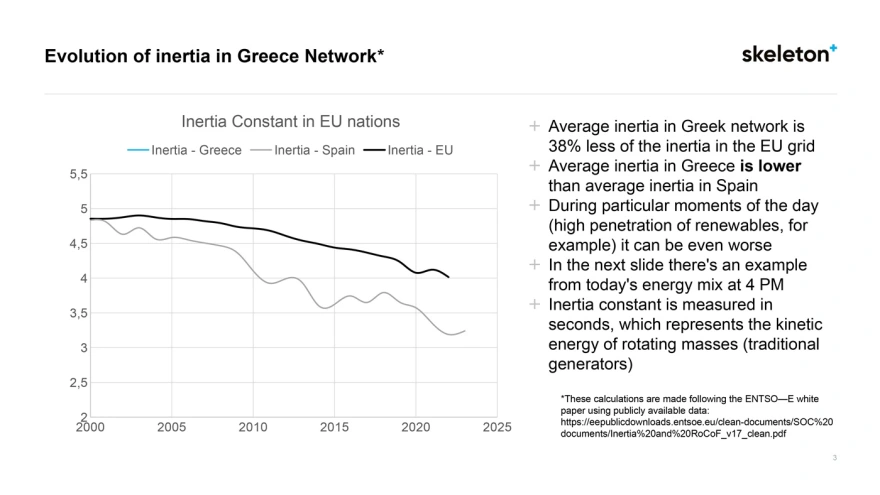
The Spanish blackout serves as a stark warning of the vulnerabilities inherent in aging and underfunded power grids. Greece, with its high renewable energy output but aging infrastructure, faces an even greater threat. To protect its energy security, Greece must prioritize modernization, invest in resilient infrastructure, and adopt advanced technologies.
While the future of energy is undoubtedly renewable, ensuring the stability and reliability of the grid is essential. Otherwise, Greece risks facing a large-scale blackout that could be as disruptive as or more than the recent events in Spain. Proactive planning today is the key to a secure, sustainable energy future.
Ask me anything
Explore related questions