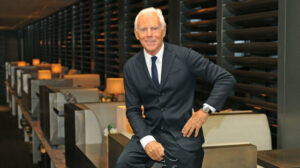
Before designing his first jacket, Giorgio Armani had already seen firsthand the deterioration of the human body in a military hospital by being a military doctor. Every day, he saw pain. There he learned to observe expressions, silences, and bodies. There, he also learned to read people without talking. From that experience, he has said, he was left with something he carried into fashion: the need for respect. To the body, to time, to simplicity.

From the quiet streets of Piacenza to the pinnacle of global fashion, Giorgio Armani — now 91 — didn’t just build a brand. He built an empire.
His name is more than synonymous with elegance. It is the very definition of quiet, effortless power — one that has outlasted trends, shaped markets, and captivated Hollywood. Armani Collezioni, Emporio Armani, Armani Jeans, Armani Casa, Armani Beauty, the Armani Hotels in Dubai and Milan — all pillars of a silent dynasty helmed by one man: Giorgio Armani.
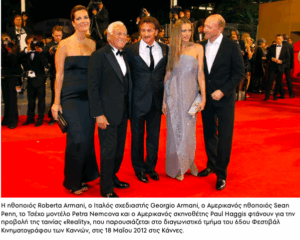
At 91, the “King of Fashion” remains the sole owner of Giorgio Armani S.p.A., one of the last major luxury houses not owned by a multinational group. In 2024, his fashion empire generated over €2 billion in revenue. In a world driven by acquisitions and private equity, Armani continues to champion independence. “Otherwise,” he once said, “it would feel like selling off my vision.”
The Birth of a Legend
Born in Piacenza in 1934, Armani grew up in the shadow of World War II, learning early the value of discipline. Fashion wasn’t his first calling — he studied medicine, explored photography, and eventually began working as a buyer at the legendary La Rinascente department store. From there, he moved to design under Nino Cerruti, before founding his label in 1975 with his life and business partner, Sergio Galeotti.
His approach was radical for its time: unstructured tailoring, softened silhouettes, neutral palettes, lightweight fabrics. Armani introduced a new sartorial language — one that blended comfort with luxury, and minimalism with precision. While others chased spectacle, he championed restraint. His clothes weren’t made to shout; they were made to serve. This almost Japanese philosophy of design set him apart — and in a world addicted to change, it was his consistency that became his greatest strength.
In 1980, he dressed Richard Gere in American Gigolo, and the Armani jacket became a symbol of modern power dressing. The red carpet followed — though Armani never chased it. Actors, musicians, Olympic teams, world leaders: all fell under the spell of his understated mastery.
A Life in Design
Armani’s aesthetic extended far beyond fashion. With the creation of Armani Casa, he brought his visual language into interiors. Armani Beauty — a global best-seller in cosmetics and fragrance — translated his sensibility into scent and skin. His hotels in Milan and Dubai define restrained luxury with an architect’s precision.
Every part of the Armani universe bears his fingerprint. From campaign casting to showroom décor, he oversees it all — a level of hands-on control rarely seen today. The result? A brand that speaks with one voice, across every touchpoint.
The Businessman of Substance
His business strategy has always favored essence over excess. Where others scaled rapidly or diversified recklessly, Armani expanded methodically. Emporio Armani catered to younger audiences. Armani Privé addressed haute couture. Armani Exchange reached streetwear markets. Armani Casa entered the world of interior design — all without diluting the brand’s DNA.
Throughout, a single aesthetic thread unites every arm of the empire: clarity, calm, and geometric balance. Armani supervised not just design but also financial decisions, avoiding risky moves and favoring long-term stability over short-term gain. He personified the rare hybrid: a designer who understood both fabric and financials.
Unlike other major houses — Dior, Gucci, Balenciaga, and Givenchy — which were absorbed into conglomerates like LVMH or Kering, Armani repeatedly declined buyout offers. Not out of ego, but out of a need for total creative and strategic control. That independence allowed him to operate on his own terms and define the future of his label without external interference.
In 2024, Giorgio Armani S.p.A. posted revenues exceeding €2.3 billion, with EBITDA at €398 million and net cash reserves of €570 million, according to Reuters. Even amid a 5–6% dip in annual growth, the company doubled its investments to €332 million — prioritizing flagship renovations and bringing e-commerce operations fully in-house.
A Legacy of Integrity
At the height of the pandemic, Armani was the first designer to cancel a live runway show — opting for a livestreamed presentation with no audience, a bold act of social responsibility. “Silence is a weapon,” he wrote in an open letter published across Italian media. “We cannot create fashion in a world that is bleeding.” He repurposed his factories to produce protective gear and donated millions to support Italy’s health system. His actions were not performative — they were rooted in principle.
Today, his legacy is not just visual. It is a testament to the enduring power of vision, discipline, and integrity in a world often seduced by noise.
Giorgio Armani is more than a designer. He is an institution — and proof that true style is eternal.
Ask me anything
Explore related questions