





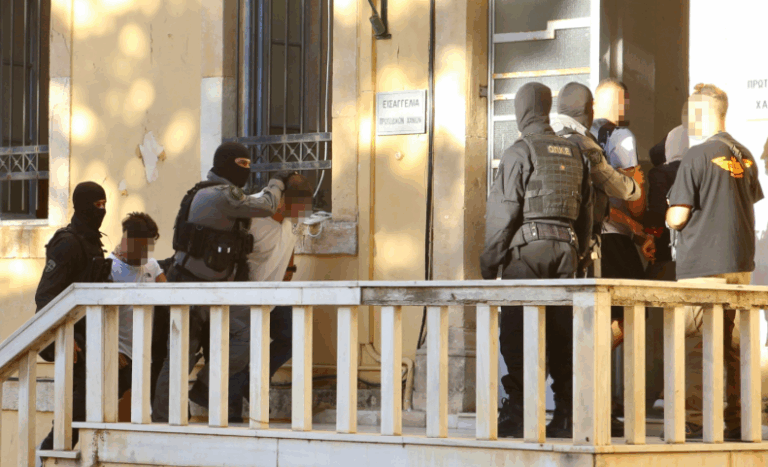
The way in which the Crete mafia managed to “launder” the “dirty” money from the sale of cocaine and cannabis was managed and tracked down by the Chania Security, which led to a total of 49 people being brought to the prosecutor, where it is only certain that they felt invulnerable on the island.
So, to “clean” the money from drug trafficking and to move it into the legal economy, what they told the buyers was to pay, but through IRIS (the interbank payment service that allows for the instant transfer of money between bank accounts).
In other cases, what they were doing was using their legitimate businesses as a black money laundry, with substance abusers paying their installment via card at the legitimate business’s “POS.”
The use of this payment method made it easier for members of the criminal organization to transfer and, more importantly, hide their earnings, bypassing system controls.
How the property of the Holy Trinity Monastery was stolen
Inside the case file, security officers describe the extortion against clergy, which resulted in the organization putting 1.5 million euros in its coffers by hijacking assets of the Holy Trinity Monastery in Chania.
In fact, in one case, it appears they tried to take from a priest 200,000 euros, blackmailing him, but were unsuccessful that time.
Among the accused is an archimandrite, who is charged with “inciting to extortion, committed in a repeated manner” and “inciting to grievous bodily harm, committed repeatedly”, among other charges.
The interest of the two business brothers in the Chania church was very high, with the local community reporting that they had chosen a camp in the succession race, with telephone communications between them almost daily.
Those arrested in the case of a drug-trafficking, extortion, and bombing ring were given 48 hours yesterday to apologise
The plea before the investigating judge will continue on Thursday morning (4/9), in stages for 30 of the 48 people arrested, with pleas expected to be completed by Friday.
Upon their arrival, several of the accused even reacted to their arrest, stating that they were “another fake criminal organization.” Their voices were heard as they were being transported by a heavy police presence to the entrance of the building.
Millions of euros in extortion involving clergy
Apart from the above, the investigation by the Hellenic Police revealed that the ring was also behind other serious crimes, such as:
– An extortion case involving clergy of the Monastic Property of Chania, managing to seize assets worth at least 1.5 million euros.
– An attempted extortion case against clergy of the Monastic Property with an expected financial benefit of at least 200,000 euros.
– An extortion case involving a businessman from Chania.
– A case of bribery of government officials.
– A case of reclassifying forest land and indications of bribery of government officials.
– An influence-peddling case involving a suspect prosecuted in the US for attempted bribery.
– An influence-peddling case involving political figures to award a higher education degree to a third party without meeting the proper criteria.
– An attempted extortion and intimidation of a construction contractor before settling a financial balance.
– An influence-peddling case aimed at affecting the election of the Metropolitan of Kydonia and Apokoronas in exchange for a fee.
– And a case of acquittal of a member of the ring in court, for which there are indications of committing criminal acts.
Finally, it should be noted that actions and possible omissions of at least four police officers, who maintained contacts with members of the organization, are being examined.
Ask me anything
Explore related questions




